In this post+
Over 60 percent of American employees say they feel disconnected during remote team activities. This challenge affects team building efforts worldwide, yet creative quiz games offer a solution that sparks genuine interaction. By choosing the right format, team-building coordinators in multinational organizations can address engagement gaps, tailor the experience for diverse teams, and create opportunities for meaningful cross-cultural connections.
Table of Contents
- Step 1: Select And Customize The Right Game Format
- Step 2: Set Up Teams And Configure Game Settings
- Step 3: Integrate Branding And Personalize Visuals
- Step 4: Guide Participants Through Game Play
- Step 5: Verify Engagement And Assess Team Outcomes
Quick Summary
| Key Insight | Explanation |
|---|---|
| 1. Choose the right game format | Analyze your team's dynamics and goals to select a game style that enhances interaction and collaboration. |
| 2. Create balanced teams | Organize participants into small, diverse groups to foster teamwork and prevent overwhelming individuals. |
| 3. Personalize visuals for branding | Integrate your company's branding into the game visuals to make the experience memorable and engaging. |
| 4. Facilitate effectively | Provide clear guidance and support during gameplay to enhance participant engagement and collaboration. |
| 5. Evaluate team outcomes | Measure participation, communication, and group performance using structured assessments for continuous improvement. |
Step 1: Select and Customize the Right Game Format
Selecting the ideal game format sets the foundation for successful team building. You want an experience that resonates with your team's unique dynamics and organizational goals.
Start by analyzing team composition and objectives to determine the most appropriate game style. Consider factors like team size, work environment (remote, hybrid, or in-person), participant energy levels, and specific outcomes you want to achieve. Some teams might thrive with competitive quiz formats, while others prefer collaborative problem-solving challenges.
Look for game formats that encourage interaction without creating undue pressure. The best team building games feel more like enjoyable group experiences than mandatory exercises. Match the game complexity to your team's comfort level and professional context. Interactive quiz games work exceptionally well across different settings because they provide structure while allowing creativity and spontaneous engagement.
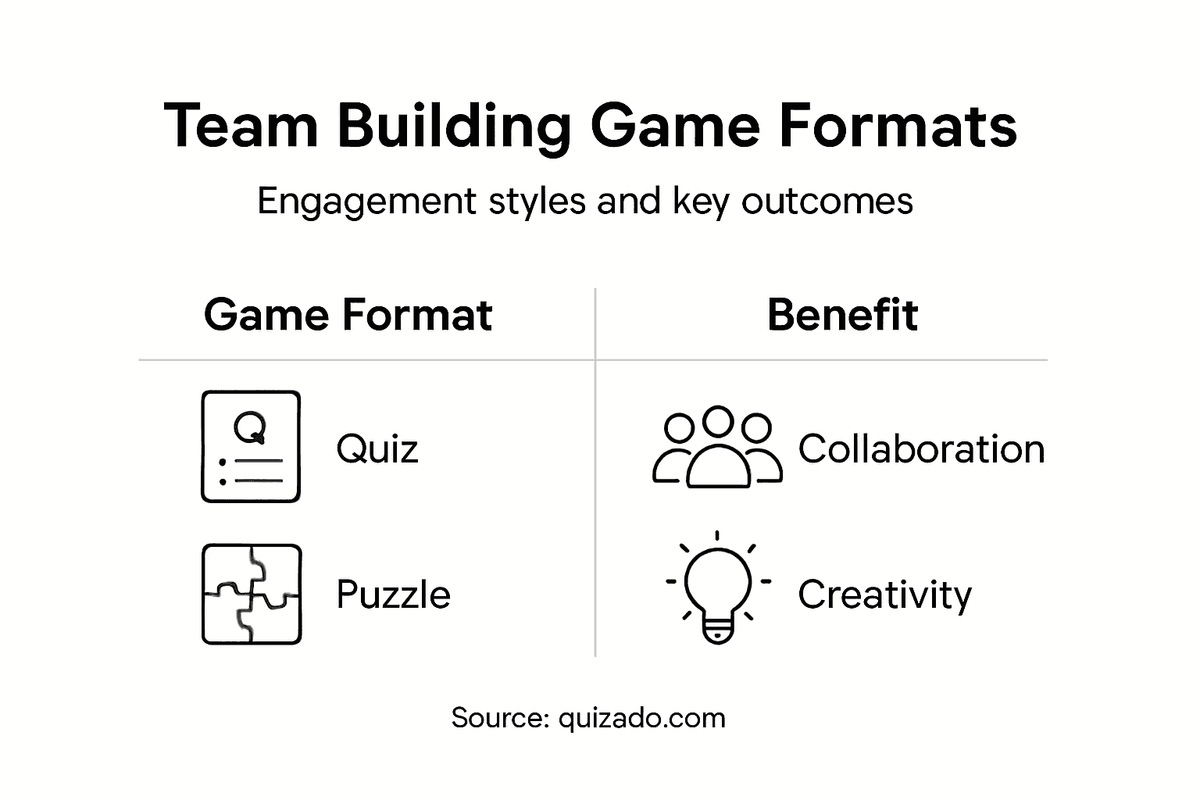
Here's a comparison of popular team building game formats and their strengths:
| Game Format | Engagement Style | Best For | Key Benefit |
|---|---|---|---|
| Competitive Quiz | Energized, interactive | Large and remote teams | Promotes knowledge sharing |
| Collaborative Puzzle | Problem solving, teamwork | Small, mixed-experience | Strengthens group cohesion |
| Creative Storytelling | Imaginative, open-ended | Hybrid or creative teams | Boosts creativity |
| Scavenger Hunt | Active, explorative | In-person or outdoor teams | Encourages movement |
Pro tip: Always have a backup game plan and be prepared to pivot if the initial format does not generate the expected enthusiasm or participation.
Step 2: Set Up Teams and Configure Game Settings
Creating an effective team configuration is crucial for maximizing engagement and ensuring smooth gameplay. Your goal is to design teams that promote collaboration and create an environment where everyone feels motivated to participate.

Structured team organization allows you to group participants strategically based on their roles, departments, or complementary skills. Consider mixing team members from different departments or experience levels to encourage cross-functional interaction. When setting up teams, pay attention to group size balanced between 4-6 people each to maintain optimal dynamics and prevent individual members from feeling overwhelmed.
Configuring game settings requires careful consideration of participant preferences and technical capabilities. Select settings that accommodate various work environments whether remote, hybrid, or in person. Ensure your platform supports flexible team assignments, allows easy communication channels, and provides intuitive controls for participants with different technological comfort levels. Interactive features like real time scoring, team chat functions, and customizable difficulty levels can significantly enhance participant engagement.
Pro tip: Always conduct a quick technical test run with a small group before launching the full team building game to identify and resolve potential configuration challenges.
Step 3: Integrate Branding and Personalize Visuals
Personalizing your team building game with meaningful visual elements transforms an ordinary activity into a memorable organizational experience. By strategically incorporating your company's unique visual identity, you create an immersive environment that resonates with participants.
AI-powered game asset creation offers innovative ways to design custom visuals that reflect your brand's personality. Consider uploading your company logo, using corporate color schemes, and integrating branded backgrounds or themes that align with your organization's culture. This approach not only makes the game feel more professional but also reinforces company identity while maintaining an engaging and interactive atmosphere.
When customizing visuals, focus on creating a cohesive design that feels intuitive and welcoming. Select graphics and color palettes that represent your team's energy and values. Ensure that visual elements are clear, high quality, and easy to understand across different devices and screen sizes. The goal is to create a visually appealing experience that feels both distinctly branded and universally accessible to all participants.
Pro tip: Test your visual customizations with a small focus group to ensure the designs are clear, engaging, and effectively communicate your intended message.
Step 4: Guide Participants Through Game Play
Facilitating team building games requires a strategic approach that balances structure with spontaneity. Your primary goal is to create an environment where participants feel engaged, supported, and motivated to collaborate effectively.
Effective teamwork game facilitation demands clear communication of rules, objectives, and expected behaviors from the start. Begin by explaining the game's purpose, setting clear expectations, and outlining specific guidelines that will help participants understand how to interact and work together. Break complex instructions into simple, digestible steps and encourage questions to ensure everyone feels comfortable and confident about participating.
As the game progresses, your role shifts from instructor to supportive guide. Monitor team dynamics, provide gentle guidance when teams get stuck, and create opportunities for meaningful interaction. Watch for moments where you can highlight collaborative behaviors, offer constructive feedback, and help participants recognize their collective strengths. Remember that the ultimate objective is not just winning the game but fostering communication, problem solving, and team cohesion.
Pro tip: Maintain an encouraging and positive tone throughout the game, and be prepared to adapt your facilitation style based on the team's energy and engagement levels.
Step 5: Verify Engagement and Assess Team Outcomes
Evaluating the effectiveness of your team building game is crucial for understanding its impact and improving future activities. A systematic approach will help you gain meaningful insights into team dynamics and individual contributions.
Measuring team contribution metrics requires a multifaceted assessment strategy. Consider using a combination of quantitative and qualitative methods such as anonymous surveys, peer feedback forms, and observational notes. Track participation levels, communication quality, problem solving approaches, and overall team interaction during the game. Pay attention to both individual contributions and collective team performance to get a comprehensive view of the activity's success.
Design your assessment process to align with specific organizational goals and team development objectives. Look beyond surface level engagement and dig deeper into how team members collaborated, supported each other, and approached challenges. Gather feedback immediately after the game while experiences are fresh, and create a structured debrief session that allows participants to reflect on their learning and share insights. The goal is not just to measure performance but to create a meaningful learning experience that promotes ongoing team growth.
This table summarizes essential team outcome metrics for evaluating team building activities:
| Metric | What It Measures | Business Impact |
|---|---|---|
| Participation Rate | Member involvement | Indicates engagement levels |
| Communication Quality | Clarity and frequency | Improves collaboration |
| Problem Solving Approach | Team strategies used | Drives innovation |
| Peer Feedback | Member perceptions | Reveals group strengths |
Pro tip: Create a standardized evaluation template in advance to ensure consistent and objective assessment across different team building activities.
Elevate Your Team Building with Customizable Interactive Games
The article highlights common challenges like selecting the right game format, configuring teams effectively, and keeping participants engaged throughout play. Many organizers struggle with creating an experience that truly boosts communication and collaboration while matching their team’s unique dynamics. If you want to move beyond traditional exercises and deliver personalized, engaging quiz games that energize your workforce, this is your solution.
At quizado.com, we specialize in making team building simple and fun with customizable quiz games inspired by popular shows like Jeopardy and Family Feud. Our platform supports branded visuals, smart team configuration, and interactive controls to help you guide your teams seamlessly toward success. Whether managing remote staff or in-person groups, quizado offers flexible features designed to enhance participation and create memorable moments of connection.
Explore tailored options in our work category to discover formats that align perfectly with your organizational goals.
Ready to transform your next team building event into an engaging, interactive experience that drives real outcomes? Visit quizado.com to start customizing your quiz game today and lead your team toward stronger collaboration and lasting success.
Frequently Asked Questions
What is the best game format for team building?
Selecting the right game format depends on your team’s dynamics and goals. Analyze factors such as team size, work environment, and desired outcomes to choose a game style that encourages interaction without pressure. For instance, competitive quiz formats work well for large teams while collaborative puzzles suit smaller groups.
How do I set up teams effectively for a game?
Creating effective teams involves strategically grouping participants based on roles or complementary skills. Aim for groups of 4-6 people to maintain optimal dynamics, which encourages collaboration and ensures no one feels overwhelmed during the game.
What should I consider when integrating branding into a team game?
Incorporating your organization's branding makes the game more engaging. Use your company’s logo, color schemes, and relevant visual themes to create a cohesive and immersive experience that reflects your brand's personality. Ensure the visuals are clear and high-quality across devices.
How can I assess participant engagement during team building games?
Evaluate engagement by using a blend of quantitative and qualitative methods. Track participation levels, collect peer feedback, and observe team dynamics during the game to gain insights into collaboration quality and individual contributions.
What steps should I take to guide participants effectively through gameplay?
Effective facilitation involves communicating game rules clearly and breaking down complex instructions into manageable steps. As the game progresses, monitor team dynamics and provide encouragement, ensuring participants feel supported and motivated to interact positively.
How can I ensure that the team building game meets its goals?
To verify the game’s effectiveness, establish clear metrics aligned with your organizational goals and assess them post-game. Gather participant feedback immediately after the activity, allowing you to identify strengths and areas for improvement within the team's collaboration.
Turn these ideas into a team event
Prepare an office quiz or remote game with a shared screen, phone participation and a host on your team.