Jak poprowadzić
wieczór quizowy w pubie
Jak poprowadzić wieczór quizowy w barze, pubie lub restauracji, krok po kroku: kompletny przewodnik po wieczorach quizowych, na które ludzie wracają.
- ✓Wybierz odpowiedni format i zestaw rund dla swojego lokalu
- ✓Marketing, nagrody i skrypty prowadzącego, które naprawdę działają
- ✓Oprogramowanie, które obsługuje pytania, punktację i duży ekran


Jak przeprowadzić wieczór quizowy, krok po kroku
- Wybierz swój format
- Przygotuj pytania
- Skonfiguruj sprzęt
- Promuj swój wieczór trivia
- Poprowadź wydarzenie
- Spraw, by wracali
Prowadzisz z Quizado? Otwórz zasady do druku i skrót dla prowadzącego
Wybierz format
Wybrany format wyznacza ton całego wieczoru. Różne formaty quizowe przyciągają różną publiczność, więc pomyśl o swoim lokalu i stałych gościach przy wyborze. Oto najpopularniejsze opcje organizacji wieczoru quizowego w barze:
Tradycyjne rundy to klasyczny format pub quiz. Prowadzący czyta pytania na głos, drużyny zapisują lub przesyłają odpowiedzi, a punkty są zliczane po każdej rundzie. To najbardziej znany format, który sprawdza się doskonale w lokalach organizujących quiz po raz pierwszy. Jest przystępny, łatwy do wytłumaczenia nowym graczom i ma komfortowy rytm.
Trivia z buzzerem dodaje element rywalizacji. Drużyny ścigają się, kto pierwszy naciśnie buzzer na smartfonie, a najszybsza drużyna zyskuje wyłączne prawo do odpowiedzi. Ten format tworzy pełne energii momenty, które rozgrzewają publiczność i jest idealny dla lokali szukających głośniejszej, bardziej ekscytującej atmosfery.
Plansza z kategoriami, taka jak QuizoParty w Quizado, pozwala drużynom wybierać pytania z siatki kategorii i wartości punktowych. Dodaje to element strategiczny, ponieważ drużyny mogą grać bezpiecznie z łatwymi pytaniami lub sięgać po te o wysokiej wartości. Daje też drużynom większą kontrolę nad grą, co zwiększa zaangażowanie.
Rundy na szybkość i rundy z zakładami sprawdzają się świetnie jako finały lub rundy specjalne w większej grze. W rundzie na szybkość drużyny ścigają się z zegarem. W rundzie z zakładami drużyny obstawiają punkty przed zobaczeniem pytania — tworząc dramatyczne zwroty akcji w tabeli wyników.
Quizado obsługuje wszystkie te formaty dzięki 5 wbudowanym typom rund. Możesz mieszać i dopasowywać formaty w ramach jednej gry, aby utrzymać świeżość. Sprawdź wszystkie dostępne typy rund na naszej stronie typów rund.
Przygotuj pytania
Świetne pytania quizowe to fundament udanego wieczoru trivia. Jakość pytań bezpośrednio wpływa na to, ile radości będą miały drużyny i czy wrócą w przyszłym tygodniu. Oto co składa się na dobry zestaw pytań:
Mieszaj poziomy trudności. Dobra zasada to 30% łatwych pytań, na które większość drużyn odpowie poprawnie (budują pewność siebie), 50% pytań o średnim poziomie trudności, które różnicują stawkę, i 20% trudnych pytań, które trafią tylko najsprytniejsi. Jeśli każde pytanie jest za trudne, okazjonalni gracze stracą zainteresowanie. Jeśli wszystko jest za łatwe, zapaleni quizowicze się znudzą.
Zrównoważ kategorie. Obejmij szeroki zakres tematów: popkultura, historia, nauka, geografia, sport, muzyka, jedzenie i napoje, filmy i telewizja. Dzięki temu różni członkowie drużyny mogą wnosić swój wkład na podstawie swoich mocnych stron. Gdy każdy w drużynie może być ekspertem przynajmniej raz, doświadczenie staje się inkluzywne i przyjemne.
Dodaj lokalny klimat. Pytania o Twoje miasto, okolicę lub region tworzą wyjątkowe doświadczenie, którego drużyny nie dostaną z generycznej aplikacji quizowej. Pytaj o lokalne zabytki, historię, drużyny sportowe lub restauracje. Te pytania zawsze generują najwięcej dyskusji i śmiechu.
Pisanie pytań od zera wymaga czasu. Quizado zawiera wbudowaną bibliotekę pytań z tysiącami pytań z dziesiątek kategorii, gotowych do użycia od razu. Możesz też tworzyć własne pytania z obrazami, dźwiękiem i wideo. Przeglądaj przykładowe pytania na naszej stronie z pytaniami bar trivia.
Skonfiguruj sprzęt
Jedną z największych zalet cyfrowych narzędzi quizowych jest to, jak niewiele sprzętu tak naprawdę potrzebujesz. Minęły czasy drukowania arkuszy odpowiedzi, ostrzenia ołówków i chodzenia po sali, aby zbierać kartki. Oto czego potrzebujesz do prowadzenia nowoczesnego wieczoru quizowego:
Telewizor lub projektor jest niezbędny do wyświetlania pytań, odkrywania odpowiedzi i tabeli wyników na żywo. Większość barów i restauracji ma już przynajmniej jeden telewizor. Ustaw go tak, aby większość sali go widziała. Jeśli Twój lokal jest duży, rozważ użycie wielu ekranów lub projektora z większą powierzchnią wyświetlania.
Potrzebujesz laptopa lub tabletu do prowadzenia gry. To centrum dowodzenia prowadzącego, gdzie przełączasz pytania, zarządzasz czasem i monitorujesz wyniki. Podłącz go do telewizora przez HDMI lub udostępnianie ekranu. Wystarczy dowolny nowoczesny laptop lub tablet — nie jest wymagany specjalistyczny sprzęt.
Niezawodne Wi-Fi to jedyny wymóg techniczny dla graczy. Z Quizado gracze dołączają skanując kod QR na telefonie — bez pobierania aplikacji. Gra działa w przeglądarce mobilnej i zużywa minimalne dane, więc nawet standardowa sieć Wi-Fi w barze sobie z tym poradzi. Upewnij się, że Twoja sieć obsłuży oczekiwaną liczbę graczy.
Mikrofon i system nagłośnienia dla prowadzącego są bardzo zalecane, ale nie bezwzględnie wymagane. W mniejszych lokalach prowadzący może dobrze projektować głos. W większych przestrzeniach prosty mikrofon bezprzewodowy robi ogromną różnicę w utrzymaniu zaangażowania publiczności. Jeśli planujesz rundy muzyczne (np. rundę „Złap tę melodię”), system dźwiękowy staje się niezbędny.
Z Quizado eliminujesz papier, długopisy, drukowane arkusze odpowiedzi i fizyczne buzzery. Gracze używają swoich smartfonów, aby dołączyć i odpowiadać. To drastycznie skraca czas przygotowania i sprzątania, pozwalając Ci skupić się na tym, co najważniejsze — prowadzeniu świetnego wydarzenia.
Wypromuj swój wieczór quizowy
Możesz mieć najlepszą grę quizową na świecie, ale to nic nie znaczy, jeśli nikt się nie pojawi. Promocja jest kluczowa, szczególnie w pierwszych tygodniach, gdy budujesz grono stałych bywalców. Oto jak rozprzestrzenić informację:
Media społecznościowe to Twój najlepszy przyjaciel. Publikuj o wieczorze quizowym na Instagramie, Facebooku i TikToku. Udostępniaj zdjęcia z poprzednich wydarzeń, zapowiadaj nadchodzące tematy i publikuj wyniki, aby wywołać FOMO. Oznaczaj swój lokal i używaj lokalnych hashtagów. Zachęcaj drużyny do dzielenia się własnymi zdjęciami i oznaczania Twojego konta — treści generowane przez użytkowników są niezwykle skuteczne.
Nie lekceważ oznakowania w lokalu. Stojaki na stolikach, plakaty przy wejściu i wzmianki w menu lub na tablicy kredowej przypominają obecnym klientom o nadchodzących wieczorach quizowych. Wielu Twoich stałych gości może nie obserwować Cię w mediach społecznościowych, więc fizyczne oznakowanie trafia do nich tam, gdzie już są.
Ustal regularny cotygodniowy harmonogram i trzymaj się go. Regularność jest kluczowa. Gdy ludzie wiedzą, że quiz jest w każdy wtorek o 19:00, mogą to zaplanować. Zmieniaj harmonogram zbyt często, a stracisz stałych bywalców. Wybierz dzień i godzinę, a potem trzymaj się tego przez co najmniej kilka miesięcy.
Wieczory tematyczne generują dodatkowe zainteresowanie. "Quiz muzyczny z lat 90.", "Quiz o Harrym Potterze" czy "Quiz sportowy" dają ludziom konkretny powód do przyjścia. Tematy pomagają też przyciągnąć niszową publiczność, która może nie przyjść na zwykły quiz, ale zbierze się dla swojego ulubionego tematu.
Nawiąż współpracę z lokalnymi firmami w celu wzajemnej promocji. Lokalne browary, restauracje i sklepy mogą ufundować nagrody w zamian za wspomnienia podczas wydarzenia. To tworzy sytuację korzystną dla obu stron, która rozszerza Twój zasięg na ich bazę klientów.
Poprowadź wydarzenie
Nadszedł wieczór gry. Masz przygotowane pytania, sprzęt ustawiony, a drużyny wchodzą do lokalu. Oto jak poprowadzić płynne wydarzenie quizowe od początku do końca:
Zacznij od rejestracji i tworzenia drużyn. Wyświetl kod QR na telewizorze lub projektorze około 15-20 minut przed oficjalnym rozpoczęciem. To daje drużynom czas na zeskanowanie, dołączenie, wybranie nazw drużyn i rozgoszczenie się z napojami i jedzeniem. Z Quizado gracze skanują kod na telefonie i tworzą lub dołączają do drużyny w kilka sekund — bez pobierania aplikacji.
Tempo jest kluczowe. Utrzymuj dynamikę, ale nie poganiaj. Daj drużynom wystarczająco dużo czasu na omówienie odpowiedzi (zwykle 30-60 sekund na pytanie), ale używaj timerów, aby rundy się nie przeciągały. Wbuduj krótkie przerwy między rundami, aby drużyny mogły zamówić drinki i porozmawiać. Aspekt towarzyski to połowa zabawy — nie eliminuj go nieustannym tempem.
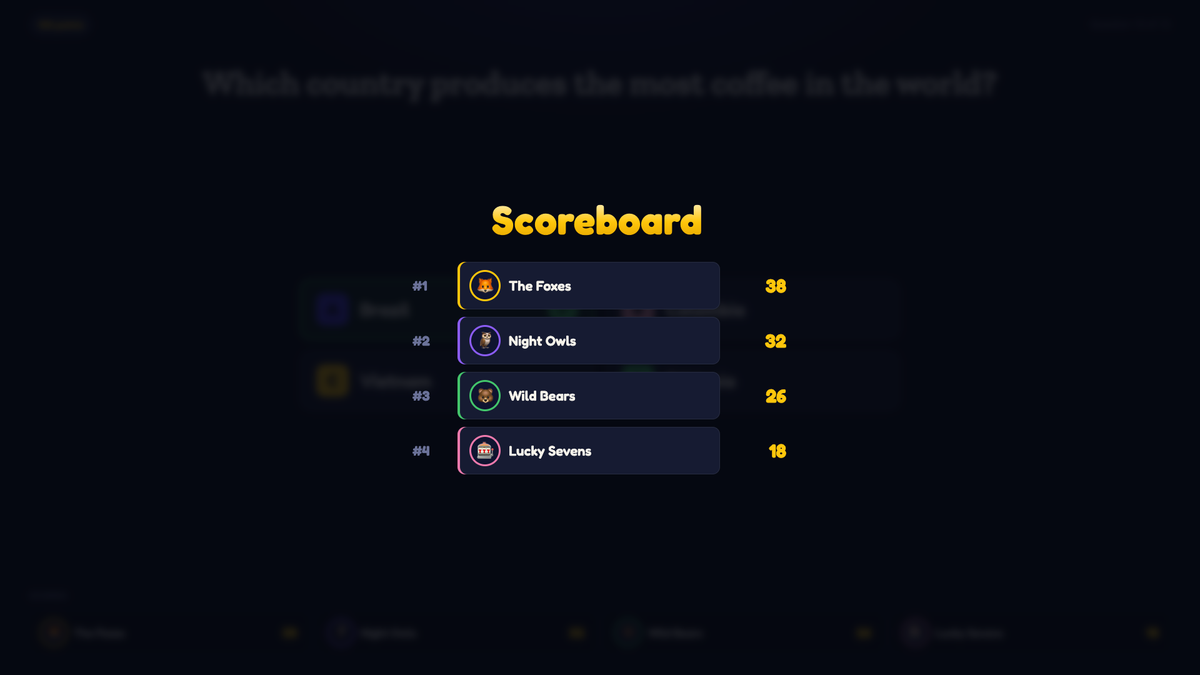
Utrzymuj energię przez cały wieczór. Dobry prowadzący quiz wyczuwa nastrój na sali i dostosowuje się odpowiednio. Jeśli energia spada, opowiedz żart, podziel się ciekawostką lub wrzuć pytanie bonusowe. Ogłaszaj klasyfikację tabeli wyników między rundami, aby budować napięcie. Podkreślaj bliskie wyniki i dramatyczne zmiany w prowadzeniu. Tabela wyników na żywo na dużym ekranie to jedno z najskuteczniejszych narzędzi do utrzymania emocji.
Zakończ z przytupem. Ostatnia runda powinna być najbardziej dramatyczna — runda z zakładami, podwójne punkty lub runda błyskawiczna. Buduj napięcie do kulminacji, ogłoś zwycięzców z fanfarami i zaproś wszystkich ponownie na przyszły tydzień. Zawsze kończ na wysokiej nucie.
Spraw, aby wracali
Pojedynczy wieczór quizowy to zabawa. Cotygodniowa tradycja quizowa to silnik przychodów. Prawdziwa wartość pochodzi z budowania społeczności stałych bywalców, którzy wracają tydzień po tygodniu, przyprowadzając znajomych i wydając pieniądze w Twoim lokalu. Oto jak stworzyć tę lojalność:
Regularność buduje nawyki. Organizuj quiz w ten sam dzień, o tej samej godzinie, co tydzień. Drużyny zarezerwują to w swoich kalendarzach. Pomiń tydzień, a przerwiesz nawyk — więc planuj z wyprzedzeniem wokół świąt i komunikuj wszelkie zmiany harmonogramu wcześnie.
Sumy punktów z kolejnych tygodni tworzą długoterminowe zaangażowanie. Śledź wyniki drużyn przez sezon (8-12 tygodni) i wyłoń ogólnego mistrza na koniec. To daje drużynom powód do powrotu nawet po słabym wieczorze — sezon się jeszcze nie skończył. Ogłaszaj klasyfikację sezonową na początku każdego wydarzenia.
Nagrody nie muszą być drogie, aby były skuteczne. Cotygodniowe nagrody jak kolejka drinków dla zwycięskiej drużyny, mały rachunek barowy lub markowe gadżety sprawdzają się doskonale. Na mistrzostwa sezonu celuj wyżej — puchar, większa karta podarunkowa lub specjalny zarezerwowany stolik na następny sezon. Nagroda to mniej kwestia wartości pieniężnej, a bardziej prawo do chwalenia się.
Rotuj tematy, aby utrzymać świeżość. Podczas gdy Twój podstawowy format pozostaje ten sam, od czasu do czasu zmieniaj tematykę pytań. Wieczór quizowy na temat świąt, specjalna edycja dekady muzycznej lub quiz o historii lokalnej dają stałym bywalcom coś nowego, na co mogą się cieszyć. Sezonowe wydarzenia związane z Super Bowl, Oscarami czy March Madness przyciągają dodatkowe zainteresowanie.
Buduj społeczność poza lokalem. Stwórz grupę w mediach społecznościowych lub listę mailingową dla stałych quizowiczów. Udostępniaj wyniki, zapowiadaj nadchodzące tematy i celebruj osiągnięcia drużyn. Gdy gracze czują, że należą do społeczności quizowej — a nie tylko uczestniczą w losowym wydarzeniu barowym — stają się lojalnymi ambasadorami, którzy rekrutują nowe drużyny w Twoim imieniu.
Wskazówki dla prowadzących quiz
Zacznij od 4-6 rund po 8-10 pytań
Daje to łącznie 40-60 pytań, które wypełniają około 90 minut do 2 godzin. Wystarczająco dużo treści, aby wszystko toczyło się sprawnie, bez rozwlekania.
Dodaj rundę muzyczną lub obrazkową dla urozmaicenia
Rundy multimedialne przełamują format oparty wyłącznie na tekście i angażują różne umiejętności. Runda muzyczna, w której drużyny rozpoznają piosenki, jest zawsze ulubieńcem publiczności.
Utrzymuj rundy poniżej 10 minut każda
Krótkie, energiczne rundy podtrzymują energię i dają naturalne momenty na przerwę. Drużyny mogą zdobyć drinki i jedzenie między rundami, niczego nie tracąc.
Oferuj drobne nagrody - rachunki barowe świetnie działają
Skromny rachunek barowy dla zwycięskiej drużyny jest idealny. Zatrzymuje ich w lokalu na dłużej i tworzy namacalną nagrodę bez nadwyrężania budżetu.
Zakończ efektowną rundą finałową
Runda z zakładami lub finał na podwójne punkty buduje napięcie i daje drużynom z tyłu szansę na nadrobienie strat. Utrzymuje zaangażowanie wszystkich aż do samego końca.
Najczęściej zadawane pytania
Więcej zasobów o Bar Trivia
Oprogramowanie do Bar Trivia
Poznaj platformę bar trivia Quizado z dołączaniem przez kod QR, punktacją na żywo i wieloma typami rund.
Pytania Bar Trivia
Przeglądaj setki gotowych pytań trivia uporządkowanych według kategorii, z dołączonymi odpowiedziami.
Nazwy drużyn Bar Trivia
Zainspiruj się naszą kolekcją zabawnych, sprytnych i kreatywnych pomysłów na nazwy drużyn trivia.
Aplikacja dla prowadzącego
Poprowadź wieczór z telefonu lub laptopa: dołączanie przez kod QR, buzzery na telefonach i punktacja na żywo.
Karty odpowiedzi do quizu
Darmowe karty odpowiedzi do druku na 10, 20 lub 25 pytań.
Pomysły na wieczór quizowy
Formaty rund, nagrody, dopasowane jedzenie i taktyki zbiórek charytatywnych.
Motywy na wieczór quizowy
Czterdzieści siedem motywów, każdy z trzema przykładowymi kategoriami.
Twój następny krok
Masz już pomysł. Nadaj mu oprawę teleturnieju.
Dobre pytanie daje do myślenia. Wspólny ekran, ranking na żywo i prowadzący wciągają do gry całą salę. Wypróbuj pakiet startowy, zanim zaczniesz tworzyć własne rundy w płatnym planie.
Zacznij od bezpłatnego Bar Trivia dla maksymalnie 4 graczy. Większe grupy i tworzenie własnych pytań wymagają płatnego dostępu.
- WybierzDobierz format i pytania do swojej grupy.
- PrzećwiczPrzetestuj ekran, sposób dołączania i pierwszą rundę.
- PoprowadźPoprowadź grupę, ciesz się jej reakcjami i ogłoś wynik.