How to Foster Team Creativity for Stronger Collaboration

Over 60 percent of american employees say workplace creativity drives their motivation and job satisfaction. Tapping into this creative drive can spark powerful innovation and set teams apart in a crowded market. Yet, understanding which steps help unlock real potential can be confusing. Learn how focused assessment, playful culture, and meaningful feedback work together to foster genuine creativity so your american team can achieve its most imaginative results.
Table of Contents
- Step 1: Assess Creative Readiness Within Your Team
- Step 2: Establish a Supportive and Playful Environment
- Step 3: Incorporate Interactive Team-Building Activities
- Step 4: Leverage Feedback and Reflect on Team Sessions
- Step 5: Measure Results and Sustain Creative Momentum
Quick Summary
| Key Insight | Explanation |
|---|---|
| 1. Assess your team's creative readiness | Conduct a systematic assessment to identify creativity levels and areas for development using structured evaluations like ECAT. |
| 2. Foster a supportive and playful environment | Create a workplace where open communication and playful interactions thrive, making team members feel safe to express ideas. |
| 3. Implement interactive team-building activities | Design engaging, collaborative experiences that break traditional barriers and encourage innovative problem solving among team members. |
| 4. Establish regular feedback and reflection sessions | Use constructive feedback to enhance team creativity and reinforce collaborative skills through open discussions and collective evaluations. |
| 5. Measure creativity holistically | Develop a nuanced strategy to track creative progress that focuses on collaborative quality and idea diversity, avoiding high-pressure metrics. |
Step 1: Assess Creative Readiness Within Your Team
Understanding your team's creative potential starts with a strategic and systematic assessment. By using targeted evaluation methods, you can uncover hidden talents and identify areas where creativity can be nurtured and developed.
A robust approach involves implementing a comprehensive creative problem solving assessment that examines multiple dimensions of team creativity. Researchers have developed specialized tools that evaluate key factors like technical knowledge, communication skills, critical thinking capabilities, and cognitive flexibility. The Engineering Creativity Assessment Tool (ECAT) provides an excellent framework for this process, focusing on critical metrics such as fluency, originality, and adaptive thinking.
To conduct an effective assessment, start by designing a multi-part evaluation that includes both self-reporting and objective measurements. Create surveys that ask team members to rate their own creative confidence, participate in problem solving exercises, and demonstrate innovative thinking through practical challenges. Combine these insights with observed performance to create a holistic view of your team's creative readiness. Pay special attention to individuals who demonstrate unique perspectives or unconventional approaches to problem solving.
Warning: Avoid turning this assessment into a high-pressure competition. The goal is to understand and develop creativity, not to rank or judge team members. Approach the process with curiosity and support, making participants feel safe and encouraged to express their innovative potential.
With these insights, you'll be prepared to move into the next phase of fostering team creativity and building stronger collaborative skills.
Step 2: Establish a Supportive and Playful Environment
Creating an environment that sparks creativity requires more than just good intentions. Your goal is to design a workspace that encourages open communication, mutual support, and playful interaction among team members.
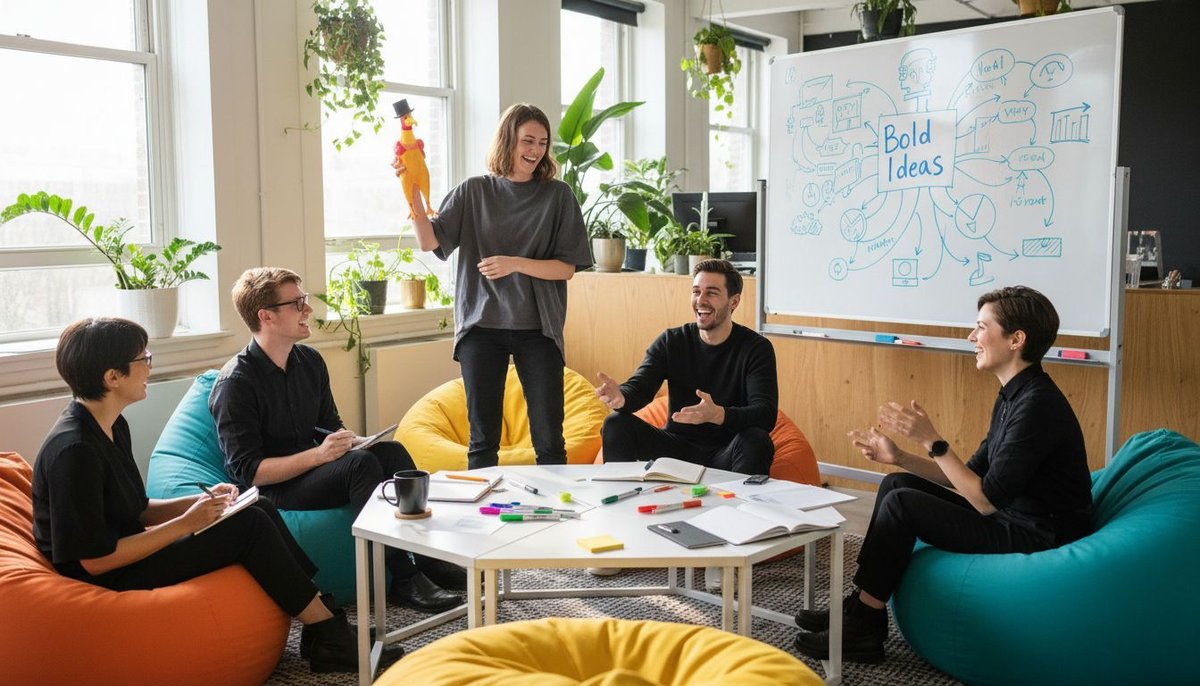
Research demonstrates that shared experiences of adversity can significantly enhance team creativity by fostering deeper connections and supportive interactions. Similarly, incorporating playful elements into work design can dramatically boost employee creativity through increased engagement and a sense of flow. Start by reimagining your team interactions not as formal meetings, but as collaborative adventures.
Implement strategies that break down traditional barriers. Host interactive brainstorming sessions where no idea is considered too wild. Create designated spaces for spontaneous collaboration, whether physical or virtual. Encourage team members to share personal stories, participate in impromptu challenges, and experiment with unconventional problem solving approaches. Reward curiosity and risk taking, not just successful outcomes.
Warning: Playfulness does not mean being unprofessional. Maintain clear boundaries and ensure that the supportive environment remains focused on productive creativity. The goal is to make team members feel psychologically safe to express innovative thoughts without fear of ridicule.
With this foundation of support and playfulness, you will unlock your team's hidden creative potential and set the stage for breakthrough innovations.
Step 3: Incorporate Interactive Team-Building Activities
Interactive team-building activities are the secret weapon for unlocking your team's creative potential. Your mission is to design engaging experiences that transform routine interactions into opportunities for collaborative innovation.
Research reveals fascinating insights into how structured activities can boost creativity. Frameworks for developing team creativity through interactive experiences demonstrate that purposeful play can dramatically enhance creative behaviors. Modern teams can even leverage advanced technologies like AI-augmented brainwriting techniques to facilitate more dynamic idea generation processes.
Start by designing activities that challenge traditional thinking patterns. Implement interactive team building exercises that encourage unconventional problem solving. This might include scenario-based challenges where teams must solve complex problems using limited resources, collaborative storytelling sessions, or rapid prototyping workshops. Rotate team members across different groups to maximize cross-pollination of ideas and perspectives.
Warning: Avoid activities that feel forced or artificial. The most effective team-building experiences emerge organically, creating genuine connections and allowing creativity to flow naturally. Prioritize psychological safety and ensure every team member feels comfortable participating.
These interactive activities will set the stage for more dynamic, collaborative, and innovative team interactions.
Step 4: Leverage Feedback and Reflect on Team Sessions
Reflection and constructive feedback are the cornerstone of continuous creative improvement. Your goal is to transform team sessions into powerful learning opportunities that drive innovation and strengthen collaborative skills.
Observation and reflective practices are critical mechanisms for unlocking creative potential within teams. Research demonstrates that systematic feedback environments can significantly enhance creative outcomes by providing structured opportunities for team members to analyze their collaborative processes.
Implement a comprehensive team feedback process that goes beyond traditional performance reviews. Schedule regular reflection sessions where team members can openly discuss what worked well, identify challenges, and propose innovative solutions. Create a safe space for honest dialogue by establishing ground rules that prioritize constructive insights over criticism. Use techniques like round robin sharing, anonymous suggestion boxes, or digital feedback platforms to capture diverse perspectives.
Warning: Feedback sessions can quickly become unproductive if not carefully managed. Ensure that reflections remain forward looking, solution oriented, and focused on collective growth rather than individual blame.
By embracing a culture of continuous reflection, you will transform team challenges into opportunities for breakthrough creativity and collaborative excellence.
Step 5: Measure Results and Sustain Creative Momentum
Measuring creativity is not about rigid metrics but understanding the dynamic pulse of your team's innovative potential. Your mission is to develop a nuanced approach that tracks creative progress while keeping team motivation high.
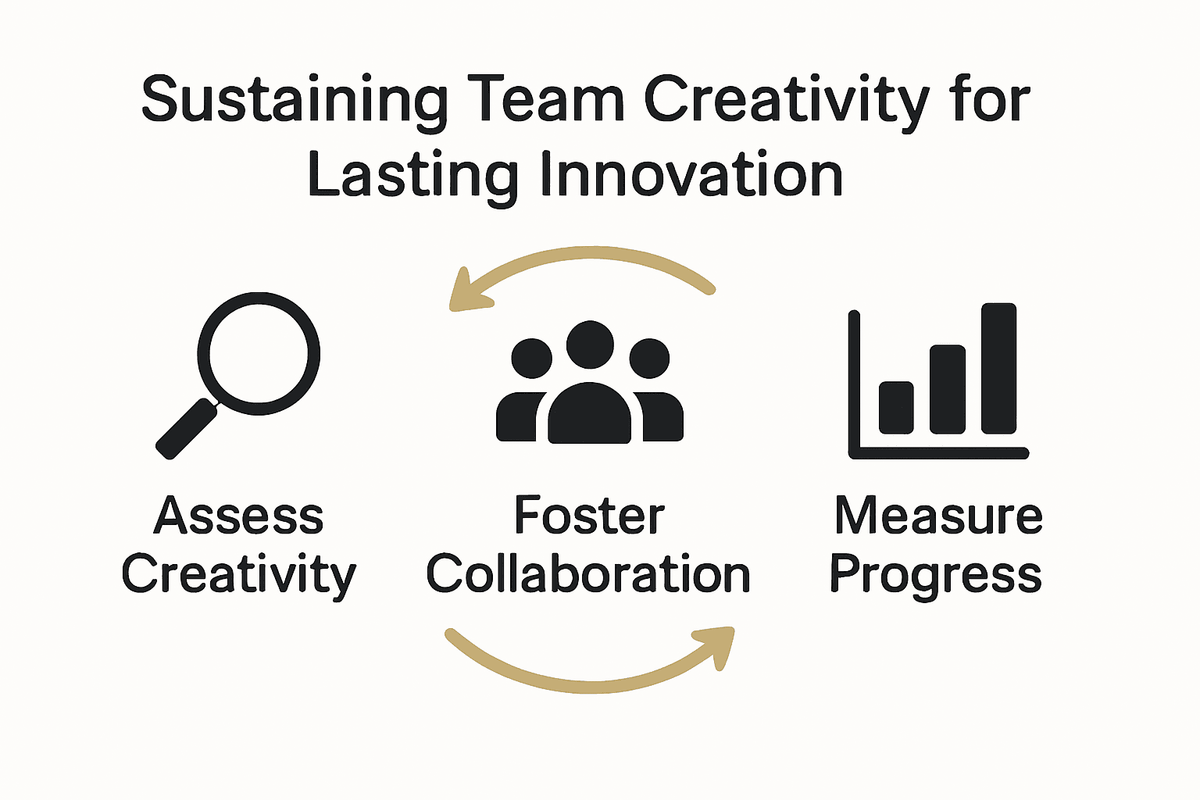
Research offers powerful insights into quantifying creativity. Advanced psychometric frameworks now utilize sophisticated tools to assess creative outcomes, allowing teams to develop precise measurement strategies. Team motivational climate analysis reveals that understanding the psychological dynamics can significantly sustain creative momentum.
Design a comprehensive measurement strategy that goes beyond traditional performance indicators. Track not just output but also the quality of collaborative interactions, idea generation frequency, and the diversity of solutions proposed. Implement quarterly creative assessment workshops where team members can self evaluate and collectively discuss their innovative contributions. Use a combination of quantitative metrics like number of implemented ideas and qualitative assessments such as peer feedback and creative problem solving effectiveness.
Warning: Avoid turning measurements into a high stakes competition. The goal is to provide insights that inspire growth not create anxiety or discourage risk taking.
By thoughtfully measuring and nurturing creativity, you will transform your team into a dynamic innovation powerhouse.
Unlock Your Team’s Creative Power with Engaging Interactive Games
Building stronger collaboration through creativity requires a supportive environment and dynamic team activities. The challenge many organizations face is how to spark playful interaction while promoting open communication and innovative problem solving without pressure or judgment. This article highlights the importance of playful atmospheres and interactive experiences that foster psychological safety and boost creative confidence.
At quizado.com, we provide a versatile platform designed exactly for this purpose. Our customizable team-building quiz games inspired by popular game shows turn routine meetings into energizing collaboration adventures. With features like team configurations, remote controls, and personalized branding, you can create interactive challenges that stimulate creative thinking, encourage curiosity, and strengthen bonds among team members. Discover how incorporating themed visual interfaces and a rich question bank can transform your team dynamics into continuous creative engagement.

Don’t let your team’s creative potential remain untapped. Start designing unique interactive experiences today at quizado.com and watch collaboration and innovation thrive like never before. Explore our tools now to spark playful, productive teamwork that aligns perfectly with the strategies outlined in this guide.
Frequently Asked Questions
How can I assess my team's creative readiness?
Start by implementing a comprehensive creative problem-solving assessment that evaluates multiple dimensions such as technical knowledge and critical thinking. Use tools like surveys and practical challenges, and involve both self-reporting and objective measures to gain a well-rounded view of your team's capabilities.
What steps can I take to create a supportive environment for creativity?
Design your workspace to encourage open communication and playfulness. Host collaborative brainstorming sessions and create designated spaces for spontaneous idea sharing, ensuring that team members feel psychologically safe to express their innovative thoughts.
What types of team-building activities boost creativity?
Engage your team in interactive exercises that promote unconventional problem solving. Consider scenario-based challenges or collaborative storytelling sessions, aiming to rotate team members for diverse perspectives and enhanced collaboration.
How do I effectively gather and use feedback from team sessions?
Establish regular reflection sessions to openly discuss what worked and what didn’t during team activities. Create a safe space for constructive feedback by prioritizing collective growth, and use techniques like anonymous suggestion boxes to encourage honest dialogue.
What metrics should I use to measure my team's creative progress?
Develop a comprehensive measurement strategy that tracks both the quality of collaborative interactions and idea generation frequency. Include quarterly creative assessment workshops to evaluate your team's contributions, focusing on ongoing improvement rather than competition.
Host a quiz with your group
Find a hosting setup for your venue, company, classroom or activity group.

Bring your group together for a game
Try a free starter game, then choose the format and plan for your group.
Trusted by 5,000+ hosts