Team Communication Workflow Guide: Complete Overview
Every American organization faces daily challenges when team messages get lost or misunderstood. Studies show that unclear workflows can cause up to 30 percent of project failures. Effective team communication is not just a luxury, it is a critical driver of trust, collaboration, and performance. Understanding how information travels between people and departments can reveal solutions you may not have considered, helping teams avoid common pitfalls and work together more seamlessly.
Table of Contents
- Defining Team Communication Workflows
- Types of Team Communication Channels
- Core Elements of Effective Workflows
- Integrating Tools for Seamless Collaboration
- Common Mistakes and Optimization Tips
Key Takeaways
| Point | Details |
|---|---|
| Effective Communication Workflows | Establishing clear channels, shared understanding, and structured interaction protocols enhances team collaboration. |
| Incorporating Technology | Integrating appropriate communication tools fosters seamless interaction and reduces barriers within teams. |
| Avoiding Common Pitfalls | Proactively addressing over-communication, channel mismanagement, and information bottlenecks improves overall efficiency. |
| Fostering a Supportive Environment | Creating a culture of psychological safety encourages open dialogue and empowers team members to contribute meaningfully. |
Defining Team Communication Workflows
A team communication workflow represents the structured process through which team members exchange information, collaborate, and coordinate their efforts toward shared objectives. At its core, this systematic approach defines how communication happens, ensuring messages are transmitted efficiently and effectively across different organizational levels and departments.
Effective team communication workflows integrate multiple critical components. Interdisciplinary communication research highlights three fundamental conditions that transform basic communication into strategic collaboration:
- Clear Communication Channels: Predefined pathways for information transfer
- Shared Understanding: Common knowledge base and context
- Structured Interaction Protocols: Standardized procedures for exchanging information
Research from communication studies emphasizes that successful workflows require more than just technical infrastructure. They demand a nuanced approach that considers human dynamics, psychological safety, and organizational culture. Teams must develop mechanisms that not only transmit information but also foster trust, encourage open dialogue, and create an environment where every member feels empowered to contribute.
To construct an effective team communication workflow, organizations should focus on designing flexible yet structured processes that adapt to different scenarios while maintaining consistency. This involves mapping communication routes, establishing response time expectations, defining communication tool usage, and creating transparent feedback mechanisms. The ultimate goal is creating a dynamic system that enhances collaboration, reduces misunderstandings, and accelerates team performance.
Types of Team Communication Channels
Team communication channels represent the diverse pathways through which organizational information flows, enabling collaboration and coordination across different levels and departments. Internal communication research identifies several critical communication channel types that facilitate effective organizational interactions.
Based on organizational communication studies, communication channels can be categorized into two primary classifications:
- Formal Communication Channels
- Vertical communication (top-down and bottom-up)
- Horizontal communication between departments
- Diagonal communication across different organizational units
- Informal Communication Channels
- Spontaneous interactions
- Grapevine networks
- Social connections outside structured meetings
Modern organizations leverage multiple communication technologies to support these channels. Digital platforms like messaging apps, video conferencing tools, project management software, and email systems have transformed traditional communication paradigms. These technologies enable real-time information exchange, allowing teams to collaborate seamlessly across geographic and hierarchical boundaries.
Effective communication strategies require thoughtful selection and integration of appropriate channels. Teams must consider factors like message complexity, urgency, audience preferences, and organizational culture when choosing communication methods. Team communication improvement strategies emphasize the importance of flexibility, ensuring communication channels remain adaptable to evolving workplace dynamics and technological innovations.

Core Elements of Effective Workflows
Team communication research reveals that effective workflows are built upon a foundation of critical interconnected elements that transform basic communication into strategic collaboration. Understanding these core components is essential for organizations seeking to optimize their team performance and communication effectiveness.
The fundamental elements of successful team communication workflows include:
- Shared Knowledge Base
- Common understanding of team objectives
- Consistent interpretation of goals and expectations
- Transparent information repositories
- Situation Awareness
- Real-time understanding of team dynamics
- Ability to anticipate potential challenges
- Proactive problem identification
- Problem-Solving Mechanisms
- Structured decision-making protocols
- Clear escalation paths
- Collaborative resolution strategies
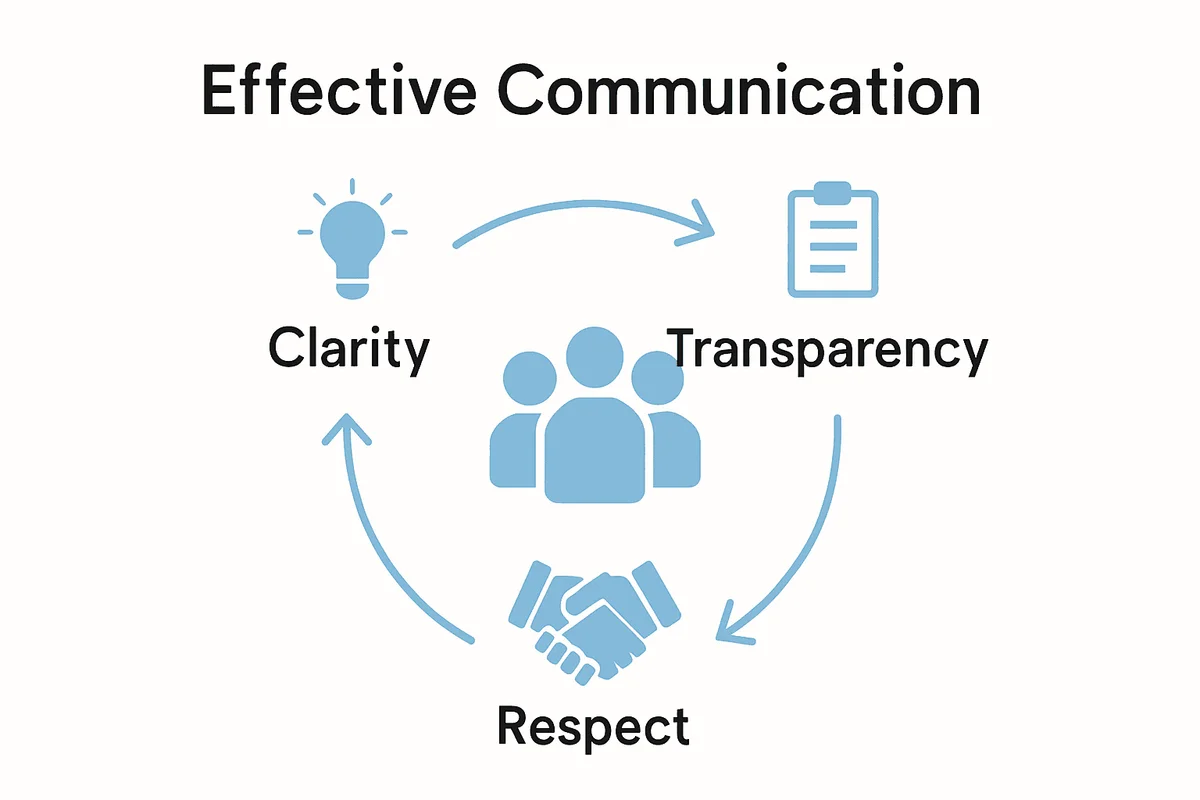
Interdisciplinary communication studies emphasize that these elements must be underpinned by mutual respect and transparent communication. Teams must create environments where members feel psychologically safe to share insights, challenge assumptions, and contribute meaningfully.
To implement these core workflow elements, organizations should develop strategies that promote teamwork by establishing clear communication protocols, investing in continuous learning, and creating feedback mechanisms that encourage open dialogue. The goal is not just information exchange, but building a cohesive, adaptive system that empowers teams to navigate complex challenges with agility and collective intelligence.
Integrating Tools for Seamless Collaboration
Innovative collaboration strategies have transformed how modern organizations approach team communication, emphasizing the critical role of technological integration in creating seamless workflow experiences. Selecting and implementing the right communication tools can dramatically enhance team productivity, reduce communication barriers, and foster a more connected work environment.
Key considerations for tool integration include:
- Compatibility: Ensuring tools work across different devices and platforms
- User Experience: Intuitive interfaces that minimize learning curves
- Security: Robust data protection and access management
- Scalability: Tools that can grow with organizational needs
Effective tool integration requires a strategic approach that goes beyond simple software selection. Communication channel research highlights the importance of matching communication tools to specific team needs, considering factors like message complexity, urgency, and team dynamics.
Modern collaboration platforms typically encompass multiple functionalities:
- Real-time messaging systems
- Video conferencing capabilities
- Project management dashboards
- Document sharing and collaborative editing
- Task tracking and workflow management
To improve team collaboration, organizations must adopt a holistic approach that combines technological tools with human-centric design principles. The goal is creating an integrated ecosystem that supports seamless communication, promotes transparency, and enables teams to work efficiently across different locations and time zones.
Common Mistakes and Optimization Tips
Internal communication research reveals that organizations frequently encounter systematic challenges that undermine effective team communication. Understanding and proactively addressing these common pitfalls can significantly enhance workflow efficiency and team collaboration.
Common Communication Workflow Mistakes:
-
Over-Communication
- Excessive emails and messages
- Redundant information sharing
- Notification fatigue
-
Channel Mismanagement
- Using inappropriate communication channels
- Inconsistent message routing
- Lack of communication protocol standards
-
Information Bottlenecks
- Hierarchical communication barriers
- Delayed decision-making processes
- Limited cross-departmental information flow
Communication channel studies highlight the risks associated with unstructured communication, particularly the potential for misinformation and reduced organizational transparency. Informal communication networks, while valuable, can inadvertently spread rumors and create communication distortions.
To foster teamwork and corporate collaboration, organizations must implement robust optimization strategies. This involves developing clear communication guidelines, training team members on effective communication techniques, leveraging technology strategically, and creating feedback mechanisms that continuously improve communication workflows. The ultimate goal is creating a dynamic, responsive communication ecosystem that balances structure with flexibility.
Elevate Your Team Communication with Engaging Interactive Solutions
The article highlights the importance of structured team communication workflows that build shared understanding, transparent interaction, and dynamic collaboration. Yet many teams struggle with communication bottlenecks, channel mismanagement, and fostering psychological safety. Your goal is to create a flexible, effective workflow that empowers every member while reducing misunderstandings and enhancing teamwork.

Unlock the potential of your team communication by combining these proven workflow principles with fun, interactive team-building activities. At quizado.com, you will find customizable quiz games designed to actively engage your team members and strengthen collaboration in both online and real-world settings. Our platform supports team configuration, branded experiences, and real-time remote control, making it easier to foster trust and open dialogue as emphasized in the guide. Visit quizado.com now to transform your team’s communication dynamics and create memorable, productive interactions.
Begin enhancing communication workflows with engaging solutions today at quizado.com and explore how improving team collaboration through interactive games can elevate your team’s performance.
Frequently Asked Questions
What is a team communication workflow?
A team communication workflow is a structured process that outlines how team members exchange information, collaborate, and coordinate efforts toward shared objectives. It ensures efficient and effective communication across different organizational levels and departments.
What are the key components of effective team communication workflows?
The key components include clear communication channels, shared understanding, and structured interaction protocols. These elements help promote mutual respect and transparency in team interactions.
How can organizations improve their team communication workflows?
Organizations can improve their communication workflows by developing clear communication guidelines, leveraging appropriate technological tools, creating feedback mechanisms, and fostering an open dialogue among team members.
What common mistakes do organizations make with team communication?
Common mistakes include over-communication, channel mismanagement, and information bottlenecks. Addressing these issues is crucial for enhancing workflow efficiency and reducing misunderstandings.
Host a quiz with your group
Find a hosting setup for your venue, company, classroom or activity group.

Bring your group together for a game
Try a free starter game, then choose the format and plan for your group.
Trusted by 5,000+ hosts