
In this post+
More than one in three American technology teams operate remotely, transforming how HR professionals build engagement and trust across digital platforms. The shift from traditional face-to-face collaboration to virtual team building means coordinators must rethink their strategies for fostering cohesion and productivity. This article explores practical, results-driven virtual approaches that strengthen remote teams and address the unique challenges technology organizations face.
Table of Contents
- Virtual Team Building Fundamentals Explained
- Types Of Virtual Team Building Activities
- Key Features Of Effective Virtual Engagement
- Impact On Communication And Productivity
- Risks And Common Mistakes To Avoid
- Comparing Virtual And In-Person Team Building
Key Takeaways
| Point | Details |
|---|---|
| Importance of Structured Engagement | Virtual team building requires intentional planning and consistent activities to cultivate trust and collaboration among remote team members. |
| Diverse Activity Types | Utilizing a variety of virtual team building activities can enhance communication, foster deeper connections, and improve overall team performance. |
| Technology Integration | Leveraging robust digital tools is essential for creating meaningful interactions that simulate in-person experiences and support effective collaboration. |
| Ongoing Process | Virtual team building should be viewed as a continuous effort, requiring regular check-ins and structured interactions to maintain team cohesion and engagement. |
Virtual team building fundamentals explained
Virtual team building represents a strategic approach to creating cohesion and collaboration among remote technology professionals. Unlike traditional in-person team development, virtual methodologies leverage digital platforms and interactive experiences to bridge geographical distances and create meaningful connections. Understanding daily team cooperation dynamics reveals that effective virtual interactions depend significantly on intentional leadership and structured engagement.
Successful virtual team building encompasses several core principles that transform digital interactions from transactional to transformational. Key elements include establishing clear communication channels, designing interactive online experiences, and creating opportunities for spontaneous social interaction. Technology companies require specialized approaches that recognize the unique challenges of remote collaboration, such as maintaining team spirit, encouraging knowledge sharing, and preventing professional isolation.
The most effective virtual team building strategies integrate multiple engagement techniques. These might include:
- Interactive online quiz experiences
- Structured digital problem solving sessions
- Virtual game-based learning activities
- Collaborative digital whiteboard workshops
- Regular video conference social meetups
Team leaders must recognize that virtual team building is not a one-time event but an ongoing process of relationship cultivation and trust development. Regular, structured interactions help remote teams develop the psychological safety necessary for authentic professional relationships.
Pro tip: Schedule short, weekly informal video meetups where team members can discuss non-work topics and build genuine personal connections.
Types of virtual team building activities
Virtual team building activities represent a critical strategy for maintaining team cohesion and engagement in modern technology organizations. Systematic literature reviews of virtual team interactions reveal multiple categories of activities designed to enhance communication, social interaction, and overall team performance. These activities range from quick connection builders to more complex collaborative experiences that address the unique challenges of remote work environments.
Technology companies can leverage different types of virtual team building activities strategically. These typically fall into several key categories:
- Connection Activities: Short, engaging exercises that help team members get to know each other
- Problem Solving Challenges: Collaborative digital tasks that require collective thinking
- Skill Development Sessions: Interactive workshops focused on professional growth
- Social Bonding Experiences: Informal gatherings designed to create personal connections
- Creative Collaboration Exercises: Activities that encourage innovative thinking and team creativity
The most effective virtual team building approaches recognize that different activities serve distinct purposes. Comprehensive research on remote team dynamics emphasizes the importance of designing activities that are authentic, structured, and supported by intuitive technology. Tech teams benefit most from activities that not only entertain but also build genuine professional relationships and enhance collaborative capabilities.
Successful virtual team building requires intentional design and consistent implementation. Leaders should rotate between different activity types, ensuring that team members experience varied interactions that address multiple aspects of team dynamics such as communication, trust, and collective problem solving.
Here's how different categories of virtual team building activities contribute to team outcomes:
| Activity Category | Main Objective | Typical Outcome |
|---|---|---|
| Connection Activities | Break the ice, build rapport | Faster team integration |
| Problem Solving Challenges | Foster collaboration skills | Improved group decision-making |
| Skill Development Sessions | Enhance professional abilities | Increased team expertise |
| Social Bonding Experiences | Deepen personal connections | Higher morale and retention |
| Creative Collaboration Exercises | Inspire innovation | More creative project solutions |
Pro tip: Create a quarterly rotation of virtual team building activities to maintain engagement and prevent predictability in your team interactions.
Key features of effective virtual engagement
Virtual team engagement requires a strategic approach that goes beyond simple digital communication. Interactive elements and high-quality digital tools are crucial in creating meaningful connections among remote team members. Modern technology companies must recognize that engagement is a multifaceted concept involving motivation, active participation, and personalized experiences that transcend traditional communication methods.
Effective virtual engagement encompasses several key features:
- Technological Infrastructure: Robust, user-friendly digital platforms
- Interactive Communication: Real-time collaboration tools
- Personalization: Tailored experiences that recognize individual team member preferences
- Continuous Learning: Opportunities for skill development and knowledge sharing
- Emotional Connection: Mechanisms that foster genuine interpersonal relationships
Immersive learning platforms demonstrate that team member presence and perceived effectiveness are intrinsically linked. Successful virtual engagement requires technologies that create a sense of connection, enable meaningful interactions, and simulate the richness of in-person collaboration. This means going beyond basic video conferencing to create environments that feel dynamic, responsive, and genuinely interactive.
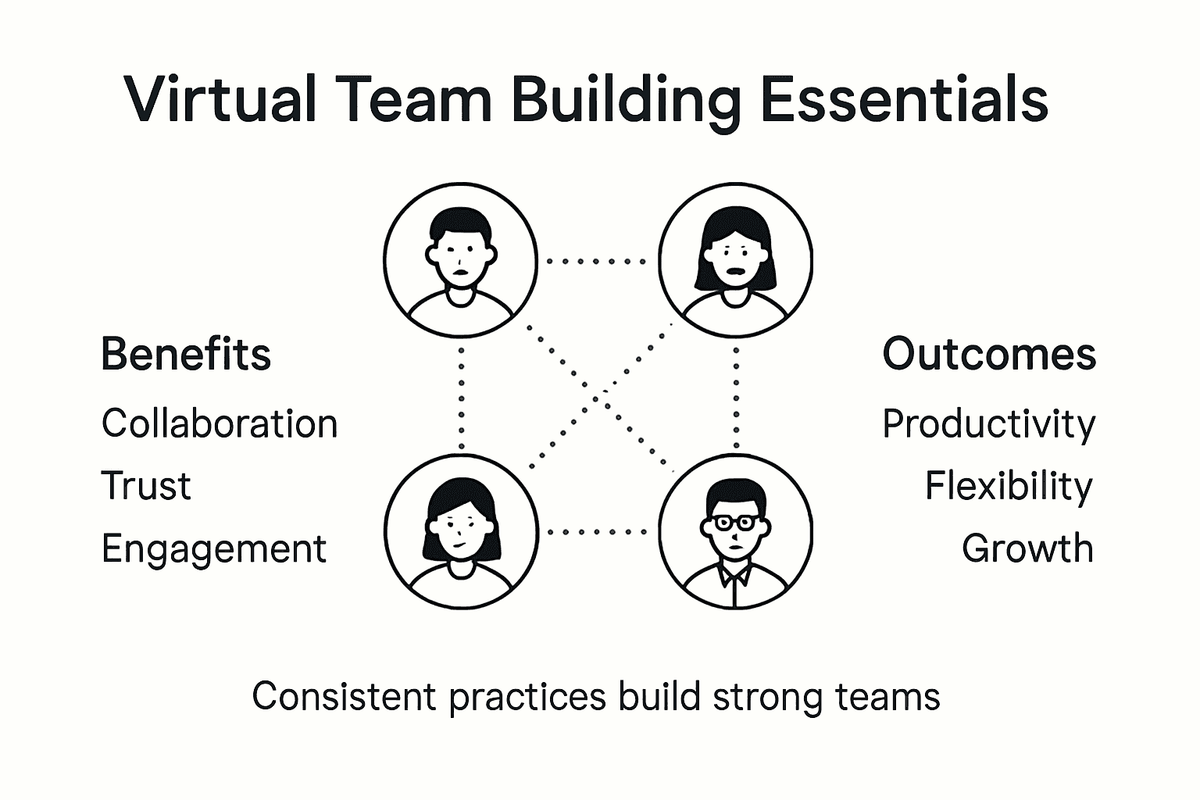
Leaders in technology organizations must intentionally design virtual engagement strategies that balance professional objectives with human connection. This involves selecting tools that are not just technologically advanced, but also intuitive, inclusive, and capable of adapting to diverse team communication styles and preferences.
Pro tip: Conduct quarterly technology audits to ensure your virtual engagement tools remain cutting-edge and aligned with your team's evolving communication needs.
Impact on communication and productivity
Virtual team building has profound implications for organizational communication and overall productivity. Empirical research on virtual team cooperation demonstrates that strategic leadership and intentional interaction significantly enhance team performance in remote work environments. The traditional boundaries of workplace communication are rapidly evolving, with technology enabling more dynamic and responsive collaborative approaches.
The impact on communication can be understood through several critical dimensions:
- Transparency: Enhanced visibility of team member contributions
- Frequency: More consistent and structured communication channels
- Quality: Deeper, more meaningful professional interactions
- Accessibility: Breaking down geographical communication barriers
- Inclusivity: Creating opportunities for all team members to participate equally
Productivity in virtual environments is not simply about maintaining existing work standards but reimagining how teams collaborate. Successful organizations recognize that communication is not a passive process but an active, strategic effort that requires continuous refinement. Technological tools and deliberate team-building strategies can transform potential communication challenges into opportunities for innovation and collective problem solving.

Leaders must approach virtual communication as a sophisticated ecosystem that requires ongoing investment, adaptability, and a commitment to understanding individual team member communication preferences. This means selecting tools that are not just technologically advanced, but also intuitive, inclusive, and capable of fostering genuine human connections across digital platforms.
Pro tip: Implement monthly communication audits to identify and address potential virtual interaction barriers within your team.
Risks and common mistakes to avoid
Critical challenges facing virtual teams reveal complex obstacles that can undermine team performance and collaboration. Technology companies must proactively identify and mitigate potential risks to ensure successful remote team dynamics. Understanding these challenges is the first step toward creating resilient and effective virtual work environments.
Key risks in virtual team environments include:
- Communication Breakdown: Misinterpretations due to lack of nonverbal cues
- Trust Erosion: Difficulty establishing genuine professional relationships
- Cultural Misunderstandings: Challenges arising from diverse global team compositions
- Technical Complexity: Inconsistent technological infrastructure
- Motivation Challenges: Reduced team engagement and connection
Research on virtual team challenges highlights that common mistakes often stem from leadership approaches and communication strategies. Micromanagement, unclear delegation processes, and neglecting team cohesion can significantly undermine virtual team effectiveness. Successful organizations recognize these risks as opportunities for intentional intervention and strategic team-building approaches.
Mitigating risks requires a holistic approach that combines technological solutions, leadership training, and cultural sensitivity. Technology companies must develop comprehensive strategies that address both technical and human elements of virtual collaboration. This involves creating clear communication protocols, investing in robust digital infrastructure, and fostering a culture of trust and mutual understanding.
Below is a side-by-side look at common risks and their mitigation strategies in virtual teams:
| Common Risk | Impact if Not Addressed | Mitigation Strategy |
|---|---|---|
| Communication Breakdown | Frequent misunderstandings | Set clear digital protocols |
| Trust Erosion | Reduced collaboration | Schedule regular check-ins |
| Technical Complexity | Work disruptions | Invest in robust platforms |
| Cultural Misunderstandings | Team tension | Provide intercultural training |
| Motivation Challenges | Lower engagement | Plan diverse engagement activities |
Pro tip: Conduct quarterly virtual team health assessments to proactively identify and address potential communication and collaboration challenges.
Comparing virtual and in-person team building
Comparative research on team interaction formats reveals nuanced differences between virtual and in-person team building approaches. While both methodologies aim to enhance team cohesion and collaboration, they leverage distinctly different interaction mechanisms. Understanding these differences is crucial for technology companies seeking to optimize team performance across various engagement platforms.
Key comparative dimensions include:
- Interaction Dynamics
- Virtual: Structured, intentional engagement
- In-person: More spontaneous, organic interactions
- Communication Depth
- Virtual: Precise, task-oriented communication
- In-person: Richer, nonverbal communication channels
- Flexibility
- Virtual: Global accessibility, time zone independence
- In-person: Limited by physical proximity
- Resource Requirements
- Virtual: Lower logistical costs
- In-person: Higher travel and venue expenses
Pandemic-era team dynamics research demonstrates that both virtual and in-person team building have unique strengths. In-person interactions typically generate stronger perceived team culture and leadership connections, while virtual environments offer unparalleled accessibility and inclusive participation opportunities. Successful organizations increasingly adopt hybrid approaches that blend the best elements of both interaction models.
Effective team building transcends the physical or digital medium. The core principle remains consistent: creating meaningful connections, fostering trust, and aligning team members toward shared objectives. Technology companies must design intentional experiences that overcome format limitations and create genuine human connections.
Pro tip: Design team building experiences that intentionally blend virtual and in-person elements to maximize engagement and accessibility.
Elevate Your Tech Team's Virtual Collaboration with Custom Interactive Games
Virtual team building is no longer just an option but a necessity for overcoming challenges like communication breakdowns, motivation dips, and trust erosion in remote tech teams. The article highlights how structured engagement and creative collaboration exercises foster stronger connections and boost productivity. However, creating these meaningful, tailored experiences can be complex and time-consuming without the right tools.
At Quizado, we understand these unique pain points faced by technology companies. Our customizable quiz platform lets you transform virtual team building into an engaging and interactive experience inspired by popular game shows. With features like personalized branding, team configuration, and smartphone remote control, you can craft authentic connection and problem-solving sessions that resonate with your team's culture and preferences.

Discover how simple it is to enhance your remote team's cohesion and communication today. Visit Quizado's homepage to explore customizable quiz games and start elevating your virtual team engagement now. Don't wait to turn team challenges into opportunities for fun and collaboration.
Frequently Asked Questions
What are the benefits of virtual team building for tech companies?
Virtual team building helps tech companies enhance communication, foster collaboration, and build trust among team members, which ultimately improves overall productivity and job satisfaction.
How can virtual team building activities improve employee engagement?
By incorporating interactive and social elements into virtual team building activities, companies create opportunities for employees to connect personally, reducing feelings of isolation and increasing morale.
What types of activities are effective for virtual team building?
Effective virtual team building activities can include online quizzes, digital problem-solving challenges, virtual games, collaborative workshops, and regular informal video meetups to encourage interaction and collaboration.
How can leaders ensure successful virtual team building?
Leaders can ensure success by establishing clear communication channels, regularly scheduling team interactions, using user-friendly technology, and rotating activity types to keep engagement high and cater to different team dynamics.
Recommended
Turn these ideas into a team event
Prepare an office quiz or remote game with a shared screen, phone participation and a host on your team.