How to Foster Team Communication for Trivia Nights Success
Hosting trivia nights often means juggling personalities, skill sets, and fast-paced teamwork in venues from New York to Sydney. For event coordinators, understanding how team members interact is the first step toward transforming random groups into high-performing trivia powerhouses. By assessing team dynamics and needs, you set the stage for collaboration, engagement, and flawless event flow, making every trivia night memorable for staff and players alike.
Table of Contents
- Step 1: Assess Team Dynamics And Needs
- Step 2: Set Up The Right Communication Tools
- Step 3: Establish Clear Team Roles And Rules
- Step 4: Facilitate Interactive Group Activities
- Step 5: Review Outcomes And Refine Strategies
Quick Summary
| Key Point | Explanation |
|---|---|
| 1. Assess Team Dynamics | Understand communication styles and strengths within the team to maximize collaboration. |
| 2. Choose Communication Tools | Implement user-friendly tools for smooth team interaction and information sharing during trivia nights. |
| 3. Define Team Roles Clearly | Clearly established roles enhance psychological safety and accountability, improving overall team performance. |
| 4. Facilitate Interactive Activities | Engaging group activities build chemistry, ensuring everyone contributes to the team's collaborative success. |
| 5. Conduct Regular Performance Reviews | Establish a structured review process post-event for continuous improvement and adaptive strategies. |
Step 1: Assess team dynamics and needs
Successful trivia nights require understanding the unique composition and interaction patterns of your team. By strategically assessing team dynamics and needs, you'll create an environment that maximizes collaboration and performance.
To effectively evaluate your team's potential, start by conducting a comprehensive assessment that goes beyond surface-level interactions. Team performance research indicates that understanding how team members combine their efforts is crucial for innovation and collaboration. This process involves several key steps:
- Observe individual communication styles
- Identify each member's strengths and potential contributions
- Recognize how different personalities interact within the group
Begin by scheduling an informal team meeting where members can discuss their expectations, preferences, and potential challenges. During this session, pay attention to:
- How team members communicate with each other
- Their comfort levels with different types of trivia questions
- Natural leadership and support dynamics
Team effectiveness hinges on clear roles, open communication, and a collaborative culture.
Carefully document your observations and look for patterns in team interactions. The goal is to create a balanced team where each member feels valued and understands their role in achieving trivia night success.
Pro tip: Conduct a quick team personality assessment using free online tools to gain deeper insights into individual communication styles and potential team synergies.
Step 2: Set up the right communication tools
Establishing effective communication tools is critical for creating a seamless and engaging trivia night experience. Your goal is to select platforms that enable smooth team interaction and information sharing while keeping the event fun and dynamic.
Social network communication analysis suggests that choosing communication tools tailored to your team's specific needs can dramatically improve interaction quality. For trivia nights, this means selecting tools that are both accessible and user-friendly. Consider implementing the following communication strategies:
- Dedicated team messaging app
- Group chat platform with notification features
- Shared digital workspace for planning
- Cloud-based document sharing system
Start by evaluating your team's technical comfort level and technological resources. Some key considerations include:
- Ease of use for all team members
- Cross-platform compatibility
- Cost-effectiveness
- Security and privacy features
Standardized communication tools reduce misunderstandings and enhance team coordination.
When selecting your communication platform, prioritize tools that allow real-time messaging, file sharing, and easy group coordination. Ensure every team member can access and use the chosen platform comfortably.
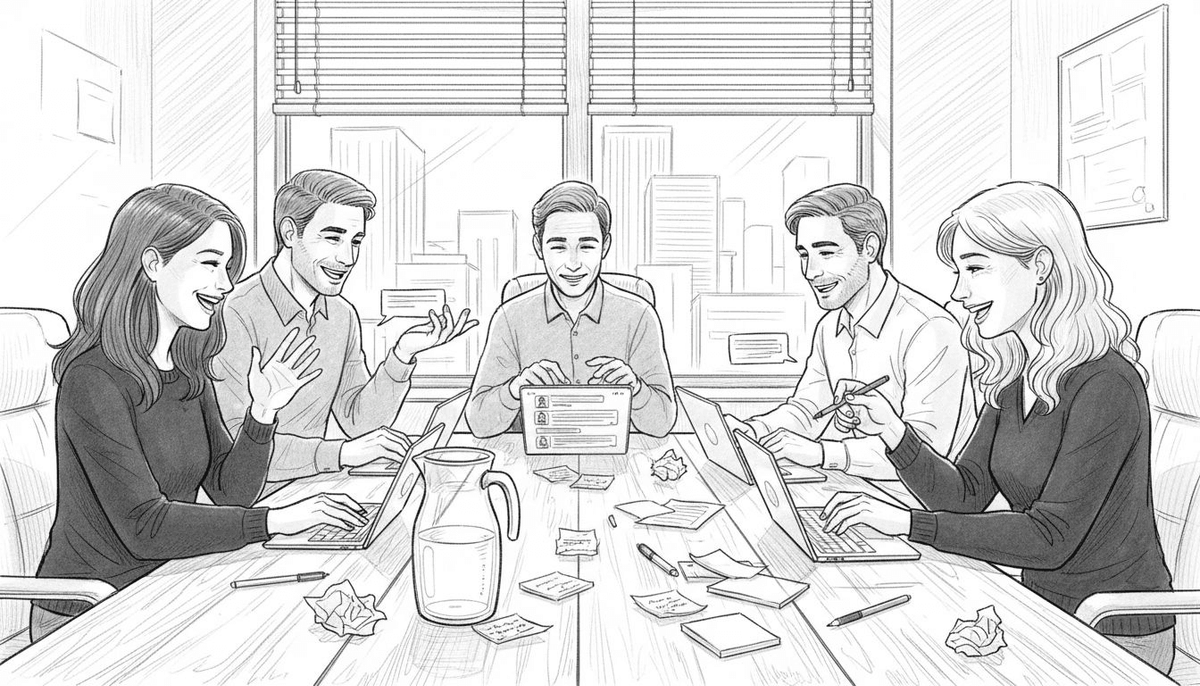
Pro tip: Schedule a brief training session to familiarize team members with the new communication tools and address any potential technical challenges upfront.
Step 3: Establish clear team roles and rules
Building a successful trivia team requires more than just assembling talented players. You need a structured approach that defines each member's responsibilities and establishes ground rules for smooth collaboration.
Team collaboration research demonstrates that clearly defined roles are crucial for creating psychological safety and reducing team conflicts. For your trivia night squad, this means creating a deliberate structure that leverages each player's unique strengths.
Consider assigning the following core roles:
Here's a summary of essential trivia team roles and how they impact team performance:
| Role | Primary Responsibility | Team Impact |
|---|---|---|
| Team Captain | Guides strategy and decisions | Ensures unity and focus |
| Research Specialist | Prepares key topics and facts | Adds depth to knowledge pool |
| Communication Coordinator | Manages updates and messaging | Streamlines team coordination |
| Morale Booster | Encourages and energizes group | Sustains team motivation |
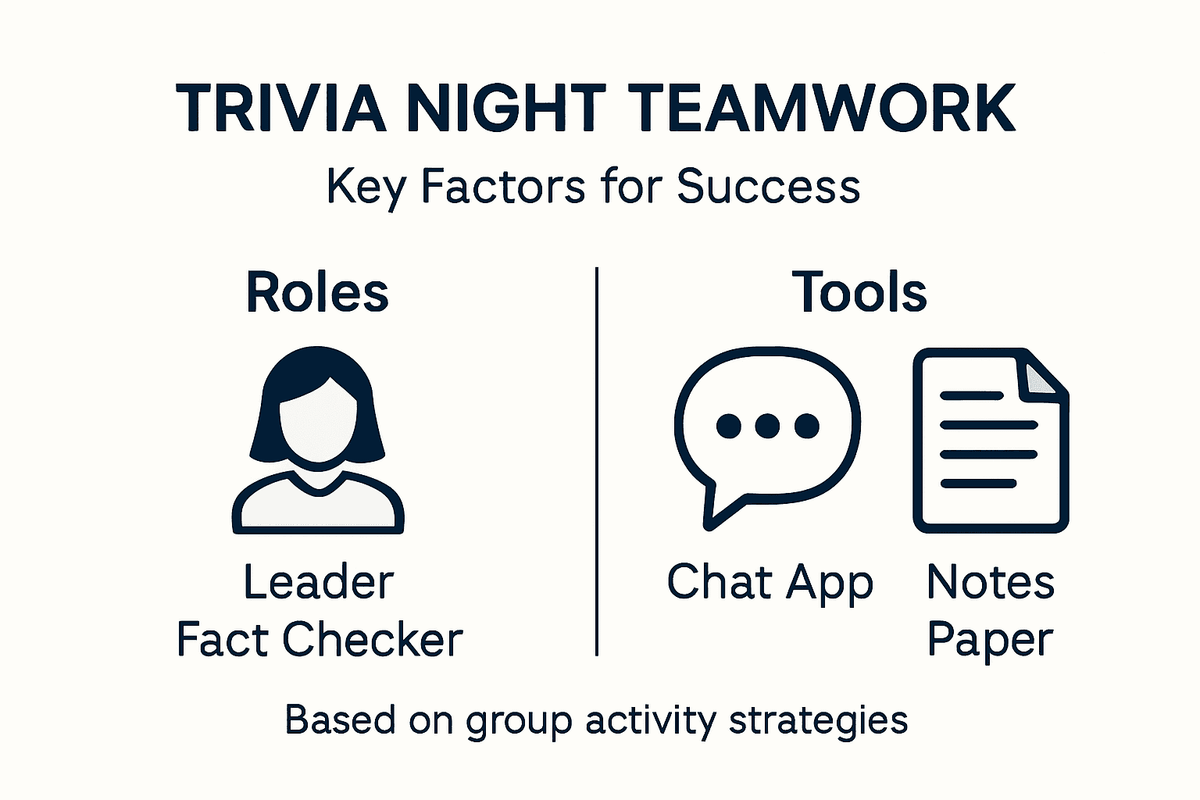
- Team Captain: Overall strategy and final decision maker
- Research Specialist: Responsible for pre-event topic preparation
- Communication Coordinator: Manages team messaging and updates
- Morale Booster: Keeps team energy and motivation high
When defining these roles, focus on:
- Individual strengths and interests
- Complementary skill sets
- Balanced workload distribution
- Mutual accountability
Effective teams establish clear expectations that create a shared understanding of responsibilities.
Develop a team agreement that outlines expectations, communication protocols, and performance standards. This document should be collaborative, allowing each member to provide input and feel ownership of the team's approach.
Pro tip: Create a rotating role system to prevent burnout and give every team member an opportunity to develop different leadership skills.
Step 4: Facilitate interactive group activities
Building team chemistry and engagement requires more than passive interactions. Your goal is to create dynamic, participatory experiences that transform your trivia team from a collection of individuals into a cohesive unit.
Research on team cohesion demonstrates that intentional interactive activities can dramatically improve team synchrony and performance. These activities should challenge, entertain, and ultimately unite your team in unexpected and exciting ways.
Consider implementing these interactive group strategies:
- Pre-trivia practice quizzes
- Team problem-solving challenges
- Collaborative learning sessions
- Rotating leadership mini-challenges
- Skill-sharing workshops
When designing these activities, focus on:
- Creating a safe, supportive environment
- Ensuring equal participation
- Making activities genuinely enjoyable
- Connecting activities to trivia night skills
Successful team activities transform individual talents into collective strength.
Design activities that reveal and celebrate each member's unique contributions. This approach helps build mutual respect and understanding, critical components of team success.
Pro tip: Rotate activity leaders to ensure everyone gets a chance to design and facilitate group experiences, which increases team investment and engagement.
Step 5: Review outcomes and refine strategies
After each trivia night, your team needs a structured approach to evaluating performance, learning from experiences, and continuously improving your collaborative skills. Systematic review processes transform good teams into exceptional ones.
Collaborative team dynamics research emphasizes that ongoing assessment enables teams to enhance communication and strategic approaches. Your review should be comprehensive yet constructive, focusing on growth rather than criticism.
Implement a structured review process that includes:
- Quantitative performance metrics
- Qualitative team feedback
- Individual and collective insights
- Specific improvement recommendations
Conduct your review through these key steps:
Consider how each team review method contributes to ongoing improvement:
| Review Method | Purpose | Benefit to Team |
|---|---|---|
| Quantitative Metrics | Track scores, speed, accuracy | Objective insight into progress |
| Qualitative Feedback | Gather opinions and feelings | Detect morale or process issues |
| Group Analysis | Identify what worked or failed | Drive targeted improvements |
| Action Planning | Turn insights into changes | Supports adaptive learning |
- Collect individual team member perspectives
- Analyze trivia night performance data
- Identify strengths and improvement areas
- Develop actionable strategy adjustments
Continuous reflection transforms team potential into actual performance.
Document your review findings and create a clear action plan for implementing improvements. This approach ensures your team remains adaptive and progressive.
Pro tip: Schedule your review meeting within 48 hours of the trivia night while memories and impressions are still fresh and insights are most valuable.
Elevate Your Trivia Team Communication with Quizado
Building strong team communication and clearly defined roles are vital to trivia night success. If your team struggles with coordination or finding the right engagement tools, Quizado offers the perfect solution to bring your team together with professional-grade game show software. From the intuitive smartphone-based buzzer system to customizable visuals, Quizado helps teams focus on collaboration and fun without technical distractions.
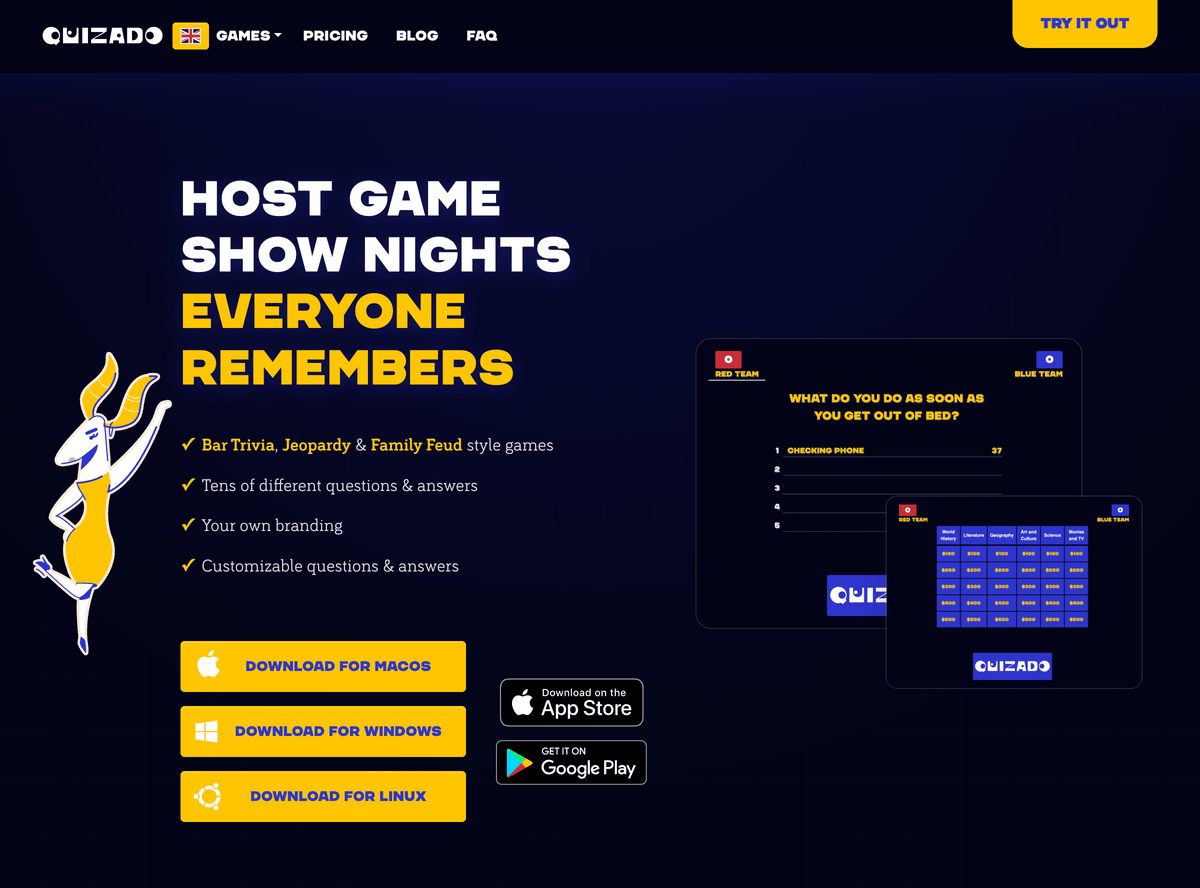
Take your trivia events to the next level today by transforming any venue into an immersive game show experience. Discover how easy it is to set up, manage multiple teams, and foster real-time interaction with Quizado’s server-run platform. Don’t let communication challenges hold your team back. Explore Quizado’s full features and get started with a free test version that fits your team’s needs now.
Frequently Asked Questions
How can I assess my trivia team's communication styles?
To assess your trivia team's communication styles, start by observing how team members interact during discussions. Schedule an informal meeting where everyone shares their preferences and comfort levels regarding different types of trivia questions. Document your observations to identify patterns.
What communication tools are best for trivia nights?
Choose communication tools that are user-friendly and accessible to all team members. Consider dedicated messaging apps, group chat platforms, and shared digital workspaces to facilitate real-time communication and information sharing. Evaluate their ease of use and ensure everyone can access them comfortably.
How do I establish clear roles for my trivia team?
Establishing clear roles involves understanding each member's strengths and interests. Define responsibilities such as Team Captain, Research Specialist, and Communication Coordinator based on individual skills, ensuring balanced workloads and mutual accountability. Develop a team agreement outlining these roles.
What interactive activities can boost team cohesion?
Implement interactive group activities like pre-trivia practice quizzes and team problem-solving challenges to boost cohesion. These activities should encourage participation and foster a supportive environment, ultimately transforming individual talents into collective strengths.
How should my team review performance after trivia nights?
Conduct a structured review of your trivia night performance by collecting both quantitative metrics and qualitative feedback. Analyze team insights and identify strengths and areas for improvement, then develop an action plan to implement necessary adjustments. Schedule this review within 48 hours of the event for optimal discussion.
Host a quiz with your group
Find a hosting setup for your venue, company, classroom or activity group.
Bring your group together for a game
Try a free starter game, then choose the format and plan for your group.
Trusted by 5,000+ hosts