Why upgrade trivia formats for higher engagement in 2026
Most event organizers assume their trivia nights fail because guests aren't interested in trivia. The real problem? Traditional formats feel stale, exclude casual players, and lack the interactive energy modern audiences expect. Upgrading trivia formats with gamification mechanics, balanced content, and smart technology transforms slow nights into packed events. When you replace predictable pen-and-paper rounds with dynamic game show experiences, wireless buzzers, and tiered challenges, participation soars. This shift doesn't just entertain, it builds community, drives repeat attendance, and turns skeptical guests into enthusiastic regulars who bring friends.
Table of Contents
- Why Traditional Trivia Formats Often Fall Short
- How Gamification And Upgraded Mechanics Boost Engagement
- Jeopardy-Style Trivia And Technology Innovations That Enhance Interaction
- Implementing Upgraded Trivia Formats: Practical Tips For Event Organizers
- Boost Your Events With Expert Trivia Solutions
- Frequently Asked Questions About Upgrading Trivia Formats
Key takeaways
| Point | Details |
|---|---|
| Gamification drives retention | Challenges, rewards, and leaderboards tap into competitive instincts and boost satisfaction scores. |
| Balanced content matters | Smart easy questions engage novices and experts alike, sparking discussion without alienating anyone. |
| Technology enhances fairness | Wireless buzzers eliminate disputes, speed up gameplay, and keep every participant actively involved. |
| Skilled hosts transform events | Pacing, tone, and psychological safety controlled by hosts determine whether guests feel welcomed or excluded. |
Why traditional trivia formats often fall short
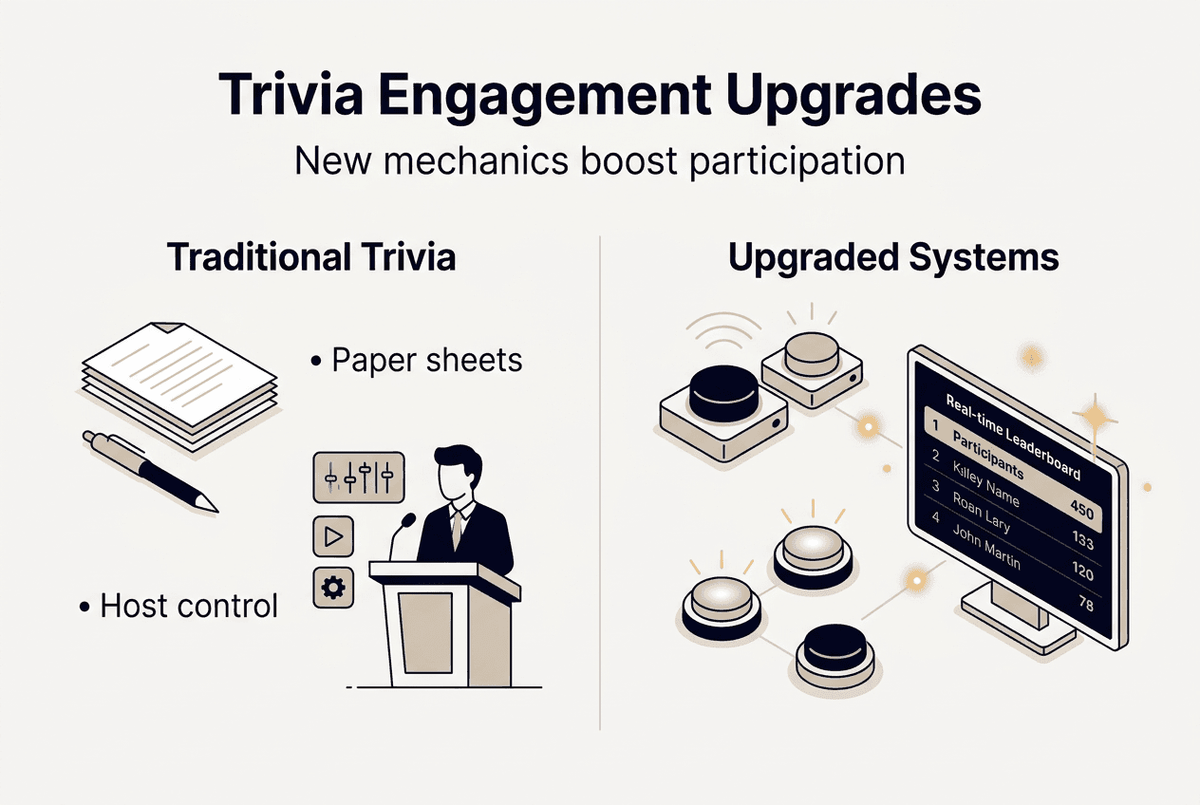
Traditional trivia nights follow a predictable script: teams huddle around paper answer sheets, a host reads questions aloud, and rounds drag on while volunteers tally scores. This format worked decades ago, but modern guests crave interaction and instant feedback. Many attendees find these events boring because they lack dynamic pacing and visual engagement. When questions favor niche knowledge, casual players disengage quickly, feeling outmatched by trivia experts who dominate every round.
Not everyone feels comfortable volunteering answers in front of a crowd. Introverted guests or newcomers often sit silently, watching a few vocal participants control the game. This exclusion problem compounds when hosts fail to manage group dynamics or create welcoming atmospheres. Poor hosting kills energy, turning what should be a lively social experience into an awkward waiting game. Traditional trivia team building isn't for everybody, especially when formats ignore participant comfort levels and engagement preferences.
Question difficulty balance poses another challenge. Too easy, and experts lose interest. Too hard, and beginners feel stupid. Traditional formats rarely calibrate content to match diverse audience knowledge, leading to frustration on both ends. Without clear game mechanics or visual cues, participants struggle to understand scoring systems or how their performance stacks up against competitors. This opacity reduces motivation and makes the experience feel arbitrary rather than rewarding.
Venue managers notice these issues reflected in attendance numbers. When trivia nights feel like homework instead of entertainment, guests stop showing up. The solution isn't abandoning trivia, it's upgrading the format to address these engagement gaps systematically. Modern approaches to corporate trivia events emphasize engagement and offline reliability, proving that thoughtful format redesign revitalizes this classic event type.
Key shortcomings of traditional trivia:
- Slow pacing with long gaps between questions and feedback
- Limited participant involvement beyond writing answers
- Unclear scoring and game progression
- Content that alienates either casual players or serious enthusiasts
- Hosts who lack training in energy management and inclusion
"The biggest mistake event organizers make is assuming trivia engagement depends solely on question quality. Format design, technology integration, and host skill matter just as much."
How gamification and upgraded mechanics boost engagement
Gamification transforms passive trivia into active competition by introducing challenges, rewards, and social dynamics that motivate participants. The human brain responds positively to challenges, rewards, and social competition, all of which gamification taps into naturally. When you layer points, badges, or leaderboards onto trivia rounds, guests shift from casual observers to invested competitors tracking their progress against peers. This psychological shift increases focus, effort, and enjoyment throughout the event.

Clear game mechanics replace confusion with engagement. Instead of vague instructions, upgraded formats define exactly how points accumulate, when bonuses apply, and what actions earn rewards. Participants understand their role immediately, reducing friction and allowing them to jump in confidently. Tiered reward systems keep both high performers and struggling teams motivated by offering multiple achievement levels. A team finishing last can still celebrate earning a comeback bonus or nailing a difficult category, maintaining morale across all skill levels.
Gamified events see improved retention rates and more enthusiastic participation, which leads to higher satisfaction scores and better networking outcomes. When guests enjoy themselves, they return and bring friends. Gamified trivia formats can raise attendance, and social media mentions and word-of-mouth referrals often rise with it. The competitive element sparks conversation, breaks ice between strangers, and creates shared experiences that bond participants.
Structured gameplay ensures smooth pacing by defining round lengths, question counts, and break intervals upfront. This predictability helps hosts manage time effectively while keeping energy high. Interactive elements like live scoreboards, countdown timers, and sound effects add theatrical flair that traditional formats lack. These touches transform a simple quiz into a memorable show that guests talk about long after leaving.
Core gamification elements for trivia:
- Point systems with multipliers - Base points plus bonuses for speed, accuracy streaks, or category mastery
- Visual leaderboards - Real-time standings displayed prominently so teams track their position
- Achievement unlocks - Badges or titles earned for specific accomplishments beyond raw scores
- Team vs. team dynamics - Social competition that encourages collaboration within groups
- Timed challenges - Urgency that heightens focus and excitement
Diverse participant involvement becomes possible when game mechanics accommodate different play styles. Some guests excel at fast buzzer reflexes, others at collaborative strategy discussions. Upgraded formats create space for both by mixing rapid-fire rounds with deliberation periods. This variety ensures everyone contributes meaningfully rather than watching a few dominant players control outcomes.
Pro Tip: Introduce a wildcard round where teams can wager points on their confidence level before seeing questions. This risk-reward mechanic adds drama and lets trailing teams make strategic comebacks, keeping suspense alive until the final question.
"Gamification isn't about making trivia childish. It's about making engagement visible, progress tangible, and competition fun. When participants see their impact on the scoreboard immediately, they invest more energy into every question."
The benefits of team-based games in workplace settings extend beyond entertainment, fostering collaboration skills and breaking down departmental silos through friendly competition.
Jeopardy-style trivia and technology innovations that enhance interaction
Jeopardy-style trivia, when well-executed, fosters higher engagement in corporate events compared to traditional team-building activities. The format's success stems from combining familiar game show structure with strategic choice. Contestants select questions by category and difficulty, creating agency that passive formats deny. This control empowers participants, making them active architects of their experience rather than passive recipients of random questions.
Wireless buzzers revolutionize answer mechanics by eliminating the chaos of shouted responses or raised hands. The use of wireless buzzers in trivia games significantly enhances engagement by providing a clean and fair mechanism for answering questions. When every participant holds a buzzer, everyone has equal opportunity to respond first. This technology removes host bias, speeds up gameplay, and adds physical interaction that keeps energy high. The satisfying click of a buzzer and instant lockout of competitors creates micro-moments of triumph that traditional formats miss entirely.
Content balance determines whether upgraded formats succeed or flop. Smart easy questions, those requiring thought but accessible to most adults, form the sweet spot. These prompts stimulate discussion without alienating casual players or boring experts. A question like "Which planet is closest to the sun?" is too simple, but "Which element's atomic number equals the number of letters in its name?" engages multiple knowledge levels. The best trivia content mixes pop culture, history, science, and wordplay so every participant contributes expertise from different domains.
| Format Element | Traditional Trivia | Jeopardy-Style Upgrade |
|---|---|---|
| Question Selection | Host-controlled sequence | Player-chosen categories and values |
| Answer Method | Written or shouted | Wireless buzzer system |
| Scoring Visibility | Announced periodically | Live leaderboard updates |
| Pacing Control | Variable, often slow | Structured rounds with timers |
| Participant Agency | Low, passive listening | High, strategic choices |
The host's role is critical because they control the pace, tone, and psychological safety of the game. A skilled host reads the room, adjusting difficulty on the fly and celebrating small wins to keep morale high. They manage trash talk to keep it playful rather than mean, ensuring introverted guests feel safe participating. Poor hosts rush through questions, ignore struggling teams, or let dominant personalities monopolize attention. Great hosts orchestrate an inclusive experience where everyone feels valued regardless of trivia prowess.
Technology integration extends beyond buzzers to encompass projection systems, sound effects, and automated scoring. When questions appear on large screens with vibrant graphics, the event feels professional and polished. Sound cues signal correct answers, time warnings, and round transitions, creating rhythm that guides participant attention. Automated scoring eliminates calculation errors and speeds up transitions between rounds, maintaining momentum that traditional paper-based systems kill.
Pro Tip: Implement a Daily Double mechanic where teams can wager accumulated points before seeing a question. This gambling element injects suspense and allows strategic risk-taking that makes comebacks possible, keeping all teams engaged even when trailing.
The Jeopardy game format for team building demonstrates how familiar game show structures translate effectively to corporate and venue settings when supported by appropriate technology and skilled facilitation.
Implementing upgraded trivia formats: practical tips for event organizers
Successful implementation starts with defining clear goals. Are you maximizing attendance on slow Tuesdays? Building team cohesion at a corporate retreat? Driving bar revenue through repeat visits? Your objectives shape every subsequent decision about format, content, and promotion. Write down specific, measurable targets like "increase Tuesday attendance by 30%" or "achieve 4.5+ satisfaction ratings" so you can evaluate success objectively.
Choosing the right format and mechanics requires matching your audience and venue constraints:
- Assess your space - Large venues support team-based formats with multiple groups, while intimate settings work better for individual play or smaller team sizes
- Know your crowd - Corporate audiences appreciate structured competition, bar crowds prefer casual, drop-in formats
- Consider timing - Weeknight events need faster pacing (90 minutes max) than weekend showcases that can run longer
- Budget technology wisely - Wireless buzzers and projection enhance experience but aren't mandatory for every venue
- Test before committing - Run a pilot event with your chosen format to identify friction points before promoting widely
Recruiting and training skilled hosts makes or breaks upgraded trivia events. The host's role is critical because they control the pace, tone, and psychological safety of the game. Look for individuals with public speaking confidence, quick wit, and genuine enthusiasm for creating inclusive experiences. Train them on your specific format mechanics, scoring systems, and technology operation. Role-play scenarios like handling disputes, managing dominant personalities, and recovering from technical glitches so hosts feel prepared for anything.
Technology incorporation should enhance rather than complicate your events. Start simple with core upgrades that deliver maximum impact:
- Wireless buzzer systems for fair, fast answer collection
- Projection or large displays for question visibility and leaderboards
- Sound systems that ensure every participant hears clearly
- Backup power and a mobile hotspot for venues with unreliable WiFi
Avoid over-engineering with apps or platforms that require extensive participant onboarding. The best technology disappears into the background, working seamlessly without drawing attention to itself. Guests should focus on competition and camaraderie, not troubleshooting connection issues.
Promotion determines whether your upgraded format reaches its attendance potential. Leverage multiple channels:
- Social media posts highlighting unique format features and past event photos
- Email campaigns to existing customer lists with early registration incentives
- In-venue signage and staff mentions during regular service
- Partnerships with local businesses or organizations for cross-promotion
- Referral bonuses encouraging attendees to bring friends
Emphasize what makes your trivia different. Don't just announce "Trivia Night Tuesday." Promote "Live Jeopardy Showdown with Wireless Buzzers and Cash Prizes" to communicate the upgraded experience clearly.
Gathering feedback and iterating continuously improves your events over time. Distribute brief surveys after each session asking about format enjoyment, content difficulty, host performance, and likelihood to return. Track attendance trends and revenue impact to quantify success. Adjust question difficulty, round structure, or technology based on participant input. The most successful event organizers treat trivia as an evolving product, refining based on data rather than assumptions.
Pro Tip: Create a signature round unique to your venue, like local history questions or inside jokes about regular customers. This customization builds community identity and gives guests reasons to choose your event over competitors.
Exploring examples of corporate event games for teams provides additional format inspiration and demonstrates how upgraded mechanics translate across different event contexts and audience types.
Boost your events with expert trivia solutions
Upgrading trivia formats requires careful planning, technology investment, and skilled facilitation that many event organizers lack time to develop in-house. Professional trivia solutions eliminate these barriers by providing ready-made game show experiences, wireless buzzer systems, and expert hosting that transform your events immediately. Instead of spending months testing formats and training staff, you access proven systems designed specifically for bars, corporate events, and private gatherings.
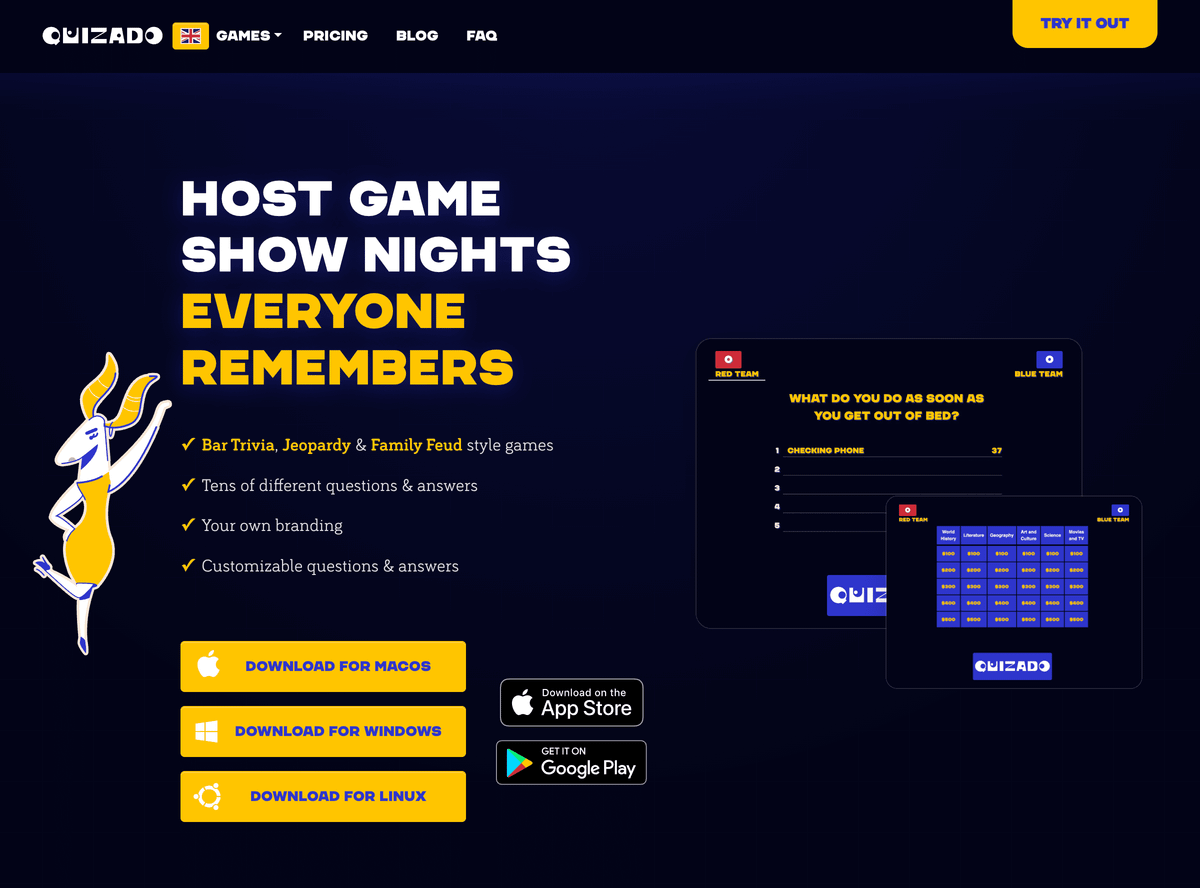
Expert hosts bring energy, polish, and crowd management skills that elevate amateur efforts into memorable experiences. They handle technical details, adapt to your audience in real time, and ensure every participant feels included regardless of trivia knowledge. This professional touch drives higher satisfaction scores and repeat attendance that justify the investment. When you partner with professional trivia solutions, you gain access to extensive question libraries, customizable Jeopardy game formats for team building, and technology that works reliably even in challenging venue conditions. Explore corporate event game examples to see how upgraded formats drive engagement across diverse settings and audience types.
Frequently asked questions about upgrading trivia formats
What makes upgraded trivia formats more engaging than traditional ones?
Upgraded formats incorporate gamification mechanics like points, leaderboards, and timed challenges that tap into competitive instincts and provide instant feedback. Wireless buzzers and visual displays add interactive elements missing from paper-based games. Strategic choice, where participants select questions by category and difficulty, creates agency that passive formats lack, keeping everyone mentally invested throughout the event.
How do wireless buzzers improve the trivia experience?
Wireless buzzers eliminate disputes about who answered first by providing objective, instant lockout of other contestants. They speed up gameplay dramatically compared to raised hands or shouted responses, maintaining energy and momentum. Every participant holds equal opportunity to respond, removing host bias and ensuring introverted guests can compete fairly without needing to be loudest or most assertive in the room.
What role does the host play in upgraded trivia events?
Hosts control pacing, manage tone, and create psychological safety that determines whether guests feel welcomed or excluded. Skilled hosts read the room and adjust difficulty on the fly, celebrate small wins to maintain morale, and manage competitive banter to keep it playful rather than hostile. They orchestrate smooth technology operation and handle disputes diplomatically, ensuring the event runs professionally regardless of unexpected challenges.
Can upgraded trivia formats work for all event sizes?
Yes, but implementation varies by scale. Intimate gatherings of 10 to 20 people work well with individual play or small teams using basic buzzer systems. Large corporate events with 100+ participants benefit from multi-team formats, projection systems, and professional hosting. The core principles of gamification, balanced content, and interactive technology scale effectively across sizes when you match mechanics and equipment to your specific venue capacity and audience composition.
How to measure success after implementing new trivia formats?
Track quantitative metrics like attendance numbers, repeat visitor rates, revenue per event, and social media engagement. Gather qualitative feedback through post-event surveys asking about format enjoyment, content difficulty, and likelihood to recommend. Compare these metrics against baseline data from traditional formats to calculate improvement percentages. Successful upgrades typically show higher attendance and better satisfaction scores within a few months of implementation.
Recommended
Host a quiz with your group
Find a hosting setup for your venue, company, classroom or activity group.

Bring your group together for a game
Try a free starter game, then choose the format and plan for your group.
Trusted by 5,000+ hosts