In this post+
Many bar and restaurant managers assume interactive game hosting means expensive tech setups or complicated installations. Actually, it's a straightforward software solution that turns smartphones into game controllers for trivia nights. This misunderstanding keeps venues stuck with declining midweek traffic when they could be packing houses. Interactive game hosting offers bars and restaurants a proven way to boost customer engagement, increase dwell time, and drive revenue on traditionally slow nights without the hassle of traditional hosted events.
Table of Contents
- Understanding Interactive Game Hosting: What It Is And How It Works
- Benefits Of Interactive Game Hosting For Bars And Restaurants
- Interactive Game Hosting Versus Traditional Hosted Events: A Comparison
- Practical Steps To Implement Interactive Game Hosting In Your Venue
- Explore Interactive Game Hosting Options With Quizado
- What Is Interactive Game Hosting?
Key takeaways
| Point | Details |
|---|---|
| Real-time gameplay | Interactive game hosting enables real-time trivia games using software where clients' devices connect to a central server |
| Revenue impact | Venues can see higher per-customer spending and increased midweek traffic through engaging trivia experiences |
| Cost savings | Non-hosted platforms often cost less than traditional hosted events while offering more scheduling flexibility |
| Engagement features | Live leaderboards, smartphone-based play, and diverse game categories keep guests actively participating throughout the night |
| Scalability | Cloud-based infrastructure handles multiple simultaneous players without performance issues when properly configured |
Understanding interactive game hosting: what it is and how it works
Interactive game hosting leverages client-server architecture for real-time gameplay. The server manages game logic while client devices display the interface and receive updates. Your guests' smartphones become the controllers, eliminating the need for specialized hardware.
The system works through coordinated communication between devices. When a player buzzes in or submits an answer, their phone sends that input to the server instantly. The server processes the action, updates the game state, and pushes changes back to all connected devices. This happens in milliseconds when configured correctly.
Latency matters significantly for smooth gameplay. Building a multiplayer game focuses more on coordination and shared state management than game logic itself. If your venue has spotty WiFi, players experience lag or disconnections that ruin the experience. Software that keeps the game state on its servers helps here: a player who drops can rejoin, and the board and scores are still there.
Server-side logic maintains fairness and prevents cheating. The server validates every action before accepting it, ensuring no player can manipulate scores or skip ahead. Client devices simply display what the server tells them, nothing more.
Key technical requirements include:
- Reliable network infrastructure and a backup hotspot
- Display screens visible to all participants
- Smartphone compatibility for iOS and Android devices
- Server capacity to handle peak player loads
- Low-latency connections for real-time responsiveness
Scalability depends on your infrastructure. Cloud-based solutions handle hundreds of simultaneous players across multiple venues. Local installations work best for single-location operations with consistent attendance. Understanding these technical foundations helps you choose solutions that match your venue's capabilities and avoid frustrating technical failures during peak hours. Platforms like those detailed in this interactive team games guide demonstrate how proper architecture creates seamless experiences.
Benefits of interactive game hosting for bars and restaurants
Interactive game hosting directly impacts your bottom line through measurable improvements. Trivia nights increase midweek customer traffic when other entertainment options struggle to fill seats. That translates to higher beverage sales and food orders during traditionally slow periods.
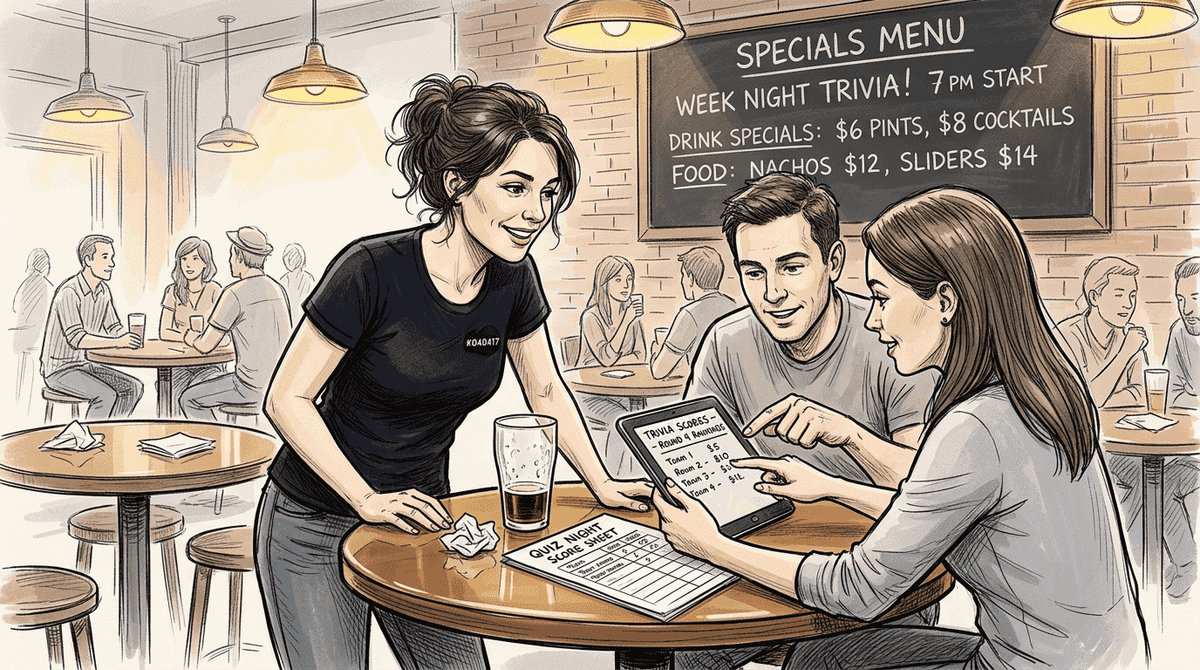
Cost efficiency stands out as a major advantage. AMI Trivia charges 20-25% less than hiring hosts for single events. You eliminate scheduling conflicts, no-shows, and variable quality from human hosts. The platform runs consistently whether you have 10 guests or 100.
Engagement metrics show tangible improvements. Venues can see higher per-customer spending when interactive games keep guests entertained longer. People order another round while waiting for the next question. They stay through closing instead of leaving after one drink.
Interactive game show software can also raise customer satisfaction. Satisfied customers become regulars who bring friends, building a loyal community around your trivia nights.
Financial and operational benefits breakdown:
| Metric | Traditional Hosted | Interactive Hosting | Impact |
|---|---|---|---|
| Event cost | $200-400 per night | $150-300 monthly subscription | Lower cost |
| Scheduling flexibility | Limited to host availability | Run anytime | Increased frequency |
| Customer dwell time | Shorter | Longer | Longer stays |
| Marketing options | Word of mouth only | On-screen promos plus social | Broader reach |
Marketing flexibility expands with interactive platforms. You display promotional content between rounds, highlight upcoming events, or showcase menu specials. These on-screen promotions reach every participant without additional advertising costs.
Diverse game categories keep content fresh. Venues rotate through sports trivia, pop culture, music rounds, and local history to appeal to different demographics. This variety attracts new customers while keeping regulars engaged week after week.
Pro Tip: Track customer return rates specifically on trivia nights versus non-trivia nights to quantify the community-building impact and justify continued investment in the platform.
Repeat visits compound revenue over time. A customer who discovers your venue through trivia night often returns for dinner on weekends or recommends you to colleagues for happy hour. The initial entertainment investment pays dividends through expanded customer lifetime value. Strategies from this guide on how to energize corporate events game shows apply equally to building recurring bar attendance.
Interactive game hosting versus traditional hosted events: a comparison
Traditional hosted trivia requires hiring an entertainer who commands the room, manages questions, and keeps score manually. Hosted events face limitations from scheduling conflicts, inconsistent quality between hosts, and higher costs per event. Hosts get sick, double-book, or deliver subpar performances that damage your venue's reputation.
Interactive hosting eliminates human variability. The software delivers consistent quality every single time. Guests participate via smartphones without waiting for a host to read questions or calculate scores. Players engage at their own pace without interrupting conversations or other venue entertainment.
Cost differences add up quickly over a year. A weekly hosted event at $300 per night costs $15,600 annually. An interactive platform subscription typically runs $1,800 to $3,600 yearly for unlimited use. That's savings of $12,000 to $13,800 you can redirect toward marketing or facility improvements.
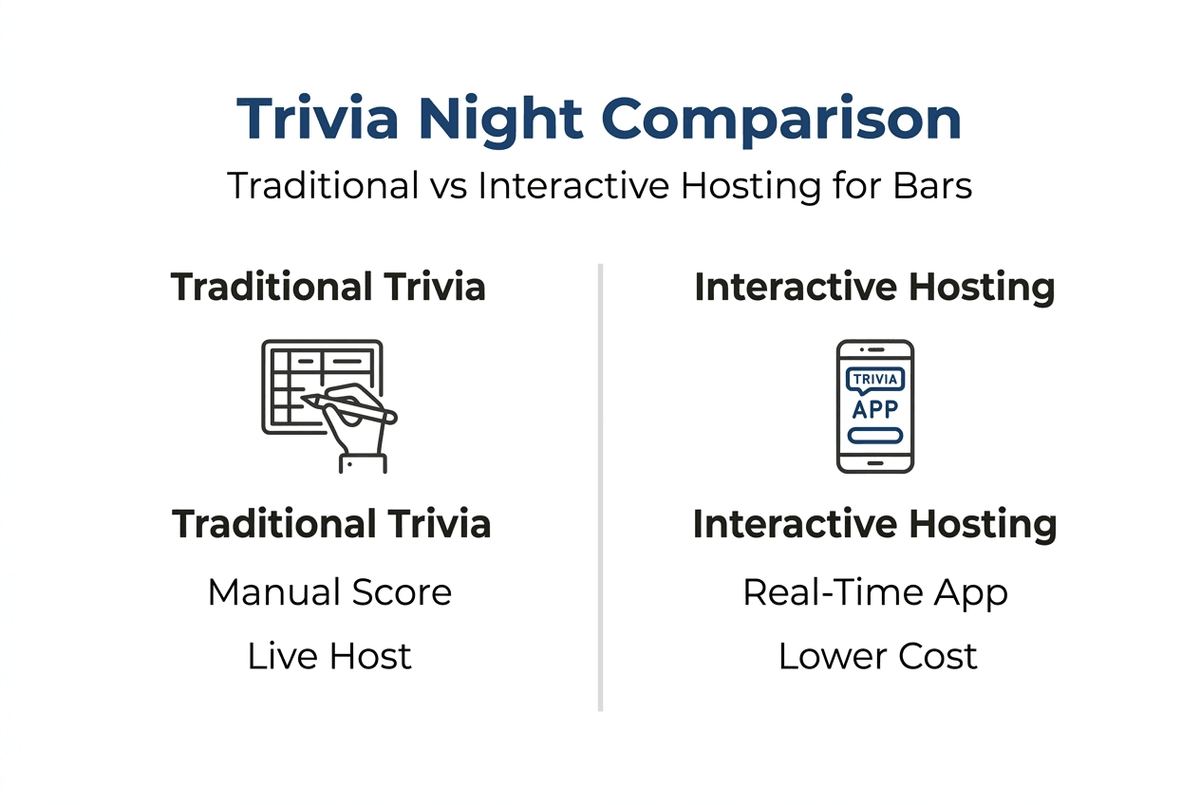
Scheduling flexibility transforms your event calendar. Traditional hosts require booking weeks in advance and might cancel last minute. Interactive platforms let you launch trivia night spontaneously when you notice slow traffic or want to test different days and times. You control when and how often events happen.
| Factor | Traditional Hosted | Interactive Hosting |
|---|---|---|
| Setup time | 30-60 minutes with host arrival | 5-10 minutes software launch |
| Cost per event | $200-400 | $0 after subscription |
| Scheduling | Requires host availability | On-demand anytime |
| Guest experience | Passive listening | Active smartphone participation |
| Scalability | Limited by host capacity | Handles 100+ players easily |
| Venue disruption | High, dominates atmosphere | Low, integrates with existing ambiance |
Guest experience differences matter for retention. Traditional trivia forces everyone to stop conversations and listen to question announcements. Interactive formats let groups play while continuing their social interactions. This balance between engagement and socializing keeps more guests satisfied.
Atmosphere control remains with your venue. Interactive hosting doesn't require a host's voice dominating your speakers or controlling your music. You maintain the ambiance your regulars expect while adding entertainment value. This subtlety works especially well for upscale venues where loud hosts clash with the desired environment.
Pro Tip: Offer a trial night with interactive hosting alongside your traditional format to let customers compare directly and provide feedback before fully committing to one approach.
Technical onboarding presents the main challenge for interactive systems. Some guests need help connecting their phones initially. Station staff near entrances during the first 15 minutes to assist with connections and answer questions. After guests successfully join once, they rarely need help in future visits. The concepts explored in virtual team celebration ideas hr leaders translate well to creating smooth onboarding experiences.
Practical steps to implement interactive game hosting in your venue
Selecting the right platform determines your success. Evaluate software based on reliability, question variety, customization options, and smartphone compatibility. AMI Trivia provides 20 game categories and 1,800+ promotion templates that cover most venue needs. Test multiple platforms during free trials to assess which interface your staff handles most comfortably.
Technical setup requires minimal infrastructure. You need display screens visible from seating areas, stable internet with a backup hotspot, and basic WiFi for guest connections. Most bars already have these components installed. Dedicate one staff member to become the platform expert who troubleshoots issues and optimizes settings.
Implementation checklist:
- Choose your interactive game software and complete vendor setup
- Install display hardware and configure screen positioning for visibility
- Test the system during slow hours with staff as mock participants
- Create promotional materials announcing your trivia night launch
- Train bar staff on guest onboarding and basic troubleshooting
- Schedule your first official event and monitor performance closely
- Collect feedback from early participants to refine the experience
- Adjust timing, difficulty, and format based on guest preferences
Marketing drives attendance for new trivia nights. Use the platform's on-screen promotion features between rounds to highlight upcoming dates. Post weekly reminders on social media with teaser questions that build anticipation. Create a dedicated email list for trivia enthusiasts who want advance notice of special themed nights.
Social proof accelerates growth. Photograph engaged guests during trivia nights and share images with permission on Instagram and Facebook. Highlight winner celebrations and prizes to showcase the competitive fun. User-generated content from satisfied customers reaches their networks organically.
Engagement features maximize participation:
- Display live leaderboards between rounds to fuel friendly competition
- Rotate question categories weekly to appeal to different knowledge areas
- Offer prizes for winners to incentivize serious participation
- Enable team play to encourage groups and larger parties
- Incorporate audience polls during breaks for social interaction
Performance tracking informs optimization. Monitor attendance numbers, average check sizes, and return visit rates specifically for trivia nights. Compare these metrics against non-trivia nights to quantify ROI. Music bingo venues can earn back the investment with proper implementation, which shows the target is achievable.
Pro Tip: Start with one weekly trivia night and perfect that experience before expanding to multiple nights, ensuring quality over quantity during your initial rollout.
Iterative improvements compound over time. Adjust question difficulty if you notice teams scoring too high or too low consistently. Experiment with different start times to find when your target demographic arrives. Test various prize structures to determine what motivates participation without cutting deeply into margins.
Staff training prevents technical friction. Ensure bartenders and servers understand how to help guests connect their phones, explain game rules briefly, and handle common technical questions. Confident staff create confident guests who enjoy the experience rather than feeling frustrated by technology. The principles in customizable quizzes team success apply to creating smooth venue experiences. Additionally, insights from managing team participation process guide help streamline guest involvement.
Explore interactive game hosting options with Quizado
Quizado delivers professional-quality interactive game experiences specifically designed for bars and restaurants facing midweek traffic challenges. The platform runs every game on its servers, so a reload or a device switch does not lose the scores. Players answer over the internet, so keep a mobile hotspot ready in case the venue connection drops.
Smartphone-based controls mean zero specialized hardware purchases. Guests use their own devices as buzzers and answer inputs, keeping your costs minimal. Over 500 hours of ready-made content lets you launch immediately without spending hours creating questions.
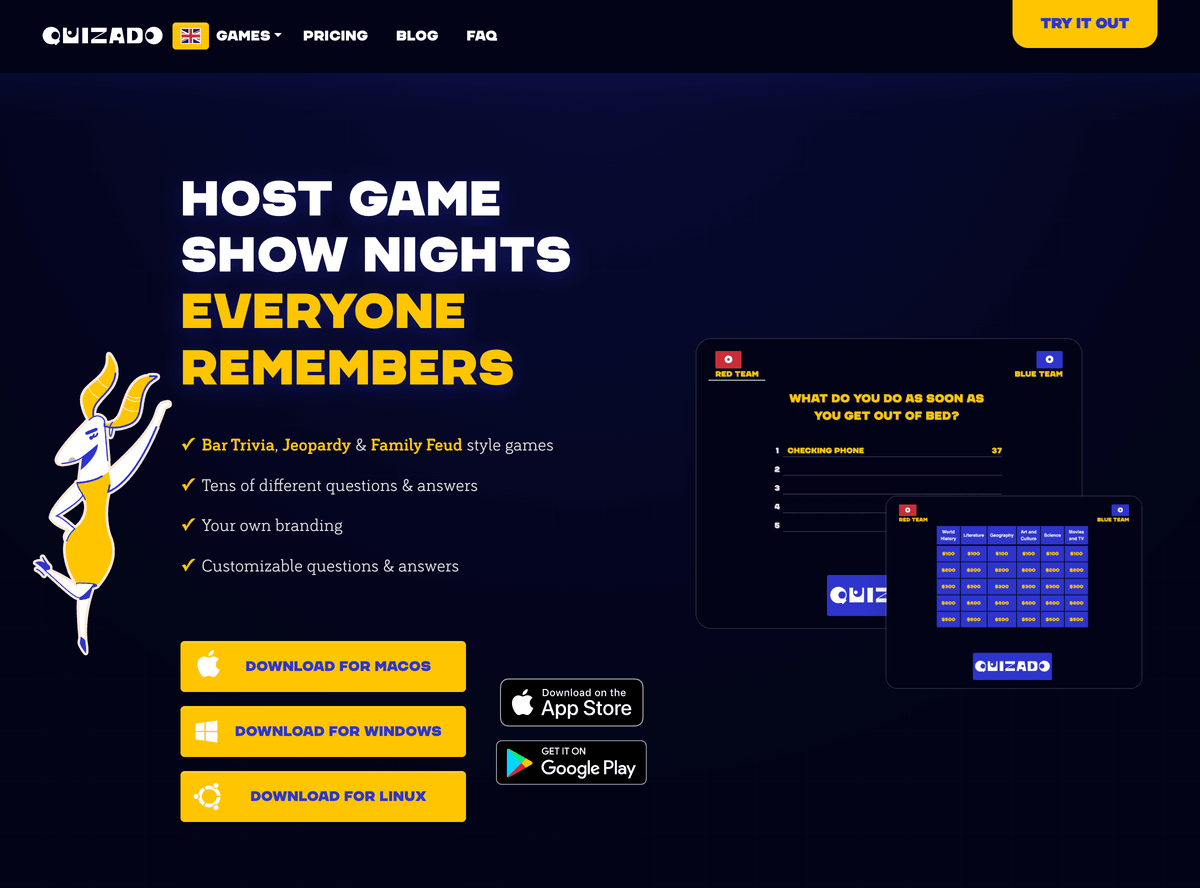
Customization options match your brand identity. Upload your logo, choose visual themes, and create questions specific to your local area or customer interests. The platform supports multiple teams with configurable sizes, accommodating everything from intimate groups to packed houses.
Explore diverse question options like this feature walrus quiz or check out walrus feature quiz options to see the variety available. The interactive quiz features demonstrate how engaging properly designed content keeps guests entertained round after round. Venue managers consistently report higher customer satisfaction and measurable revenue increases after implementing Quizado for recurring entertainment events.
What is interactive game hosting?
What exactly is interactive game hosting and how does it differ from regular trivia?
Interactive game hosting uses software to manage real-time trivia where players use smartphones as controllers instead of pen and paper. Unlike traditional trivia where a host reads questions aloud, interactive systems display questions on screens while players submit answers through their devices. The software handles scoring automatically and updates leaderboards instantly, creating a more dynamic and engaging experience that doesn't require a human host to manage gameplay.
How does latency affect interactive game quality and what can venues do about it?
Latency creates delays between player actions and game responses, frustrating participants when answers don't register immediately. Venues need strong, stable WiFi infrastructure and a backup hotspot to minimize latency issues. Software that runs the game on its servers keeps the board and scores safe when a device drops or reloads. Testing your system during peak hours before launching publicly identifies potential latency problems you can address through network upgrades or platform switching.
What technological requirements do venues need for interactive game hosting?
Venues need display screens visible to participants, reliable internet with a backup hotspot, and guest WiFi for smartphone connections. Most bars already have these basics installed for music or sports. The software itself runs on standard computers, tablets, or dedicated devices without requiring specialized gaming hardware. Staff needs one device to control the host interface and manage game flow, which typically uses the same equipment you already own for business operations.
What costs should managers expect and what ROI do case studies show?
Interactive platforms typically cost $150 to $300 monthly for subscriptions, compared to $200 to $400 per night for traditional hosts. Annual savings range from $12,000 to $13,800 for weekly events. Venues can earn a strong return through increased traffic and higher per-customer spending. The investment pays for itself quickly when you factor in saved host fees plus incremental revenue from extended guest dwell times and repeat visits.
How can venues handle guest onboarding and technical challenges effectively?
Station staff near entrances during the first 15 minutes of trivia nights to help guests connect their phones and answer questions. Create simple printed instructions with QR codes for quick connection. Most guests only need help once, then connect independently at future events. Train your bartenders and servers on common troubleshooting steps so they can assist when your designated tech staff member is busy. Starting with smaller test events lets you refine your onboarding process before scaling to full capacity nights.
Can interactive game hosting work for venues with poor WiFi infrastructure?
Partly. Players answer over the internet, so a strong connection or a backup hotspot is still needed for phone play. Software that runs the game on its servers keeps the board and scores safe through a reload or a device switch, and in Quizado, Family Feud and Jeopardy can continue offline in the desktop and mobile apps. Reliability stands as a critical feature to evaluate when comparing platforms, especially if you've experienced connectivity issues during past events.
Recommended
Run your next trivia night with Quizado
Prepare the rounds, invite players by QR code and show live scores on your venue’s screen.