In this post+
Most American businesses struggle with building strong team participation, yet teams with clearly defined roles see up to 30 percent higher productivity. Defining each team member’s role and participation objectives early helps eliminate confusion, set expectations, and unlock better collaboration. If you want your American team to reach its full potential, understanding how to map roles, set goals, and monitor engagement is the first critical step.
Table of Contents
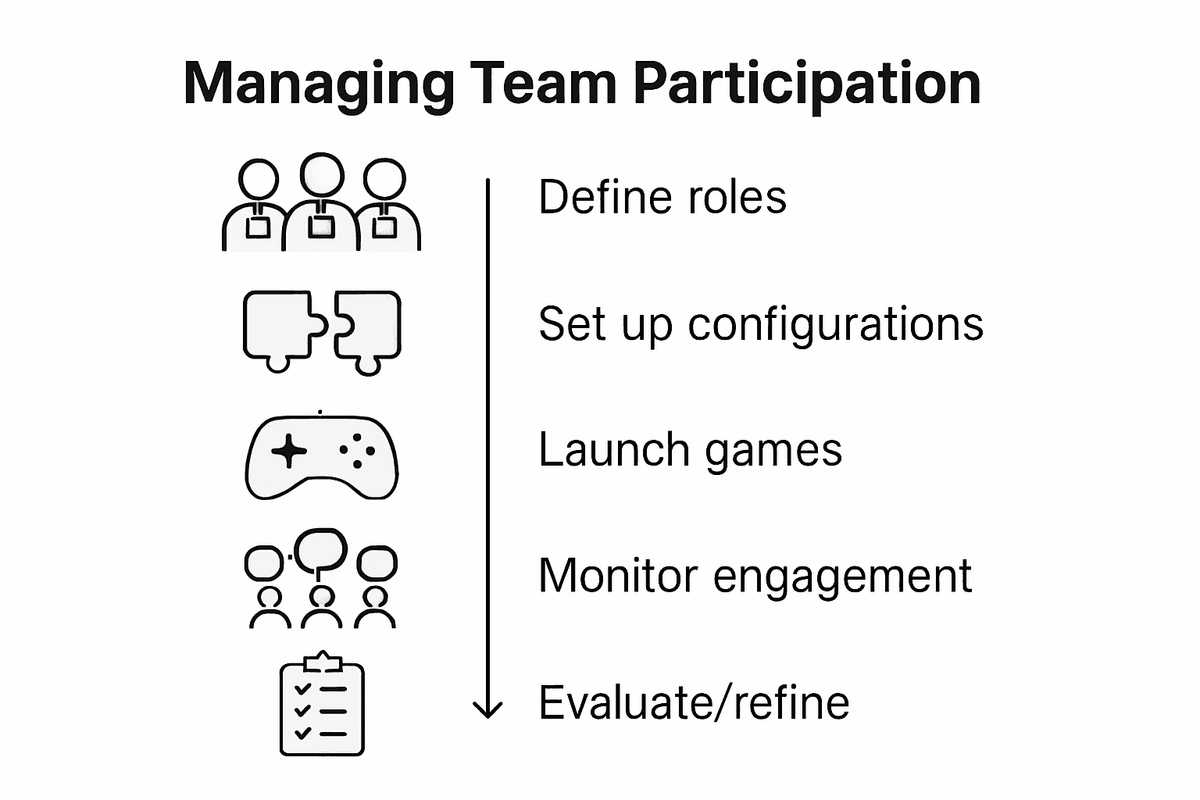
- Step 1: Define Team Roles And Participation Objectives
- Step 2: Set Up Customizable Team Configurations
- Step 3: Launch And Facilitate Interactive Game Sessions
- Step 4: Monitor Engagement And Encourage Collaboration
- Step 5: Evaluate Outcomes And Refine Participation Process
Quick Summary
| Key Point | Explanation |
|---|---|
| 1. Define Clear Roles | Establish clear roles and responsibilities to minimize confusion and enhance team performance. |
| 2. Create Custom Configurations | Tailor team setups to fit project needs, ensuring flexibility and optimized communication. |
| 3. Facilitate Engaging Games | Launch interactive sessions that promote participation and team bonding for effective learning. |
| 4. Monitor Team Engagement | Continuously assess team dynamics through regular check-ins to maintain motivation and alignment. |
| 5. Regularly Evaluate Processes | Implement systematic evaluations for ongoing improvements, fostering a growth-oriented team culture. |
Step 1: Define team roles and participation objectives
Establishing clear team roles and participation objectives is foundational to building a collaborative and effective team. By precisely defining who does what and setting expectations upfront, you create a roadmap for success that minimizes confusion and maximizes individual and collective performance.
Start by conducting a comprehensive role mapping exercise that identifies each team member's unique strengths, skills, and potential contributions. Understanding key team participation elements involves breaking down specific responsibilities and aligning them with overall team goals. This process requires careful consideration of individual capabilities and how they interconnect to support the broader team mission. Consider categorizing roles into task roles (specific assignments) and process roles (how work gets accomplished), ensuring every team member understands their specific contributions and how they fit into the larger organizational strategy.
Document these roles and objectives transparently, using clear language that leaves no room for ambiguity. Create a shared reference document that outlines each person's responsibilities, expected outcomes, and how their work contributes to team success. Regularly review and adjust these definitions as team dynamics evolve and project requirements change.
Pro tip: Schedule an initial team meeting dedicated exclusively to role clarification, allowing each member to ask questions, seek understanding, and provide input into how responsibilities are defined and distributed.
Step 2: Set up customizable team configurations
Customizable team configurations empower organizations to create flexible and tailored collaboration environments that adapt to specific project requirements and team dynamics. By strategically designing your team setup, you can optimize communication channels, role assignments, and performance tracking.
Evaluating team members' technical skills and competencies is crucial when establishing your team configuration. Begin by mapping out individual strengths, professional backgrounds, and potential contributions. Consider creating a comprehensive profile for each team member that highlights their expertise, preferred communication methods, and key performance indicators. This approach allows you to design roles that maximize individual potential while ensuring seamless integration within the larger team structure.
Implement a modular approach to team configuration that allows for easy adjustments as project needs evolve. Develop a flexible framework that defines clear communication protocols, establishes reporting hierarchies, and sets performance expectations. Utilize collaborative tools that support real-time updates and transparent role management, enabling team members to understand their responsibilities and track collective progress effectively.
Pro tip: Create a visual team configuration diagram that illustrates reporting lines, role interconnections, and key responsibilities to provide immediate clarity and reduce potential misunderstandings.
Step 3: Launch and facilitate interactive game sessions
Successfully launching interactive game sessions requires strategic planning and a nuanced approach to team engagement. Your goal is to create an environment that encourages participation, builds team connections, and generates genuine excitement about collaborative learning.
Team building activities designed to address group dynamics are essential for creating meaningful interactions. Begin by selecting games that align with your specific team objectives, ensuring they challenge participants while remaining enjoyable and inclusive. Carefully consider each team member's comfort level and potential strengths, creating scenarios that allow everyone to contribute meaningfully. Introduce clear instructions, establish ground rules that promote respectful interaction, and set expectations for participation and communication throughout the game session.

As you facilitate the session, maintain an adaptive and responsive approach. Monitor group energy, watch for opportunities to encourage quieter team members, and be prepared to adjust game dynamics if engagement starts to wane. Create moments for reflection after each game, allowing teams to discuss insights gained, strategies employed, and lessons learned. This reflective practice transforms interactive games from simple entertainment into powerful team development experiences.
Pro tip: Prepare backup game variations and alternative activities in advance, giving you flexibility to pivot quickly if the initial game plan does not resonate with your team.
Step 4: Monitor engagement and encourage collaboration
Effective team collaboration requires continuous monitoring and strategic interventions that keep team members motivated, connected, and aligned with collective objectives. Your primary goal is to create an environment where every team member feels valued, heard, and invested in the group's success.
Strategies for fostering a culture of teamwork and collaboration involve proactive engagement techniques that go beyond surface level interactions. Implement regular check-ins that provide opportunities for team members to share progress, challenges, and insights. Use a combination of quantitative metrics such as participation rates and qualitative observations like interaction quality to assess team dynamics. Pay special attention to individual communication styles, ensuring that both extroverted and introverted team members have meaningful ways to contribute and feel acknowledged.
Develop a transparent feedback mechanism that encourages open dialogue and continuous improvement. Create safe spaces for team members to express concerns, share innovative ideas, and provide constructive input without fear of judgment. Rotate leadership responsibilities, allowing different team members to lead discussions or project segments, which helps build mutual respect and demonstrates confidence in individual capabilities. By implementing these collaborative strategies, you transform team interactions from transactional to genuinely supportive and engaging.
Pro tip: Schedule monthly retrospective meetings where the team collectively reviews performance, discusses challenges, and collaboratively develops improvement strategies.
Step 5: Evaluate outcomes and refine participation process
Successfully managing team participation requires systematic evaluation and continuous improvement strategies that transform initial insights into meaningful organizational growth. Your objective is to create a dynamic feedback loop that allows for ongoing refinement of team collaboration processes.
Analyzing team member competencies and performance dynamics involves developing a comprehensive assessment framework that goes beyond traditional metrics. Implement a multifaceted evaluation approach that examines both quantitative performance indicators and qualitative interaction patterns. This means tracking not just individual task completion rates but also measuring collaborative behaviors, communication effectiveness, problem solving skills, and interpersonal dynamics. Consider using structured surveys, peer feedback mechanisms, and objective performance data to build a holistic understanding of team participation.
Establish a regular review process that transforms evaluation findings into actionable improvements. Create transparent channels for sharing assessment results, ensuring that team members understand the purpose of the evaluation is growth and development rather than criticism. Encourage open discussions about challenges, invite suggestions for process improvements, and demonstrate a commitment to implementing meaningful changes based on team input. By treating evaluation as a collaborative dialogue rather than a top down assessment, you build trust and motivate continuous team development.
Pro tip: Develop a standardized evaluation template with clear, measurable criteria that can be consistently applied across different team projects and adjusted based on specific team goals.
This reference table outlines common team participation evaluation metrics and their practical applications:
| Metric Type | What It Measures | Practical Application |
|---|---|---|
| Task Completion | Rate and quality of finished work | Identifies workflow bottlenecks |
| Communication | Frequency and clarity of updates | Improves information transparency |
| Collaboration | Quality of teamwork interactions | Builds trust and reduces conflict |
| Innovation Input | New ideas and suggestions shared | Spurs creative problem solving |
Here's a summary comparing key elements of effective team participation management at each step:
| Step Focus | Main Activity | Key Outcome |
|---|---|---|
| Define Roles and Objectives | Role mapping and objective setup | Clarity in responsibilities |
| Set Up Team Configurations | Custom team design | Flexible collaboration structure |
| Launch Interactive Game Sessions | Facilitated learning activities | Enhanced team engagement |
| Monitor Engagement and Collaboration | Ongoing feedback and check-ins | Sustainable team motivation |
| Evaluate and Refine Participation | Performance and process reviews | Continuous process improvement |
Elevate Team Participation with Interactive Quiz Solutions
Managing team participation effectively can often feel overwhelming when balancing clear role definitions, flexible team setups, and ongoing engagement. This article highlights how establishing transparent objectives and monitoring collaboration are crucial to building strong teams. However, organizations frequently struggle to maintain motivation and foster genuine interaction within team-building activities. If you want to transform these challenges into opportunities for fun and meaningful connection, customizable game-based experiences can make all the difference.
Boost your team's collaboration and excitement by using Quizado's customizable team-building games. Designed to support flexible team configurations and interactive engagement, Quizado helps you create personalized quizzes that align with your goals while encouraging every team member to contribute actively. Whether hosting virtual or in-person events, Quizado's user-friendly platform integrates branding and real-time controls to build trust and sustain motivation beyond typical team exercises.

Discover how easy it is to define clear roles, monitor team involvement, and evaluate outcomes through engaging gameplay. Start enhancing your team dynamics today by visiting Quizado's main site. Empower your teams with interactive experiences that drive results and lasting connections.
Frequently Asked Questions
How can I effectively define team roles for better participation?
Defining team roles starts with mapping out each member's strengths and responsibilities clearly. Conduct a role mapping exercise and document these roles in a shared reference document, ensuring everyone understands how they contribute to the team's objectives.
What steps should I take to establish customizable team configurations?
To set up customizable team configurations, assess each team member's skills and preferences. Create detailed profiles highlighting their expertise and communication styles, and develop a flexible framework that allows for easy adjustments as project needs change.
How can interactive game sessions help in team building?
Interactive game sessions promote engagement and team connections by creating fun and meaningful interactions. Select games aligned with team objectives and monitor participation to cultivate a collaborative environment that encourages open discussions after each session.
What are the best practices for monitoring team engagement?
Monitoring team engagement involves conducting regular check-ins and observing communication patterns among team members. Establish a feedback mechanism that promotes open dialogue and rotate leadership roles to help everyone feel valued and heard.
How can I evaluate team performance effectively?
Evaluating team performance requires a comprehensive assessment of both quantitative and qualitative metrics. Develop a standard evaluation template that can be applied consistently, focusing on task completion rates as well as collaborative behaviors, to facilitate continuous improvement.
What should I do with the feedback collected from team evaluations?
Use the feedback from team evaluations to identify areas for improvement and implement actionable changes. Share assessment results with the team, foster open discussions about challenges, and encourage suggestions to enhance future team participation processes.
Recommended
Turn these ideas into a team event
Prepare an office quiz or remote game with a shared screen, phone participation and a host on your team.