Trivia show trends 2026: boost bar engagement and revenue
Smartphone-based buzzer systems are driving higher participant engagement at trivia nights, transforming how bars and restaurants connect with guests in 2026. As competition intensifies and customer expectations evolve, venue managers must embrace interactive technologies and strategic formats to attract crowds, extend visit duration, and maximize revenue. Modern trivia shows blend classic game formats with digital innovation, creating experiences that keep patrons returning week after week.
Table of Contents
- Introduction To 2026 Trivia Show Trends
- Technology And Interactive Engagement
- Reliability When The WiFi Struggles
- Customization And Branding Advantages
- Multi-Format Game Show Adaptations
- Engagement Strategies For Retention
- Common Misconceptions About Trivia Shows
- Conclusion And Next Steps For Venue Managers
- Boost Your Trivia Nights With Quizado
Key takeaways
| Point | Details |
|---|---|
| Interactive technology increases participation | Smartphone buzzers and digital interfaces keep players more engaged than traditional formats. |
| Reliability prevents disruptions | Venues cut technical failures with software that keeps the game on its servers and a backup hotspot. |
| Custom branding strengthens loyalty | Tailored content and venue-specific themes create stronger community connections and repeat visits. |
| Multi-format approaches broaden appeal | Combining game show styles like Family Feud and Jeopardy attracts diverse age groups and interests. |
| Strategic engagement extends revenue | Rotating formats and interactive elements increase guest spend per visit. |
Introduction to 2026 trivia show trends
Trivia shows in hospitality settings are hosted, interactive quiz events designed to engage bar and restaurant patrons through competitive gameplay and entertainment. These events have evolved dramatically from simple pen-and-paper quizzes to sophisticated digital experiences that mirror television game shows.
Several market forces are reshaping trivia nights in 2026. Competition among venues has intensified as more bars recognize trivia's power to drive weekday traffic. Customer expectations have shifted toward experiences that blend social interaction with technology, particularly among younger demographics who expect smartphone integration in entertainment. The hospitality industry's broader technology adoption has created pressure to modernize traditional offerings or risk appearing outdated.
Key trend developments include:
- Transition from traditional paper-based quizzes to hybrid and fully digital formats
- Emphasis on real-time participant interaction through personal devices
- Integration of venue branding into trivia content and visual presentation
- Adoption of multiple game show formats to maintain novelty and appeal
The shift toward interactive, technology-driven trivia addresses fundamental challenges bars face: attracting consistent crowds during slow periods, differentiating from competitors, and creating memorable experiences that justify repeat visits. Managers who understand these trends position their venues to capture the growing demand for engaging, professionally produced entertainment.
Technology and interactive engagement
Smartphone-based buzzer systems represent the most significant technological advancement in venue trivia. These systems transform patron phones into game controllers, eliminating bulky hardware while enabling lightning-fast competitive answering. Participants simply scan a QR code or enter a room code, instantly joining the game without downloading apps or creating accounts.
Digital interfaces fundamentally change gameplay dynamics. Real-time scoring displays create immediate feedback loops that sustain excitement throughout events. Leaderboards update instantly after each question, building competitive tension and encouraging teams to stay engaged even when trailing. Visual effects and sound cues replicate professional game show production values, elevating perceived event quality.
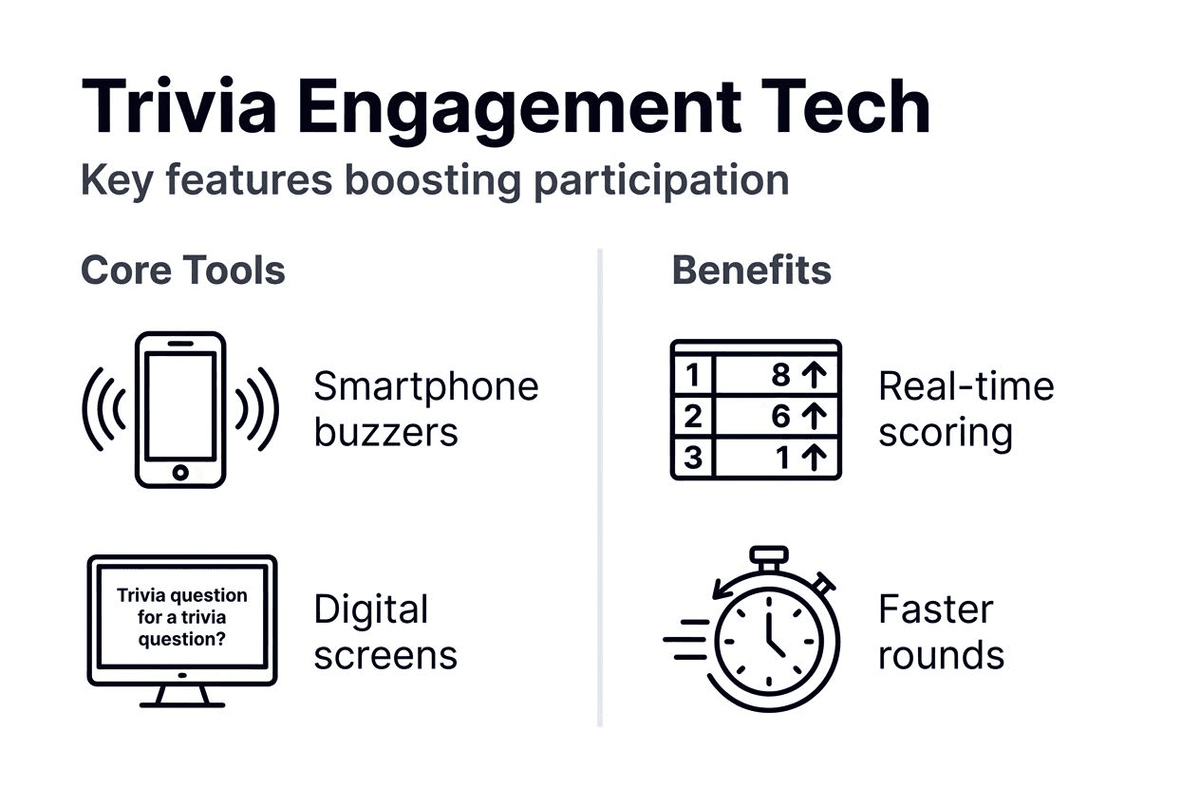
These technologies dramatically improve pacing. Traditional pen-and-paper formats require hosts to collect answer sheets, manually score responses, and announce results, creating dead time that kills momentum. Digital systems process answers within seconds, maintaining energy levels and reducing the risk of patron disengagement. Faster pacing enables hosts to cover more questions per session, delivering greater entertainment value.
Interactive features extend beyond answering questions. Many platforms enable audience members not on competing teams to participate through prediction games or bonus challenges, keeping the entire venue engaged rather than creating passive observers. This inclusivity increases the likelihood that first-time attendees become regular participants.
Pro Tip: Venues implementing digital game shows increase repeat customers by creating shareable moments that guests promote through word-of-mouth and social media. Integrate social media engagement tools to amplify reach beyond the physical venue.
The competitive advantage is measurable. Research demonstrates that smartphone buzzer integration can boost participation engagement significantly, transforming casual attendees into enthusiastic regulars who plan their schedules around trivia nights.
Reliability when the WiFi struggles
Venue WiFi infrastructure presents a persistent challenge for bars and restaurants. Network congestion during peak hours, spotty coverage in certain areas, and bandwidth limitations create reliability concerns that can derail technology-dependent events. A single connectivity failure during a climactic final round destroys the professional atmosphere managers work to create.
Software that runs the game on its servers reduces this vulnerability. If the host's device reloads or drops, the board, scores and open question are still there when it reconnects. Players answer over the internet, so a mobile hotspot as backup keeps them connected when the venue network struggles.
The operational benefits are substantial:
Software that keeps the game on its servers, plus a backup hotspot, reduces event disruptions caused by unreliable venue WiFi, ensuring smooth game flow and higher audience retention.
Reliability extends beyond preventing disruptions. Reliable software enables venues to focus resources on entertainment quality rather than IT troubleshooting. Hosts concentrate on engaging the audience instead of frantically resetting routers or apologizing for technical difficulties. This professionalism builds trust and encourages repeat attendance.
For venues considering technology adoption, reliability should be non-negotiable. The educational quiz game features that benefit classroom environments apply equally to hospitality settings where consistent performance determines success.
Customization and branding advantages
Generic trivia content fails to leverage a venue's unique identity and community connections. Customization transforms standard quiz nights into branded experiences that reinforce venue personality and build emotional connections with patrons.
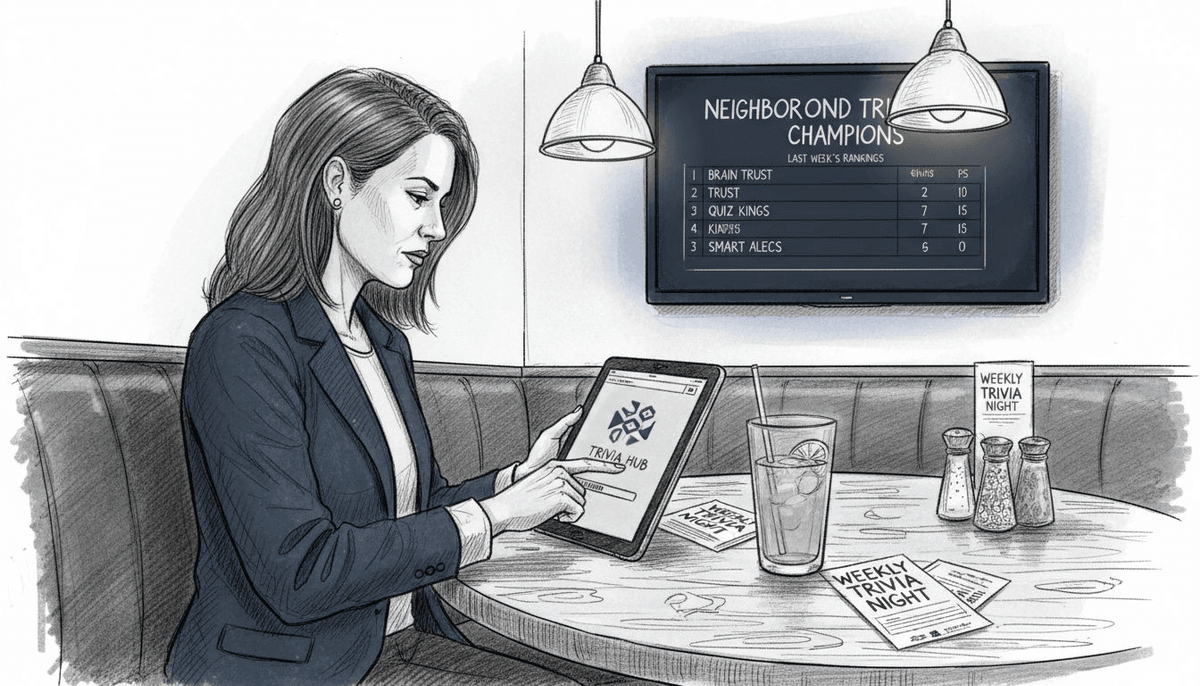
Visual branding integration creates immediate recognition. Uploading venue logos to trivia software ensures every screen displays your brand, reinforcing identity throughout the event. Theme selection allows managers to choose visual styles that match their establishment's atmosphere, whether modern minimalist for upscale cocktail bars or retro arcade aesthetics for casual pubs.
Localized trivia questions generate powerful engagement. Creating questions about neighborhood history, local sports teams, or community events demonstrates that management understands and values the surrounding area. This relevance resonates deeply with regular patrons while welcoming newcomers into the community fold. A question about a beloved former mayor or legendary local restaurant creates conversation and connection that generic questions never achieve.
Content differentiation separates your venue from competitors running identical trivia packages. When patrons experience unique questions and formats they cannot find elsewhere, they develop loyalty to your specific event rather than viewing all trivia nights as interchangeable. This distinction justifies choosing your venue over alternatives, even when competitors offer similar food and drink pricing.
Customization supports relationship building. Incorporating inside jokes, acknowledging regular team names in questions, or creating categories based on patron suggestions makes guests feel valued and heard. These personal touches transform transactional entertainment into community building.
Implementation is straightforward with modern platforms. Most systems allow question library uploads and brand asset integration without technical expertise. Managers can customize event experiences by dedicating 30 minutes weekly to creating localized content, yielding disproportionate returns in patron satisfaction.
Understanding the customizable branding purpose helps managers recognize that customization extends beyond aesthetics to strategic differentiation. The role of custom branding in building venue identity makes personalization essential rather than optional.
Venues embracing emerging technologies while maintaining local character create the strongest competitive positions. Technology enables customization at scale, making personalized trivia economically viable for independent operators.
Multi-format game show adaptations
Relying exclusively on standard trivia questions limits audience appeal and creates monotony. Multi-format approaches incorporate diverse game show styles, each attracting different demographic segments and interest profiles.
Popular formats include:
- Family Feud Style: Survey-based questions where teams guess popular responses rather than factual answers, emphasizing social knowledge and group consensus
- Jeopardy Format: Answer-and-question reversal with category selection, appealing to traditional quiz enthusiasts who enjoy strategic gameplay
- Wheel of Fortune: Word puzzles and phrase guessing that engage visual thinkers and create accessible entry points for casual participants
- Name That Tune: Music identification rounds that energize crowds and leverage audio engagement
| Format | Primary Appeal | Ideal Audience Segment |
|---|---|---|
| Family Feud | Social prediction and group discussion | Casual players, social groups |
| Jeopardy | Factual knowledge and strategy | Competitive trivia enthusiasts |
| Wheel of Fortune | Pattern recognition and wordplay | Broad demographic appeal |
| Name That Tune | Music recognition and nostalgia | Music fans, older demographics |
Format variety prevents audience fatigue. Running identical question styles weekly creates predictability that diminishes excitement. Rotating formats monthly or quarterly maintains novelty, giving regular attendees fresh experiences that justify continued participation.
Demographic expansion becomes possible when venues offer multiple formats. A bar might attract serious trivia competitors with Jeopardy nights while drawing broader crowds with Family Feud social prediction games. Music-focused events appeal to demographics who might avoid traditional knowledge quizzes. This diversity builds larger overall audiences as different format nights attract overlapping but distinct patron groups.
Format combinations within single events maximize engagement. Opening with accessible Family Feud rounds welcomes participants before transitioning to more challenging Jeopardy categories. Ending with high-energy Name That Tune segments sends guests home on an exciting note, increasing likelihood of return visits.
Managers can explore custom trivia for bars that blend multiple formats into signature events unique to their venue. The family feud inspired quiz game demonstrates how adapting television formats creates engaging experiences that require minimal setup.
Engagement strategies for retention
Attracting guests to trivia nights represents only half the challenge. Retaining participants and converting occasional attendees into weekly regulars requires deliberate engagement strategies.
-
Rotate game formats on a predictable schedule. Announce upcoming format changes in advance, creating anticipation and encouraging guests to attend specific weeks that match their interests. Consistency in rotation timing builds habits.
-
Encourage active audience participation beyond answering. Designate cheering sections, award bonus points for creative team names, or incorporate audience polling questions that include non-competing guests. Universal participation creates inclusive energy that benefits everyone present.
-
Strategically extend event duration. Longer trivia nights increase per-guest spending on food and drinks. Design formats with natural breaks for ordering between rounds. A well-paced two-hour event generates significantly more revenue than a rushed 60-minute quiz.
-
Leverage competitive elements thoughtfully. Maintain leaderboards tracking season-long performance, awarding championship titles to consistent top performers. Recognition motivates return visits as teams pursue standing improvements.
-
Implement progressive difficulty curves. Start with accessible questions to build confidence before introducing challenging material. This structure keeps novices engaged while satisfying experienced players.
-
Create social media moments. Photograph winning teams, share memorable questions, and promote upcoming themes online. Digital presence extends engagement beyond physical events and attracts new participants through peer recommendations.
Pro Tip: Understanding digital vs traditional trivia impact helps managers optimize engagement strategies. Digital formats enable real-time adjustments based on audience energy levels, something impossible with paper-based approaches.
Retention metrics matter more than single-event attendance. A venue hosting 40 guests weekly with 70% return rate builds stronger revenue than attracting 60 guests with 30% retention. Focus engagement efforts on creating experiences worth repeating rather than one-time spectacles.
Common misconceptions about trivia shows
Several persistent myths prevent venue managers from fully embracing modern trivia innovations. Addressing these misconceptions enables informed decision-making.
Myth: Traditional pen-and-paper formats create more social interaction than digital alternatives. Reality: Digital trivia gets players interacting more than paper-based formats. Smartphone integration enables real-time team communication, instant feedback, and competitive elements impossible with manual scoring. Social dynamics intensify when technology accelerates pacing and provides immediate results.
Myth: Reliable internet means nothing can go wrong. Reality: Even venues with generally stable WiFi experience occasional disruptions during peak hours or technical issues. Software that keeps the game on its servers, plus a backup hotspot, provides essential insurance against the failure that destroys guest trust. This modest preparation prevents disproportionately large reputational damage.
Myth: Older demographics resist technology-based trivia and prefer traditional formats. Reality: When properly introduced with clear instructions and intuitive interfaces, older participants adapt quickly to smartphone-based systems. The key is simplicity. Scanning a QR code and tapping answers requires minimal technical skill. Many older adults appreciate the clarity digital displays provide compared to straining to hear announced answers.
Myth: Digital formats reduce human connection by interposing screens between participants. Reality: Technology enhances social elements by handling administrative tasks, freeing hosts to focus on entertainment and interaction. Automated scoring eliminates delays, maintaining energy that encourages conversation and celebration. The digital vs traditional trivia comparison demonstrates that technology amplifies rather than replaces human engagement.
Myth: Implementing modern trivia software requires significant technical expertise. Reality: Contemporary platforms prioritize user-friendliness with intuitive interfaces designed for non-technical users. Most managers master basic operation within 30 minutes. The learning curve for modern trivia software is substantially lower than mastering point-of-sale systems already in use.
Understanding how digital game shows increase repeat customers helps managers recognize that technology adoption drives business outcomes rather than creating barriers. Evidence-based decision-making replaces assumption-based resistance.
Conclusion and next steps for venue managers
The 2026 trivia landscape demands interactive technology, reliable server-run games, strategic customization, and multi-format approaches to maximize engagement and revenue. Smartphone-based systems, custom branding, and diverse game show adaptations transform standard quiz nights into distinctive experiences that build loyal communities.
Venue managers should implement these trends through structured steps:
- Evaluate current trivia formats and identify engagement gaps or technical limitations
- Research reliable platforms offering smartphone integration and customization options
- Develop localized content incorporating neighborhood references and venue-specific themes
- Experiment with format rotation, introducing variety while monitoring audience response
- Implement engagement tactics like season leaderboards and social media promotion
- Measure retention rates and per-guest spending to quantify improvement
Benefits extend beyond entertainment. Higher engagement translates to longer visit duration and increased food and drink sales. Repeat customers develop emotional connections that insulate venues from competitive pressure. Professional production values elevate brand perception, positioning establishments as innovative community gathering places.
Modern platforms like Quizado integrate these 2026 trends into comprehensive solutions designed specifically for bars and restaurants. Managers gain access to proven technology without requiring technical expertise or significant upfront investment.
The trivia night evolution presents clear choices. Venues embracing interactive technology, customization, and strategic engagement will capture growing demand for professional entertainment experiences. Those maintaining outdated formats risk irrelevance as patron expectations continue advancing. The competitive advantage belongs to managers who act decisively to modernize their offerings.
Boost your trivia nights with Quizado
Implementing 2026 trivia trends becomes straightforward with the right platform. Quizado delivers smartphone-integrated trivia software that runs every game on its servers, designed specifically for bars and restaurants seeking professional game show experiences. The platform supports multiple formats including Trivia, Family Feud, Jeopardy, and Music Bingo, enabling the variety modern audiences expect.
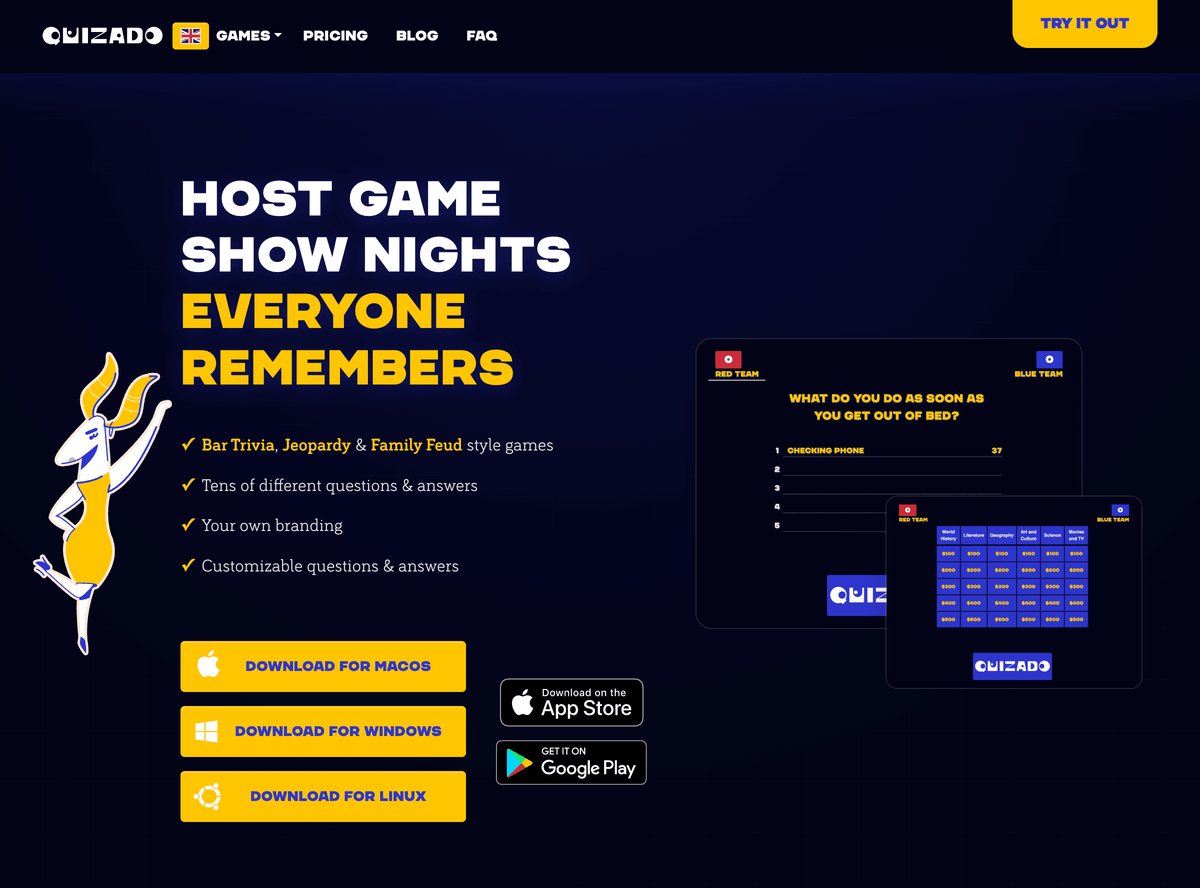
Customization tools let you customize event experiences by uploading venue logos, selecting visual themes, and creating localized questions that resonate with your community. Understanding the customizable branding purpose helps you build distinctive events that competitors cannot replicate. Every game runs on Quizado's servers, so a reload or a device switch does not stop the night, and Family Feud and Jeopardy can continue offline in the apps. Managers gain everything needed to transform standard quiz nights into revenue-driving entertainment that keeps patrons returning week after week.
FAQ
What technology is essential for hosting successful trivia nights in 2026?
Smartphone-based buzzer systems and trivia platforms that keep the game on their servers form the essential technology foundation. These tools enable interactive gameplay and limit the damage when the WiFi struggles.
How can customization improve my venue's trivia night attendance?
Customization creates unique atmospheres and stronger community connections that generic content cannot achieve. Localized questions and venue-specific branding enhance relevance, encouraging guests to customize event experiences they cannot find at competing establishments, driving repeat visits.
What are some effective engagement strategies to retain trivia participants?
Rotate game formats regularly and encourage active audience participation through team challenges and bonus activities. Extending event length with diverse formats increases guest engagement and spending per visit. Competitive elements like season leaderboards foster repeat attendance as teams pursue ranking improvements. Understanding digital vs traditional trivia impact helps optimize these strategies for maximum retention.
Recommended
Run your next trivia night with Quizado
Prepare the rounds, invite players by QR code and show live scores on your venue’s screen.

Bring your group together for a game
Try a free starter game, then choose the format and plan for your group.
Trusted by 5,000+ hosts