Corporate trivia night ideas for team engagement in 2026
Choosing the right corporate trivia night idea can make or break team engagement at your next event. Poor format selection leads to disengaged participants, technical failures, and wasted budgets. This guide walks you through proven trivia night ideas for 2026, covering engagement strategies, technology platforms, and decision criteria that help corporate planners select formats matching their team dynamics, venue constraints, and budget realities.
Table of Contents
- How To Choose The Right Corporate Trivia Night
- Classic TV Game Show Formats: Family Feud, Jeopardy, Wheel Of Fortune
- Virtual And Hybrid Trivia Nights
- Technology Platforms: Comparing Quizado, Kahoot, And Others
- Summary Comparison Of Corporate Trivia Night Ideas
- Situational Recommendations: Choosing The Best Trivia Night For Your Corporate Event
- Enhance Your Corporate Trivia Nights With Quizado
- FAQ
Key takeaways
| Point | Details |
|---|---|
| Selection criteria matter | Balance engagement style, tech reliability, customization, team fit, and budget to avoid common pitfalls. |
| Classic formats drive participation | TV game show formats like Family Feud and Jeopardy encourage participation through familiarity and competition. |
| Virtual options expand reach | Hybrid trivia engages remote teams effectively but requires reliable platforms and advance preparation. |
| Reliability is essential | Platforms that keep the game on their servers, plus a backup hotspot, ensure smooth events in venues with unreliable WiFi. |
| Premium features justify cost | Subscriptions from $20 to $50 per event offer full content libraries, branding, and technical support. |
How to choose the right corporate trivia night
Selecting effective trivia formats starts with understanding your event constraints and goals. Many planners jump straight to content without evaluating technical requirements, team composition, or budget limitations. This approach leads to engagement failures and technical disasters.
Start by assessing your venue's technology infrastructure. Check WiFi reliability, device compatibility, and display capabilities. Venues with spotty internet need reliable platforms that keep the game on their servers, plus a mobile hotspot, to avoid mid-game crashes that kill momentum. Test connections during your site visit, not on event day.
Next, analyze your participant demographics and team structures. Consider these factors:
- Team size preferences (4 to 12 players works best for active participation)
- Mix of remote and in-person attendees
- Technical comfort levels across age groups
- Cultural diversity requiring inclusive content
Align your trivia format with specific event objectives. Team building events need collaborative formats, while competitive networking events benefit from head-to-head challenges. Define success metrics before selecting your format.
Compare software platforms for essential features like multi-team support, custom branding, and question libraries. Premium platforms offer 500+ hours of ready-made content plus customization tools. Free versions typically limit teams to two and restrict question access.
Pro Tip: Run a technical rehearsal with your chosen platform at least 48 hours before your event. This catches compatibility issues and gives your team time to troubleshoot.
Classic TV game show formats: Family Feud, Jeopardy, Wheel of Fortune
TV game show formats dominate corporate trivia for good reason. Trivia built on classic formats tends to draw more participation than generic quiz nights. Familiarity breeds engagement. Participants already understand the rules and gameplay mechanics.
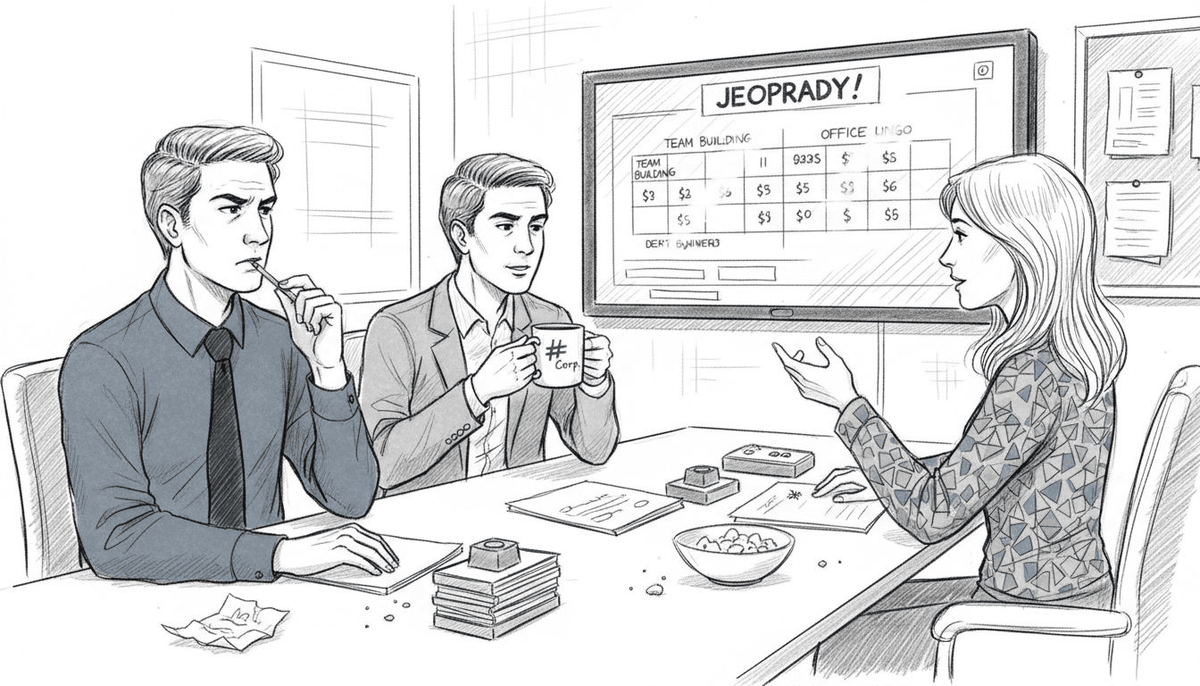
Family Feud excels at team collaboration. Teams discuss answers together before buzzing in, creating natural conversation and bonding. The survey-based questions feel less intimidating than traditional trivia, welcoming participants who don't consider themselves trivia experts. Family Feud trivia questions cover workplace scenarios, pop culture, and general knowledge that resonates across demographics.
Jeopardy offers structured competition with clear scoring. The category-based format lets you customize content around company history, industry knowledge, or entertainment themes. Players appreciate the strategic element of selecting questions by difficulty and value.
Wheel of Fortune adds physical excitement through letter-guessing mechanics. Teams work together solving puzzles, building momentum with each revealed letter. The format translates well to corporate settings because it balances luck with knowledge.
These formats support multiple simultaneous teams without complicated logistics. Modern platforms handle 4 to 20+ teams seamlessly using smartphone-based buzzers. Each team uses their phones as controllers, eliminating equipment rental costs and setup complexity.
Customization options make classic formats relevant to your organization. Upload company logos, choose color schemes matching your brand, and create popular trivia questions specific to your industry or culture. This personalization transforms generic entertainment into meaningful team experiences.
Pro Tip: Mix classic formats throughout your event rather than committing to one game for the entire night. Variety maintains energy and accommodates different player preferences.
Virtual and hybrid trivia nights
Remote and distributed workforces demand trivia formats that engage participants regardless of location. Hybrid events have grown in North America and can help engagement among distributed teams. Virtual trivia eliminates geographic barriers while maintaining competitive energy.
Successful virtual trivia requires three core elements:
- A reliable hosting platform with interactive features
- Clear communication channels for real-time coordination
- Engagement mechanics that overcome screen fatigue
Hybrid formats present unique challenges. You must balance in-person and remote participant experiences so neither group feels secondary. Dedicated facilitators for each group help manage technical issues and maintain energy levels. Split-screen displays showing both audiences create connection across locations.
Platform selection becomes critical for virtual events. Prioritize these features:
- Low-latency video and audio to prevent lag during competitive moments
- Breakout room capabilities for team huddles
- Screen sharing for question displays and scoreboards
- Mobile compatibility since many remote workers participate from personal devices
Online team building for businesses works best with shorter rounds and frequent breaks. Virtual attention spans run 30% shorter than in-person events. Design 15 to 20 minute rounds with 5 minute breaks for socializing and refreshments.
Technical preparation matters more for virtual events. Conduct platform walkthroughs with all participants 15 minutes before start time. Share backup communication channels in case the primary platform fails. Have technical support standing by during the event.
Why adopt hybrid team building becomes obvious when you see participation data. Offering hybrid options can raise overall attendance compared to location-restricted events. This flexibility particularly benefits global teams spanning multiple time zones.
Consult a comprehensive virtual team building guide for detailed implementation strategies. The guide covers scheduling across time zones, managing cultural differences, and measuring engagement effectiveness.
Technology platforms: comparing Quizado, Kahoot, and others
Platform selection determines whether your trivia night runs smoothly or crashes spectacularly. Each major platform offers distinct advantages and limitations that match different event scenarios.
| Feature | Quizado | Kahoot | Traditional Pen & Paper |
|---|---|---|---|
| Offline capability | Family Feud and Jeopardy offline in the apps; Trivia online | Requires internet | Fully offline |
| Device compatibility | macOS, Windows, Linux, Android, iOS | Web-based, any device | No devices needed |
| Custom branding | Extensive logo and theme options | Limited on free tier | Manual creation |
| Team support | Unlimited teams, configurable sizes | Up to 50 teams with premium | Limited by physical space |
| Question libraries | 500+ hours included | Community content, paid packs | Create from scratch |
| Pricing | Free plan, paid plans (see pricing) | Free basic, premium from $40/month | Material costs only |
Quizado runs every game on its servers and offers multi-OS apps, while Kahoot excels in browser-based accessibility. Corporate events at conference centers or restaurants with unreliable WiFi benefit from Quizado's server-run games, which survive a reload or a device switch, and from Family Feud and Jeopardy that can continue offline in the apps. Virtual events with strong internet infrastructure can leverage Kahoot's cloud-based features.
Smartphone buzzer systems revolutionize trivia interaction in both platforms. Participants use personal devices as controllers, buzzing in to answer questions and submitting responses in real time. This eliminates physical buzzer equipment while adding modern interactivity. The setup works smoothly when participants have cellular data as backup connectivity.
Customization depth varies significantly. Quizado offers professional branding including custom logos, color schemes, and visual themes mimicking retro or modern game show aesthetics. Kahoot's free version provides basic customization, with advanced branding locked behind premium tiers. For brand-sensitive corporate events, this difference justifies price premiums.
Pricing structures reflect different business models. Quizado has a free plan plus monthly and yearly plans for professional use. Kahoot offers monthly subscriptions with tiered feature access. Free versions exist for both but limit features such as player phones, games per day and branding. Budget-conscious planners should calculate per-event costs across multiple events rather than comparing monthly rates alone.
Explore diverse creative approaches through resources like portfolio typography examples when designing custom trivia presentations. Visual design impacts engagement more than most planners realize.
Summary comparison of corporate trivia night ideas
Consolidating all discussed formats and platforms helps clarify decision making. This comparison highlights how different options match various organizational needs and event constraints.
| Format/Platform | Offline Support | Ideal Team Size | Customization Level | Best For | Estimated Cost |
|---|---|---|---|---|---|
| Classic TV formats (Quizado) | Family Feud and Jeopardy in the apps | 4 to 12+ per team | High | In-person events, brand-sensitive gatherings | Free plan; paid plans on quizado.com/pricing |
| Virtual trivia (Kahoot) | No | 2 to 6 per team | Medium | Remote teams, online events | $40+ per month |
| Hybrid trivia (Quizado) | No, needs internet | 4 to 10 per team | High | Mixed in-person/remote audiences | Free plan; paid plans on quizado.com/pricing |
| Traditional pen & paper | Yes | Any size | Manual effort | Budget-constrained, low-tech venues | Under $50 materials |
Engagement metrics reveal clear winners. Classic TV formats tend to draw more participation than generic trivia. Hybrid formats can lift morale in distributed teams. These numbers justify premium platform investments for organizations prioritizing employee engagement.
Technology requirements separate options decisively. Venues with unreliable internet should choose software that keeps the game on its servers and bring a backup hotspot, or risk event failure. Virtual events demand stable high-speed connections for all participants. Assess your technical reality before committing to any platform.
Customization needs often tip the balance. Companies wanting branded experiences with custom content require premium platforms offering full design control. Organizations comfortable with generic templates can use free or low-cost options effectively.
Situational recommendations: choosing the best trivia night for your corporate event
Apply comparison insights to your specific situation using these scenario-based recommendations. Real event constraints rarely match ideal conditions, so prioritize your non-negotiable requirements.
For venues with spotty internet, select platforms that keep the game on their servers. Conference centers, restaurants, and retreat locations frequently have overloaded or unreliable WiFi. Testing connectivity during site visits reveals these issues early. A mobile hotspot as backup removes most of this risk.
Remote or hybrid teams benefit most from virtual trivia formats with strong video integration. Prioritize platforms offering breakout rooms and screen sharing. Schedule shorter rounds to combat screen fatigue. Budget extra time for technical troubleshooting since distributed setups introduce more potential failure points.
Large companies need platforms supporting many simultaneous teams with flexible sizing. Events with 100+ participants require software handling 10 to 20+ teams without performance degradation. Test your chosen platform at scale before the actual event. Free tiers typically restrict team counts, making premium subscriptions necessary for large gatherings.
Key selection factors by priority:
- Internet reliability at venue dictates your backup plan (hotspot, stored Family Feud or Jeopardy sets)
- Participant distribution determines virtual, hybrid, or in-person format
- Budget constraints set platform tier and customization depth
- Branding sensitivity influences customization feature needs
- Team composition affects ideal format and question difficulty
Brand-sensitive events demand platforms with extensive customization tools. Upload company logos, match corporate color schemes, and create custom questions reflecting organizational culture. This personalization transforms generic entertainment into meaningful experiences that reinforce company identity and values.
Budget limits require balancing free versus premium solutions. Calculate total costs across multiple events rather than focusing on single-event pricing. A $50 monthly premium subscription costs less than $15 per event if you host weekly trivia nights. Free versions make sense for one-off events with minimal customization needs.
Pro Tip: Always run trial events with a small test group before rolling out trivia nights company-wide. This identifies technical issues, reveals engagement patterns, and builds internal expertise for smoother large-scale execution.
Enhance your corporate trivia nights with Quizado
Ready to implement these trivia night strategies at your next corporate event? Quizado delivers the reliability, customization, and engagement features this guide recommends for successful team building.
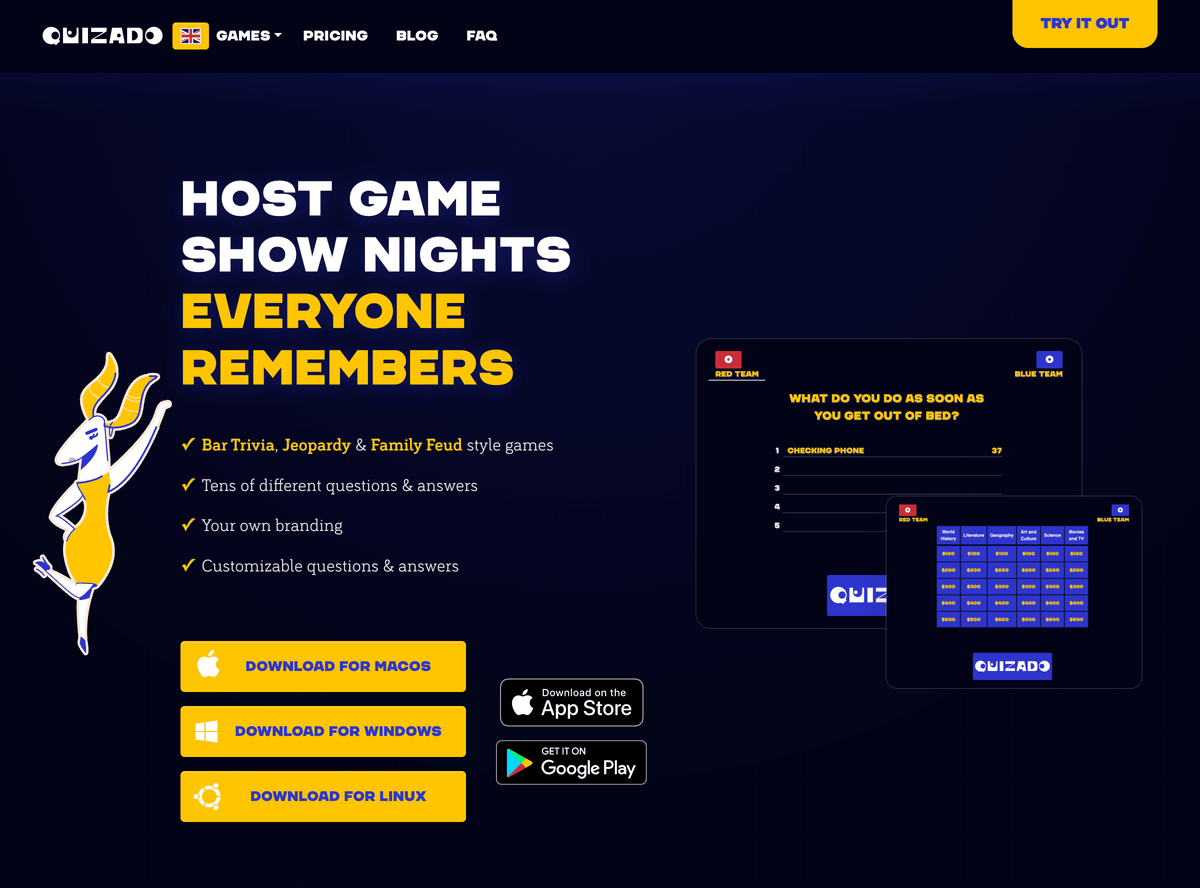
The platform runs every game on its servers, so a reload or a device switch does not stop the game, and Family Feud and Jeopardy can continue offline in the desktop and mobile apps. Access 500+ hours of ready-made content through extensive question libraries, or create custom questions reflecting your company culture. Smartphone-based buzzers eliminate equipment hassles while adding modern interactivity.
Multi-team support accommodates events of any size with configurable team structures matching your needs. Extensive branding options let you upload logos and choose visual themes for polished, professional presentations. Flexible pricing plans scale from free trials to premium subscriptions based on your event frequency and feature requirements.
Whether planning in-person gatherings or hybrid events, Quizado supports both formats seamlessly. Explore family feud trivia questions and popular trivia questions to see content quality firsthand. Visit the Quizado corporate trivia platform to start planning your next engaging team event.
FAQ
What is the ideal team size for corporate trivia nights?
Ideal team sizes range from 4 to 12 players, balancing active participation with manageable group dynamics. Smaller teams of 4 to 6 work well for intimate settings where every voice matters. Larger teams of 8 to 12 suit big events where social mixing is a priority. Platforms supporting scalable team configurations let you adjust sizing based on total participant counts and engagement goals.
Can corporate trivia nights be effective without reliable internet?
Partly. With Quizado, Family Feud and Jeopardy can run offline from sets stored in the desktop and mobile apps (on a plan that includes them), and every online game runs on Quizado's servers, so a reload or a device switch does not stop it. Trivia and phone buzzers need internet, so for venues like conference centers, restaurants, and retreat locations, bring a mobile hotspot. Download your Feud and Jeopardy sets before the event.
Are free trivia software options suitable for corporate events?
Free versions may limit team counts, question access, and customization features, reducing overall engagement quality. Restrictions typically include maximum two teams, basic question sets, and no branding options. Premium subscriptions from $20 to $50 per event unlock full content libraries, unlimited teams, custom branding, and technical support. For professional corporate events, premium features justify the cost through smoother execution and better participant experiences.
How can trivia nights support branding and company culture?
Custom trivia content integrates company-specific themes, values, and inside jokes into questions and gameplay. Platforms offering branding features let you upload logos, match corporate colors, and create questions about company history or industry knowledge. This personalization transforms generic entertainment into cultural reinforcement that strengthens team identity. Participants remember branded trivia experiences far longer than generic events, amplifying your investment in team engagement.
What are common pitfalls to avoid when planning corporate trivia nights?
Avoid relying on venue WiFi alone: keep a mobile hotspot and use software that keeps the game on its servers, as connectivity failures destroy engagement momentum. Ensure team sizes are properly configured for your participant count to prevent overcrowding or isolation. Don't underestimate premium software benefits like technical support, extensive question libraries, and customization tools that make events run smoothly. Finally, skip adequate technical rehearsals at your own risk, as most disasters stem from preventable setup issues discovered too late.
Recommended
Turn these ideas into a team event
Prepare an office quiz or remote game with a shared screen, phone participation and a host on your team.

Bring your group together for a game
Try a free starter game, then choose the format and plan for your group.
Trusted by 5,000+ hosts