
In this post+
Managing engagement across Canadian, American, and European teams brings a unique set of challenges for global HR professionals. In multinational settings, differences in cultural norms and work styles can impact how teams connect and collaborate. By focusing on cultural intelligence and inclusive leadership, organizations create stronger bonds between remote and in-office employees. This guide shows actionable ways to measure engagement, adopt technology-driven methods, and build resilient team environments across countries and cultures.
Table of Contents
- Defining Team Engagement In Multinational Settings
- Types Of Engagement Metrics And Methods
- Modern Tools For Measuring Team Engagement
- Key Drivers Of Engagement In Large Teams
- Challenges And Common Pitfalls In Engagement Measurement
Key Takeaways
| Point | Details |
|---|---|
| Cultural Intelligence is Essential | Developing cultural intelligence training can improve understanding of diverse communication styles and enhance team engagement in multinational settings. |
| Holistic Engagement Metrics Are Necessary | Employ a mixed-method approach to gauge team engagement, combining qualitative insights with quantitative metrics for comprehensive analysis. |
| Leadership Matters | Adaptive and inclusive leadership practices significantly drive engagement and foster environments where team members feel valued and understood. |
| Technology Enhances Measurement | Utilize advanced digital tools for real-time insights into team dynamics, facilitating more effective engagement strategies across diverse cultural contexts. |
Defining Team Engagement in Multinational Settings
Team engagement in multinational environments represents a sophisticated, multi-layered concept that transcends traditional workplace interaction models. Unlike localized team dynamics, global organizations face unique challenges in creating cohesive, motivated workforce experiences across diverse cultural landscapes.
Research reveals that cultural diversity profoundly impacts workplace dynamics. A recent study exploring cultural intelligence in multicultural settings demonstrates how understanding and navigating cultural differences directly influences team engagement and employee retention. Multinational teams must recognize that engagement is not a universal, one-size-fits-all construct but a nuanced interaction of individual, team, and organizational factors.
Key characteristics of effective team engagement in global settings include:
- Proactive cross-cultural communication strategies
- Inclusive leadership approaches that respect cultural differences
- Flexible collaboration frameworks
- Technology-enabled connection platforms
- Personalized recognition and motivation techniques
Leadership plays a critical role in fostering engagement. Leader inclusiveness and organizational diversity practices emerge as fundamental drivers of team resilience and engagement. Successful global HR strategies must intentionally design environments that celebrate diversity while creating unified team experiences.
Pro tip: Develop cultural intelligence training programs that help team members understand and appreciate diverse communication and work styles to enhance global team engagement.
Types of Engagement Metrics and Methods
Measuring team engagement in multinational organizations requires a sophisticated, multi-dimensional approach that goes beyond traditional performance indicators. Engagement metrics represent complex analytical tools designed to capture the nuanced interactions and psychological investments employees make within their workplace environments.

Research highlights several critical frameworks for assessing team engagement. A comprehensive study exploring metrics and assessment tools reveals that effective measurement strategies must integrate both quantitative and qualitative methodologies across diverse cultural contexts.
Key engagement metrics for global teams include:
- Employee satisfaction surveys
- Performance and productivity tracking
- Retention and turnover rates
- Communication frequency and quality
- Professional development participation
- Peer and leadership feedback mechanisms
- Cross-cultural collaboration indicators
These metrics are not standalone indicators but interconnected components that provide holistic insights into team dynamics. Team learning and performance assessment emphasizes the importance of integrating multiple data points to understand engagement comprehensively. Global HR professionals must develop adaptive measurement frameworks that respect cultural nuances while maintaining consistent evaluation standards.
Additionally, technology plays a crucial role in modern engagement measurement. Advanced analytics platforms can aggregate data from various sources, providing real-time insights into team interactions, sentiment, and potential areas for improvement. By leveraging these tools, organizations can create more responsive and dynamic engagement strategies.
Compare traditional and advanced approaches to engagement measurement:
| Approach | Data Depth | Cultural Adaptability | Analytics Capability |
|---|---|---|---|
| Traditional Surveys | Surface-level, limited | Generic, may lack nuance | Manual, basic reports |
| Advanced Digital Tools | Multi-dimensional, rich | Configurable for local needs | Automated, predictive insights |
Pro tip: Implement a mixed-method approach to engagement measurement, combining quantitative surveys with qualitative feedback sessions to capture comprehensive insights into team dynamics.
Modern Tools for Measuring Team Engagement
The landscape of team engagement measurement has dramatically transformed with the advent of advanced digital technologies. Digital platforms now offer unprecedented capabilities for tracking, analyzing, and enhancing team dynamics across global organizations, moving far beyond traditional performance review methodologies.
Digital collaboration technologies have revolutionized how multinational teams monitor and improve engagement, providing real-time insights into team interactions and individual contributions.
Key modern tools for measuring team engagement include:
- Real-time sentiment analysis platforms
- AI-powered communication analytics
- Integrated feedback and survey systems
- Performance tracking dashboards
- Virtual collaboration interaction monitors
- Cross-cultural communication assessment tools
- Psychological engagement index calculators
Moreover, communication technology evaluation demonstrates how these tools help overcome cultural and linguistic barriers by providing standardized yet flexible measurement frameworks. Advanced analytics can now capture nuanced engagement indicators that traditional methods would miss, including emotional intelligence metrics, communication pattern analysis, and predictive engagement forecasting.
Here's a summary of how modern digital tools enhance the measurement of team engagement in multinational organizations:
| Tool Type | Main Function | Business Impact |
|---|---|---|
| Sentiment analysis platforms | Assess team mood in real time | Enable swift response to team issues |
| AI communication analytics | Analyze conversation patterns | Reveal collaboration strengths and gaps |
| Feedback and survey systems | Collect team input digitally | Improve responsiveness to concerns |
| Performance tracking dashboards | Monitor goals and progress | Boost transparency and accountability |
These technological solutions offer HR professionals unprecedented visibility into team dynamics. By integrating machine learning algorithms and comprehensive data collection strategies, organizations can develop more responsive, adaptive engagement strategies that transcend geographical and cultural boundaries.
Pro tip: Select engagement measurement tools that offer customizable metrics and cross-cultural adaptability to ensure comprehensive and meaningful insights.
Key Drivers of Engagement in Large Teams
Engagement in large multinational teams represents a complex interplay of psychological, cultural, and organizational dynamics. Organizational commitment emerges as a critical foundation for creating cohesive, high-performing teams that transcend geographical and cultural boundaries.
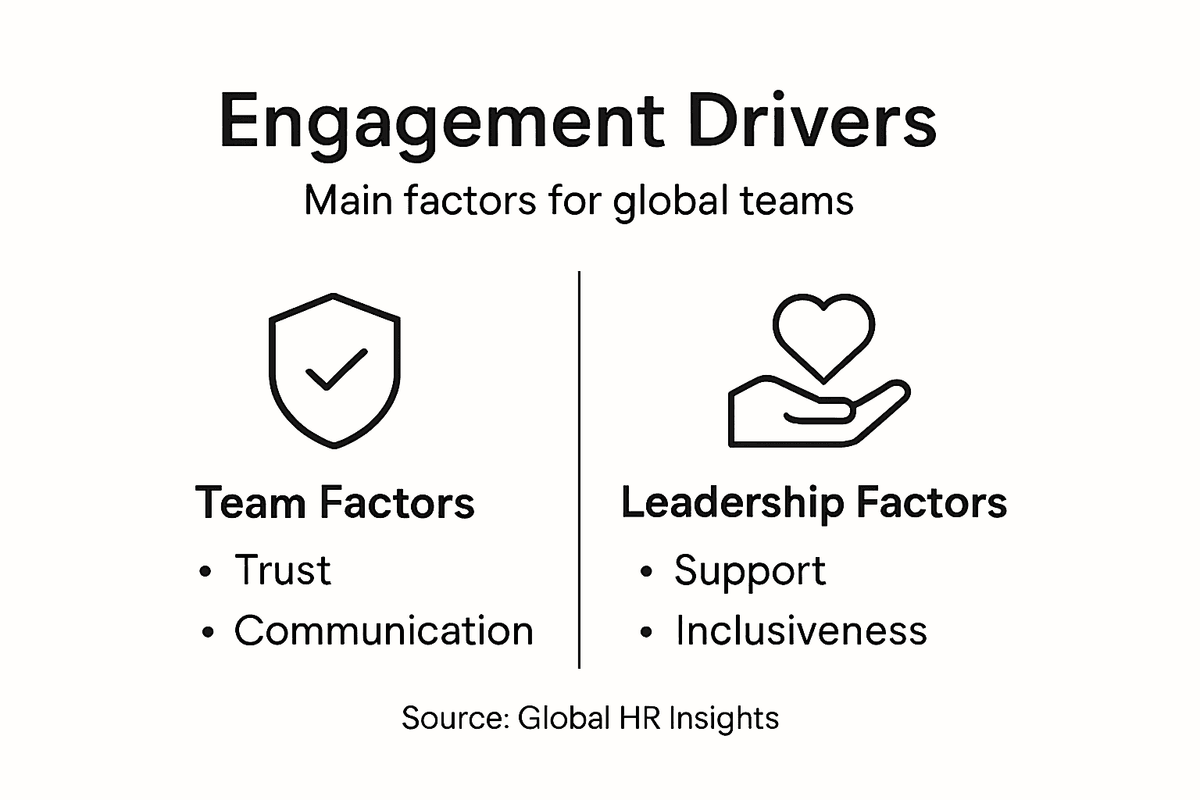
Leadership's cultural bridging behaviors play a pivotal role in fostering team engagement, demonstrating that effective leaders must deliberately create environments of psychological safety and mutual understanding.
Key drivers of engagement in large teams include:
- Adaptive and inclusive leadership approaches
- Transparent communication strategies
- Shared innovation and goal-setting processes
- Recognition of individual and collective achievements
- Cross-cultural competence and sensitivity
- Opportunities for professional development
- Meaningful work alignment
Furthermore, psychological safety and cultural sensitivity emerge as foundational elements that enable teams to collaborate effectively. These drivers create an environment where team members feel valued, understood, and empowered to contribute their unique perspectives.
Successful engagement strategies require a holistic approach that integrates technological tools, leadership practices, and cultural intelligence. By understanding and implementing these key drivers, organizations can create resilient, motivated teams that consistently deliver exceptional performance across diverse global contexts.
Pro tip: Develop customized engagement strategies that balance standardized frameworks with cultural adaptability to maximize team motivation and performance.
Challenges and Common Pitfalls in Engagement Measurement
Measuring team engagement in multinational environments presents complex challenges that go far beyond traditional performance assessment methodologies. Cultural complexity creates significant obstacles for HR professionals seeking accurate and meaningful engagement insights across diverse organizational landscapes.
Stakeholder engagement challenges reveal profound difficulties in building relationships across different cultural contexts, highlighting the nuanced nature of global team dynamics. Standard measurement approaches often fail to capture the subtle interactions and motivational drivers unique to each cultural environment.
Key challenges in engagement measurement include:
- Language and communication barriers
- Inconsistent interpretation of engagement indicators
- Cultural differences in workplace expectations
- Varying definitions of professional motivation
- Technological limitations in cross-cultural data collection
- Subjective nature of employee feedback
- Difficulty standardizing assessment metrics
Multinational team collaboration obstacles demonstrate that traditional engagement measurement tools frequently overlook critical contextual factors. These include differences in working styles, communication preferences, and deeply ingrained cultural norms that significantly impact how employees perceive and express workplace commitment.
Successful engagement measurement requires a sophisticated, adaptive approach that recognizes the inherent complexity of global team dynamics. Organizations must develop flexible frameworks that can accommodate diverse cultural perspectives while maintaining rigorous analytical standards.
Pro tip: Design engagement measurement strategies with built-in cultural calibration mechanisms that allow for nuanced interpretation of feedback across different global contexts.
Boost Global Team Engagement with Interactive Solutions
Measuring team engagement across diverse multinational teams presents clear challenges such as cultural nuances, communication barriers, and the need for adaptive strategies. This article highlights key pain points like overcoming cultural complexity and the importance of personalized recognition and motivation techniques. At Quizado, we understand that fostering meaningful collaboration requires more than traditional surveys or metrics. Our platform offers customizable team-building quiz games designed to unite global teams through fun, interactive experiences that encourage communication and trust.

Elevate your engagement measurement by incorporating entertaining, culturally adaptable activities that resonate across borders. Explore how you can transform team dynamics with Quizado’s customizable quiz platform, enabling managers to create inclusive, engaging environments that support the drivers of team commitment and motivation. Don’t wait to connect your global workforce—start enhancing collaboration and engagement today by visiting Quizado.com and creating your first personalized team experience.
Frequently Asked Questions
How can cultural diversity impact team engagement in multinational organizations?
Cultural diversity can significantly influence team engagement by affecting communication styles, workplace expectations, and individual motivations. Understanding and navigating these differences is essential for fostering cohesive team dynamics.
What are effective methods for measuring team engagement in global settings?
Effective methods for measuring team engagement in global settings include using employee satisfaction surveys, performance tracking, communication quality assessments, and analysis of peer feedback, all tailored to respect cultural nuances.
What role does leadership play in enhancing team engagement?
Leadership is critical in enhancing team engagement by promoting inclusive practices, transparent communication, and creating an environment of psychological safety that values diversity and encourages collaboration.
What are common challenges in measuring engagement in multinational teams?
Common challenges in measuring engagement in multinational teams include language barriers, cultural differences in interpreting engagement metrics, and the subjective nature of employee feedback, which can complicate efforts to gather accurate insights.
Host a quiz with your group
Find a hosting setup for your venue, company, classroom or activity group.