
In this post+
Nearly eight out of ten American managers struggle to keep remote teams engaged on a daily basis. When working across continents and cultures, measuring team performance becomes even more complex for multinational companies. Understanding what drives effective collaboration is crucial for corporate leaders seeking fresh, interactive ways to unite remote groups. Discover practical insights on strengthening team cohesion, improving communication, and motivating employees with activities that turn ordinary meetings into energizing team experiences.
Table of Contents
- Defining Team Performance In The Workplace
- Major Types Of Team Performance Metrics
- Core Drivers Of High-Performing Teams
- How To Effectively Measure Team Results
- Common Pitfalls And Ways To Improve
Key Takeaways
| Point | Details |
|---|---|
| Team Performance is Collaborative | Effective team performance hinges on cohesion, clear roles, and communication. It transforms individual contributions into organizational success. |
| Balanced Performance Metrics Matter | Utilize both quantitative and qualitative metrics for a comprehensive assessment of team effectiveness. This ensures a more nuanced understanding of performance. |
| Core Drivers for High Performance | Foster effective communication, strong leadership, and adaptability to enhance team dynamics and resilience. These factors significantly impact team success. |
| Address Pitfalls for Improvement | Recognize and tackle issues like lack of trust and communication barriers to build high-performing teams. Implement proactive strategies for continuous improvement. |
Defining Team Performance in the Workplace
Team performance represents more than individual productivity stacked together. It is a complex, dynamic process of collective achievement that transforms individual contributions into coordinated organizational success. Teamwork involves collaborative efforts where groups strategically align their skills, resources, and objectives to accomplish shared goals.
At its core, workplace team performance hinges on several critical dimensions. Effective teams demonstrate strong group cohesion, clear role definitions, and robust communication channels. These teams understand interdependence means each member's performance directly impacts overall results. Employers expect team members to participate respectfully and fulfill assigned tasks, creating an environment of mutual accountability and collaborative problem solving.
Successful team performance involves multiple interconnected elements. These include strategic planning, adaptive communication, conflict resolution skills, shared commitment to goals, and the ability to leverage individual strengths toward collective outcomes. Teams that master these competencies can transform potential challenges into opportunities for innovation and superior performance.
Pro tip: Regularly conduct team self-assessments to identify communication gaps, realign objectives, and strengthen collaborative processes.
Major Types of Team Performance Metrics
Organizations utilize multiple dimensions to assess team performance comprehensively. Performance indicators help evaluate success and strategic improvements across different organizational aspects, providing critical insights into team effectiveness and potential areas of development.
Key performance metrics typically fall into several strategic categories. Quantitative metrics include measurable outcomes like project completion rates, revenue generated, error reduction percentages, and productivity benchmarks. Qualitative metrics assess less tangible but equally important factors such as team collaboration, communication effectiveness, innovation potential, and interpersonal dynamics. Performance management encompasses five fundamental components: planning, monitoring, developing, rating, and rewarding team contributions.

Effective performance measurement requires a balanced approach that combines objective data with nuanced evaluation techniques. Advanced organizations often employ comprehensive frameworks like the balanced scorecard, which integrates multiple perspectives including financial performance, customer satisfaction, internal processes, and learning and growth potential. This holistic approach ensures that team performance is assessed not just through traditional productivity metrics, but through a more sophisticated lens that captures the complexity of collaborative work.
The following table summarizes how quantitative and qualitative team performance metrics differ in their focus and business value:
| Metric Type | What It Measures | Typical Examples | Business Impact |
|---|---|---|---|
| Quantitative | Tangible outputs and results | Completion rates, revenue | Measures productivity and ROI |
| Qualitative | Process quality and dynamics | Collaboration, innovation | Gauges effectiveness, morale |
Pro tip: Implement quarterly performance review cycles that blend quantitative metrics with structured peer and self-assessments to capture comprehensive team performance insights.
Core Drivers of High-Performing Teams
Understanding the core drivers of high-performing teams requires a multifaceted approach that goes beyond traditional productivity metrics. High-performing teams share common factors that distinguish them from average work groups, including complementary skills, dynamic problem solving capabilities, and robust social cohesion.
Key drivers of exceptional team performance encompass several critical dimensions. Effective communication stands as the foundational element, enabling teams to navigate complex challenges and align individual efforts toward collective goals. Leadership plays a transformative role in creating an environment of trust, accountability, and continuous learning. A performance culture engages and inspires workforce potential through strategic management practices, emphasizing collaboration, skill development, and meaningful feedback mechanisms.
Successful teams also demonstrate remarkable adaptability and emotional intelligence. They possess the ability to manage conflicts constructively, leverage diverse perspectives, and maintain high levels of motivation even under challenging circumstances. This requires a delicate balance of individual empowerment, mutual respect, and shared commitment to team objectives. Advanced teams cultivate an environment where members feel valued, supported, and intrinsically motivated to contribute their best work.
Pro tip: Conduct monthly team retrospectives that allow open dialogue about collaboration challenges and celebrate collective achievements to continuously strengthen team dynamics.
Here is a concise reference table for major drivers of high-performing teams and their typical workplace effects:
| Driver | Workplace Effect | Example Practice |
|---|---|---|
| Effective Communication | Faster problem solving | Regular team check-ins |
| Strong Leadership | Increased trust and engagement | Mentoring and feedback loops |
| Adaptability | Better resilience to challenges | Cross-training opportunities |
| Emotional Intelligence | Positive team relationships | Conflict management training |
How to Effectively Measure Team Results
Performance measurement involves systematic data collection and strategic monitoring that goes beyond simple numerical tracking. Effectively measuring team results requires a comprehensive approach that captures both quantitative outputs and qualitative nuances of collaborative work.
Successful measurement strategies typically incorporate multiple dimensions of assessment. Objective metrics might include project completion rates, productivity benchmarks, and specific goal achievements. However, truly insightful evaluation demands a more holistic perspective. Effective team result measurement depends on mutual trust, shared vision, and strong communication, which means incorporating feedback mechanisms, peer evaluations, and contextual performance indicators.
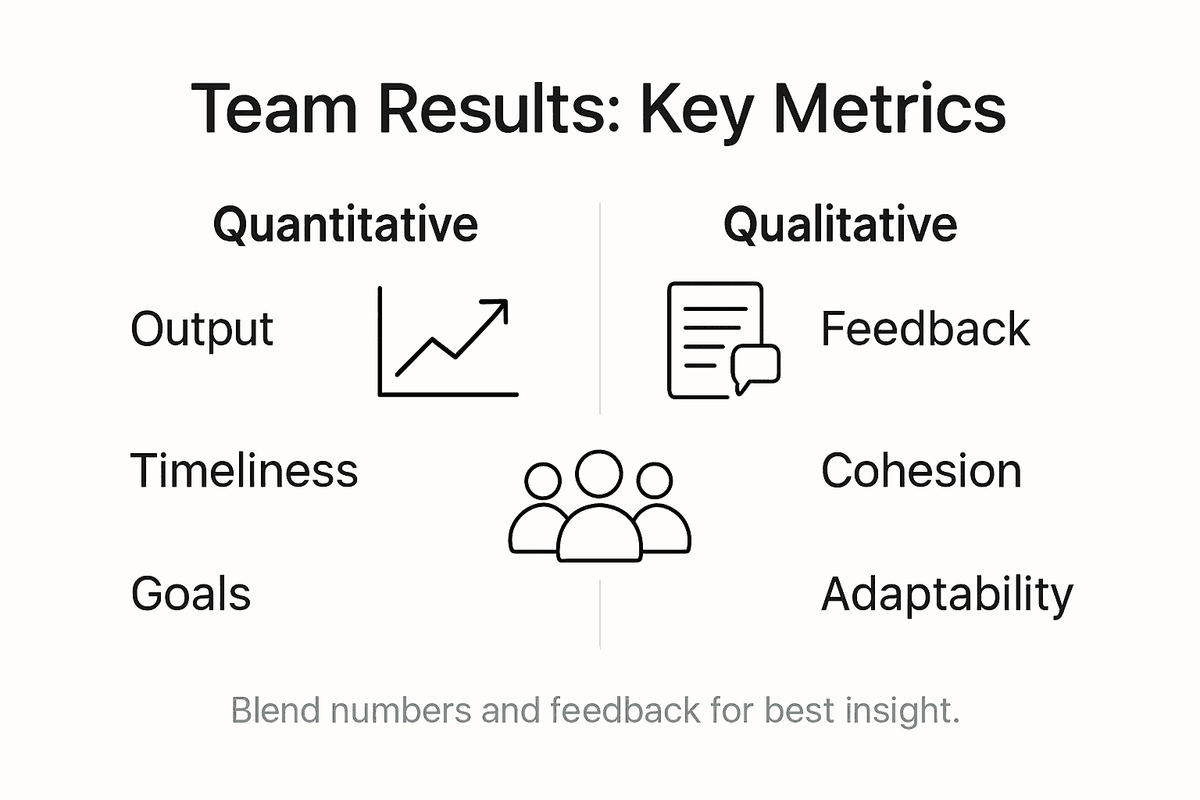
Advanced organizations recognize that team performance measurement is an ongoing, dynamic process. This approach requires creating robust evaluation frameworks that balance quantitative data with meaningful qualitative insights. Key components include regular performance reviews, 360-degree feedback systems, individual and collective goal tracking, and mechanisms that recognize both individual contributions and collective achievements. The most effective measurement strategies remain flexible, allowing for continuous improvement and adaptive goal setting.
Pro tip: Implement quarterly review cycles that blend quantitative performance data with structured narrative feedback to provide a comprehensive view of team effectiveness.
Common Pitfalls and Ways to Improve
Team performance challenges often stem from fundamental dysfunctions that undermine collective effectiveness, ranging from communication breakdowns to systemic trust issues. Understanding these potential obstacles is the first critical step toward building more resilient and high-performing teams.
Critical pitfalls typically emerge from several interconnected organizational dynamics. Lack of trust represents the most foundational challenge, creating an environment where team members hesitate to be vulnerable, share genuine perspectives, or collaborate openly. Improving team performance requires addressing communication barriers, unresolved conflicts, and weak leadership structures. Organizations must create psychological safety, where individuals feel empowered to speak candidly, challenge assumptions, and contribute meaningfully without fear of negative repercussions.
Successful team transformation demands proactive strategies that systematically dismantle traditional performance barriers. This involves developing transparent communication protocols, establishing clear accountability mechanisms, promoting constructive conflict resolution, and creating leadership models that prioritize collective achievement over individual recognition. Advanced teams recognize that continuous learning, adaptive problem solving, and genuine mutual respect are more important than rigid hierarchical structures or competitive internal dynamics.
Pro tip: Implement monthly "team health" check-ins that allow anonymous feedback and create structured opportunities for addressing interpersonal and collaborative challenges.
Boost Your Team Performance with Engaging Interactive Games
The article highlights common team performance challenges such as communication gaps, lack of trust, and the need for stronger collaboration to drive engagement and results. If your team is struggling with building effective communication, enhancing group cohesion, or creating a culture of mutual accountability, then incorporating fun and interactive activities can be a game changer. Using strategies like regular team retrospectives is key, but pairing those with engaging tools can take your team dynamics to the next level.
Quizado offers a customizable platform designed specifically to strengthen team cohesion through interactive quiz games inspired by popular game shows. With features like team configuration, branded visuals, and remote control via smartphones, it makes fostering open communication and collaboration not only easier but enjoyable. This approach directly supports the core drivers of high-performing teams detailed in the article by creating an environment where team members connect, share knowledge, and solve problems together — all while having fun.

Experience how tailored quiz games can transform your team's interaction, improve communication, and build the trust needed for higher performance. Visit Quizado today to start customizing your team-building experience and unlock your team’s full potential. Don't wait because stronger teams make better results now.
Frequently Asked Questions
What are the key dimensions of team performance in the workplace?
Key dimensions of team performance include group cohesion, clear role definitions, and robust communication channels. These factors enable teams to function effectively towards shared goals.
How can organizations measure team performance effectively?
Organizations can measure team performance using a balanced approach that combines quantitative metrics (like project completion rates and productivity benchmarks) with qualitative assessments (such as team collaboration and innovation potential).
What are some common pitfalls that hinder team performance?
Common pitfalls include lack of trust, communication breakdowns, and weak leadership structures. Addressing these issues is crucial for building high-performing teams.
What strategies can be implemented to improve team performance?
To improve team performance, organizations can focus on transparent communication, creating clear accountability mechanisms, promoting constructive conflict resolution, and fostering an environment of psychological safety.
Host a quiz with your group
Find a hosting setup for your venue, company, classroom or activity group.