
In this post+
Nearly 80 percent of American organizations report that team engagement is closely linked to higher productivity and lower turnover. For HR managers navigating large global firms, finding the right strategies to energize teams and break through cultural barriers is a daily challenge. Exploring the real drivers behind engagement and uncovering common myths can help you create interactive quiz games that spark collaboration and transform workplace morale across every continent.
Table of Contents
- Defining Team Engagement And Common Myths
- Psychological Drivers Behind Team Engagement
- Impact On Collaboration And Productivity
- Role Of Engagement In Retention And Well-Being
- Implementing Effective Engagement Activities
Key Takeaways
| Point | Details |
|---|---|
| Understanding Team Engagement | Team engagement is a complex psychological state that extends beyond collaboration; it requires active participation and shared commitment. |
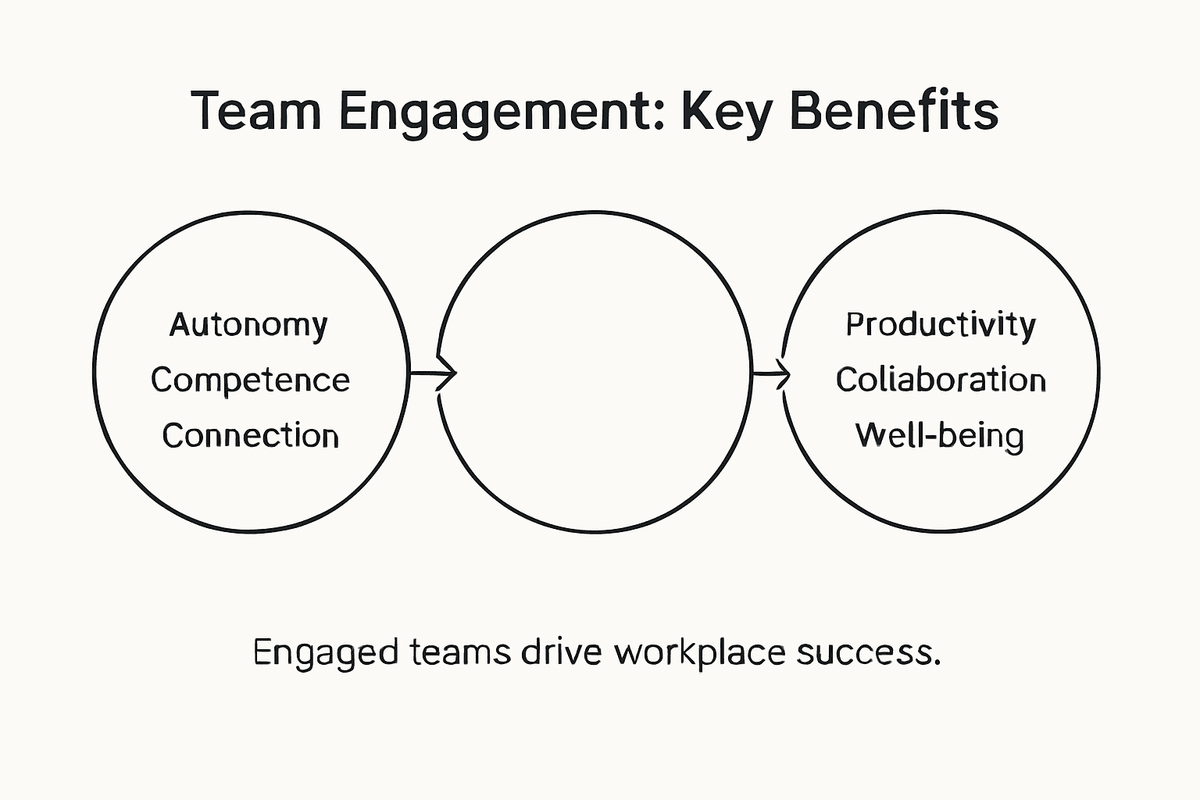
| Core Psychological Drivers | Autonomy, competence, and connection significantly influence team dynamics and engagement, shaping how members interact and contribute. |
| Impact on Productivity | High levels of team engagement correlate with improved collaboration and productivity, demonstrating that engaged teams outperform their peers. |
| Retention and Well-Being | Engaged teams foster psychological safety, leading to higher employee satisfaction, reduced turnover rates, and enhanced mental resilience. |
Defining Team Engagement and Common Myths
Team engagement is a dynamic, multifaceted concept that extends far beyond simple workplace collaboration. It represents a collective psychological state where team members are emotionally invested, motivated, and synchronized in pursuing organizational objectives. Unlike individual engagement, team engagement involves complex social interactions and shared emotional experiences that create a unified workforce.
Researchers have identified several persistent myths about team engagement that can mislead managers. One significant misconception is that team harmony automatically translates to high performance. In reality, team engagement emerges through strategic psychological and social processes that require nuanced understanding. True engagement involves more than surface level agreement it demands active participation, mutual accountability, and a genuine commitment to shared goals.
At its core, team engagement encompasses three critical dimensions: vigor, dedication, and absorption. Vigor represents the collective energy and resilience team members demonstrate. Dedication reflects their shared sense of meaning and pride in their work. Absorption indicates the team's ability to become deeply immersed in collaborative tasks, losing track of time while maintaining exceptional focus. These dimensions are not static but dynamic, requiring continuous cultivation and strategic management.
Pro Manager Tip: Conduct quarterly team engagement assessments that measure not just productivity metrics, but emotional investment, communication quality, and collective motivation levels to gain a holistic understanding of your team's engagement landscape.
Psychological Drivers Behind Team Engagement
Team engagement is fundamentally rooted in complex psychological mechanisms that drive human motivation and collective behavior. Researchers have identified three core psychological drivers that profoundly influence team dynamics and engagement: autonomy, competence, and connection. These fundamental psychological needs shape how team members interact, contribute, and maintain their commitment to organizational goals.
Autonomy represents the team's desire for self-direction and meaningful choice within their work environment. When team members feel they have genuine control over their tasks and decision making processes, their intrinsic motivation significantly increases. Competence relates to the team's collective belief in their capabilities to accomplish challenging objectives. This psychological driver involves creating environments where teams feel confident in their skills and perceive opportunities for growth and development.
The third critical psychological driver is connection, which encompasses the social and emotional bonds that unite team members. Strong interpersonal relationships, mutual trust, and a sense of belonging are essential for sustained engagement. Teams that cultivate deep connections experience higher levels of psychological safety, enabling more open communication, collaborative problem solving, and collective resilience. These social dynamics transform work from a transactional experience to a meaningful shared journey.
Pro Collaboration Tip: Design structured team activities that deliberately rotate leadership roles, allowing each member to experience autonomy, demonstrate competence, and strengthen interpersonal connections across different project scenarios.
Here is a summary of the core psychological drivers and how they influence team engagement:
| Psychological Driver | Impact on Teams | Example in Practice |
|---|---|---|
| Autonomy | Boosts motivation and creativity | Letting members choose project roles |
| Competence | Encourages skill growth and confidence | Providing professional development workshops |
| Connection | Strengthens trust and collaboration | Organizing team-building events |
Impact on Collaboration and Productivity
Comprehensive international research reveals that team engagement directly correlates with substantial improvements in workplace collaboration and organizational productivity. When teams develop high levels of engagement, they create a powerful synergy that transforms how work gets accomplished, breaking down traditional barriers and fostering a more integrated, dynamic work environment.
The impact of team engagement extends far beyond simple task completion. Engaged teams demonstrate remarkable characteristics such as enhanced communication clarity, increased trust, and more effective shared decision making processes. These teams develop an intuitive understanding of collective goals, allowing them to navigate complex challenges with greater agility and innovation. By cultivating a collaborative mindset, organizations can unlock unprecedented levels of collective performance that surpass traditional individual productivity metrics.

Productivity gains from team engagement are not merely theoretical. Empirical studies across multiple industries confirm that engaged teams consistently outperform their less engaged counterparts, showing measurable improvements in both qualitative outcomes and quantitative performance indicators. The key lies in creating an ecosystem where team members feel psychologically safe, valued, and intrinsically motivated to contribute their best work. This approach transforms workplace dynamics from transactional interactions to meaningful, collaborative experiences that drive organizational success.
Pro Performance Tip: Implement quarterly team engagement assessments that measure not just productivity metrics, but also interpersonal dynamics, communication effectiveness, and collective problem solving capabilities to continuously optimize team performance.
Role of Engagement in Retention and Well-Being
Comprehensive research demonstrates that team engagement plays a critical role in employee retention and psychological well-being, revealing a profound connection between collaborative workplace environments and individual employee satisfaction. When teams cultivate meaningful engagement, they create a psychological safety net that supports mental health, reduces workplace stress, and significantly decreases turnover rates.
The mechanisms underlying engagement's impact on retention are multifaceted. Engaged teams provide employees with a sense of purpose, belonging, and professional identity that transcends traditional job descriptions. By fostering environments where individuals feel valued, heard, and connected to broader organizational goals, companies can create powerful emotional commitments that transform workplace relationships from transactional interactions to meaningful, supportive experiences. This emotional investment directly correlates with reduced burnout, enhanced job satisfaction, and a stronger likelihood of long-term organizational commitment.
Psychological well-being emerges as a critical outcome of sustained team engagement. Employees in highly engaged teams report lower levels of work-related anxiety, improved mental resilience, and a more positive outlook on their professional trajectories. The supportive interpersonal dynamics within these teams create a buffer against workplace challenges, enabling individuals to navigate professional pressures with greater emotional intelligence and adaptive capacity. Moreover, these teams develop collective coping mechanisms that distribute emotional labor and provide mutual support during high-stress periods.
Pro Wellness Tip: Develop monthly team reflection sessions that allow members to discuss emotional experiences, share challenges, and collaboratively develop strategies for maintaining psychological balance and mutual support.
Implementing Effective Engagement Activities
Systematic research reveals critical strategies for designing impactful team engagement activities that drive organizational performance, demonstrating that successful engagement requires more than superficial team-building exercises. Effective activities must be intentionally crafted to address specific psychological and professional needs, creating meaningful opportunities for interaction, skill development, and collective growth.
Structured engagement activities should incorporate multiple dimensions of team interaction. Research suggests that the most successful approaches blend collaborative problem solving, skill-sharing workshops, and interactive challenges that encourage communication and mutual understanding. These activities work best when they align with organizational goals while simultaneously addressing individual team members' professional development needs. Interactive experiences that allow team members to showcase diverse skills, share knowledge, and develop cross-functional understanding can transform routine workplace interactions into powerful learning and connection opportunities.
The most successful engagement interventions are those that balance structured guidance with opportunities for spontaneous interaction. Controlled studies of team engagement interventions demonstrate that activities combining collaborative learning, skill exchange, and resource-building produce the most significant gains in team performance. This approach requires thoughtful design that considers team dynamics, individual strengths, and organizational context. Managers must move beyond generic team-building exercises to create experiences that feel authentic, challenging, and genuinely meaningful to participants.
Pro Activity Design Tip: Create engagement activities that rotate leadership roles, allowing each team member to experience different perspectives and contribute unique strengths while fostering a culture of mutual respect and collaborative learning.
The following table highlights how team engagement activities can be structured for maximum impact:
| Activity Type | Team Benefit | Implementation Tip |
|---|---|---|
| Collaborative Workshops | Enhances problem solving skills | Blend departments for diverse perspectives |
| Leadership Rotation | Fosters accountability and recognition | Assign new leaders per project phase |
| Skill-Sharing Sessions | Builds collective expertise | Encourage peer-led training workshops |
Elevate Your Team Engagement with Interactive Quiz Experiences
The article highlights the crucial role of team engagement in boosting collaboration productivity and well-being. If your team struggles with fostering autonomy connection or collective motivation quizado.com offers an innovative solution designed to transform these challenges into strengths. By using customizable team-building games inspired by popular formats like Jeopardy and Family Feud you can create immersive experiences that enhance psychological safety and strengthen interpersonal bonds.

Discover how easy it is to boost team vigor dedication and absorption through engaging quiz activities that encourage participation and shared accountability. With features like team configuration smartphone remote control and personalized branding you can tailor every session to your team’s unique dynamics. Take advantage of this proven approach to improve communication clarity and reduce turnover. Get started now and see immediate results on interactive team engagement today.
Frequently Asked Questions
What is team engagement?
Team engagement refers to a collective psychological state where team members are emotionally invested, motivated, and working in harmony towards shared organizational goals. It involves complex social interactions and a commitment to collaborative objectives.
Why is team engagement important for workplace success?
Team engagement directly correlates with enhanced collaboration, communication, and productivity. Engaged teams tend to outperform their less engaged counterparts, driving better qualitative and quantitative outcomes within an organization.
What are the core psychological drivers of team engagement?
The core psychological drivers of team engagement are autonomy, competence, and connection. These elements influence how team members interact, contributing to their motivation, confidence, and emotional bonds with one another.
How can organizations improve team engagement?
Organizations can improve team engagement by conducting regular assessments, fostering environments that promote autonomy, competence, and connection, and implementing structured engagement activities that enhance communication and mutual understanding.
Recommended
Host a quiz with your group
Find a hosting setup for your venue, company, classroom or activity group.