In this post+
When teams are scattered across London, Singapore, and New York, building genuine connection can feel out of reach. The struggle to keep remote colleagues engaged is more than just sending another survey—it is about sparking energy, trust, and shared purpose. Recent research confirms that team engagement stems from shared vigor, dedication, and absorption, which powerfully drives performance. Here you will discover how practical, playful engagement strategies make teamwork meaningful, no matter where your people log in.
Table of Contents
- Defining Team Engagement Strategies Today
- Types of Team Engagement Approaches
- Key Features of Modern Engagement Tools
- Applying Engagement Strategies Remotely
- Major Challenges and Mistakes to Avoid
Key Takeaways
| Point | Details |
|---|---|
| Focus on Collective Engagement | Engagement strategies should prioritize collective collaboration over individual satisfaction to boost team performance. |
| Adapt Strategies for Remote Work | Implement engagement activities designed specifically for remote settings to foster connection and reduce isolation among team members. |
| Continuous Engagement Practice | Treat team engagement as an ongoing process rather than a one-time event to sustain motivation and connection. |
| Leadership Involvement is Key | Leaders must actively participate in engagement initiatives to demonstrate commitment and ensure strategies are effectively executed. |
Defining Team Engagement Strategies Today
Team engagement strategies are structured approaches that organizations use to create conditions where team members work together with shared purpose, energy, and commitment. For HR managers in multinational corporations, this means moving beyond generic employee surveys and into the territory of understanding what actually moves people to collaborate effectively across borders, time zones, and cultural differences.
At its core, team engagement operates at the collective level, not just the individual one. Research shows that team engagement stems from shared vigor, dedication, and absorption that team members experience together, which directly impacts overall team performance. This is fundamentally different from simply adding up individual engagement scores. Your finance team isn't engaged just because each person hits a satisfaction metric—it's engaged when those individuals share a common drive toward outcomes they care about.
The challenge in 2026 is that modern teams face competing pressures. Collaboration and competition both shape work engagement, and effective strategies must balance autonomy with belonging, structure with flexibility. Remote teams across multiple regions need engagement approaches that account for psychological safety, clear role expectations, and the ability to have moments of genuine connection that aren't just another standing meeting.
Defining your team engagement strategy today requires you to identify three things: What does authentic collaboration actually look like in your organizational context? How do you create conditions where teams experience genuine absorption in their work rather than just task completion? And what role does shared enjoyment play in bonding team members who may never sit in the same physical office? The answers shape everything from how you structure projects to how you design team rituals and recognition programs. This is where interactive, customizable team experiences become practical tools for surfacing and reinforcing the behaviors you're targeting.
Pro tip: Start by observing which teams in your organization naturally demonstrate strong collaboration, then reverse engineer their engagement formula before designing a universal strategy—one-size-fits-all approaches often miss the nuances that make engagement stick in different departments and geographies.
Types of Team Engagement Approaches
Organizations don't have a single one-size-fits-all engagement model that works across all team structures and cultures. Instead, HR managers typically draw from several proven approaches, each suited to different team compositions and organizational goals. Understanding these distinct types helps you match your strategy to your actual workforce rather than forcing teams into a generic framework that misses what actually motivates them.
Collaborative engagement emphasizes shared goals, behavioral interdependence, and mutual support. This approach works exceptionally well when teams need to solve complex problems together, like cross-functional product development or global process improvements. Members rely on each other's expertise and contributions, which naturally builds psychological safety and belonging. However, collaboration alone can sometimes reduce urgency or create diffusion of responsibility if not paired with clear accountability structures. The second major approach introduces controlled competition, which taps into motivational dynamics where teams or individuals within teams compete toward shared organizational objectives. This works when you want to accelerate performance or generate creative solutions, though it requires careful management to prevent the collaboration from breaking down.
Here's a comparison of collaborative vs. competitive team engagement approaches:
| Approach Type | Core Motivation | Typical Benefits | Potential Risks |
|---|---|---|---|
| Collaborative | Shared goals & support | Greater trust; problem solving | Reduced urgency; responsibility diffusion |
| Competitive | Performance & achievement | Accelerated outcomes; creativity | Potential conflict; less cohesion |
Beyond these fundamental modes, effective team engagement requires attention to team type. Empowered cross-functional teams aligned with strategic goals demand different engagement strategies than purely functional teams or temporary project groups. Agile teams operating in rapid-cycle environments need different cadences and feedback loops than leadership teams setting long-term direction. This matters for your multinational corporation because a distributed customer service team has fundamentally different engagement needs than an innovation lab or a finance center of excellence. The engagement approach that works for one doesn't automatically transfer to another.

What separates successful engagement from well-intentioned attempts is operational substance. Too many organizations rely on charisma, team building events, or surface-level initiatives that feel good momentarily but don't change how work actually gets done. Real engagement lives in how teams are structured, how decisions flow, what autonomy individuals actually have, and whether leadership backs the stated values with resource allocation and time. This is where tools that create genuine shared experiences—interactive team activities that teams can customize with their own content and branding—become practical components of your broader engagement strategy. They're not the whole solution, but they're effective mechanisms for surfacing collaboration, celebrating wins, and reinforcing the behaviors your strategy targets.
Pro tip: Audit your current teams to identify which ones naturally gravitate toward collaboration and which ones respond better to competitive motivation, then design your engagement approach to match reality rather than imposing a single model across all teams.
Key Features of Modern Engagement Tools
The engagement tools you deploy in 2026 need to do more than look polished on a screen. They need to solve real problems that keep HR managers awake at night: how do you get distributed teams genuinely invested in working together? How do you create moments of real connection when half your team is in different time zones? Modern engagement tools succeed by combining specific capabilities that address these exact challenges.
Customization and personalization sit at the foundation of effective tools. Generic, off-the-shelf experiences feel hollow to teams who've seen twelve identical team building exercises before. Tools that allow you to inject your organization's branding, your department's inside jokes, your team's specific goals, and your company culture directly into the experience transform them from generic entertainment into meaningful team rituals. Real customization goes beyond logos and colors—it means teams can use their own questions, their own achievements, their own competitive dynamics. When a finance team in London and a operations team in Singapore both run the same game format but with their own content, you create engagement that feels personal and relevant rather than imposed from corporate.
Accessibility across devices and work environments matters more now than before. Integrated team collaboration requires functionality across mobile and desktop platforms simultaneously, whether teams work remotely, in offices, or in hybrid models. A tool that works on smartphones for remote players but also displays on large screens in conference rooms gives you flexibility to run engagement activities in whatever physical or digital space your team actually occupies. Remote control capabilities using personal devices transform passive observation into active participation.
The best modern tools also emphasize real-time interaction and immediate feedback. Teams need to see responses happening live, experience the energy shift in a room when competition intensifies, or watch as their colleagues' answers reveal surprising perspectives. This creates momentum and psychological presence that asynchronous communication simply cannot match. Combined with seamless information sharing in interactive environments, teams develop genuine connection during the experience itself, not just as an afterthought.
Finally, effective tools provide structure without rigidity. Pre-built question banks offer starting points so teams don't stare at a blank slate, but the ability to modify, skip, or reorder questions means facilitators adapt to energy levels and timing in the moment. This balance between guidance and flexibility is what separates tools that sit unused after month two from tools that become part of regular team rhythms.
Key features of modern engagement tools and their impact:
| Feature | Description | Business Impact |
|---|---|---|
| Customization | Team-specific content and branding | Increased relevance and motivation |
| Multi-device Accessibility | Works on desktop & mobile | Boosts inclusion across locations |
| Real-time Interaction | Live feedback and engagement | Fosters connection and energy |
| Flexible Structure | Adaptable activity formats | Sustains regular team participation |
Pro tip: Before selecting any engagement tool, run a pilot with a small team and specifically evaluate how quickly non-technical users can customize the experience with their own content—this reveals whether the tool will actually be used or become another abandoned software subscription.
Applying Engagement Strategies Remotely
Remote work fundamentally changes what engagement looks like. Your strategies that work brilliantly in a conference room where 40 people can see each other's reactions and energy levels won't automatically translate to screens and time zones. But here's what matters: the core principles of engagement still work remotely. You just need to adapt the mechanics.
The biggest shift is intentionality. In-person engagement often happens somewhat accidentally through hallway conversations, casual watercooler moments, or the natural energy of a shared physical space. Remote engagement requires you to be deliberate about creating those moments because they won't happen by accident. Remote work engagement hinges on communication, support systems, and work-life balance, which means your engagement strategies must directly address digital fatigue and social isolation rather than assuming teams will naturally stay connected. This is where structured engagement activities become critical infrastructure rather than optional nice-to-haves. A scheduled interactive quiz game or team challenge gives distributed team members something concrete to share, removes the ambiguity of "what should we do to bond," and creates a shared experience that would otherwise be lost.
Timing and accessibility reshape how you deploy engagement. A strategy that assumes everyone can gather in a conference room at 2 p.m. local time won't work when your team spans London to Singapore. You need approaches that either accommodate multiple time zones through recording and asynchronous participation, or you create engagement moments strategically placed to catch most team members even if everyone can't join live. Personalizing work environments and ensuring open access to organizational knowledge shapes how remote workers stay engaged, which means your engagement tools need to work individually on personal devices as well as in group settings. Remote players should be able to participate from their workspace, their home office, or even a coffee shop without technical friction.
The secret to remote engagement success is removing barriers between people who rarely see each other face-to-face. Interactive experiences that require active participation rather than passive listening work especially well because they create moments where personalities shine through. When your distributed finance team from five countries participates in a live competitive game with their own customized questions about departmental goals or company culture, something shifts. They're not just sitting through another video call. They're genuinely reacting to each other's answers, laughing at inside jokes, and building connection through active participation rather than listening to someone present. This works because it meets remote workers where they are psychologically: they need to feel seen, included, and part of something bigger than solo remote work.
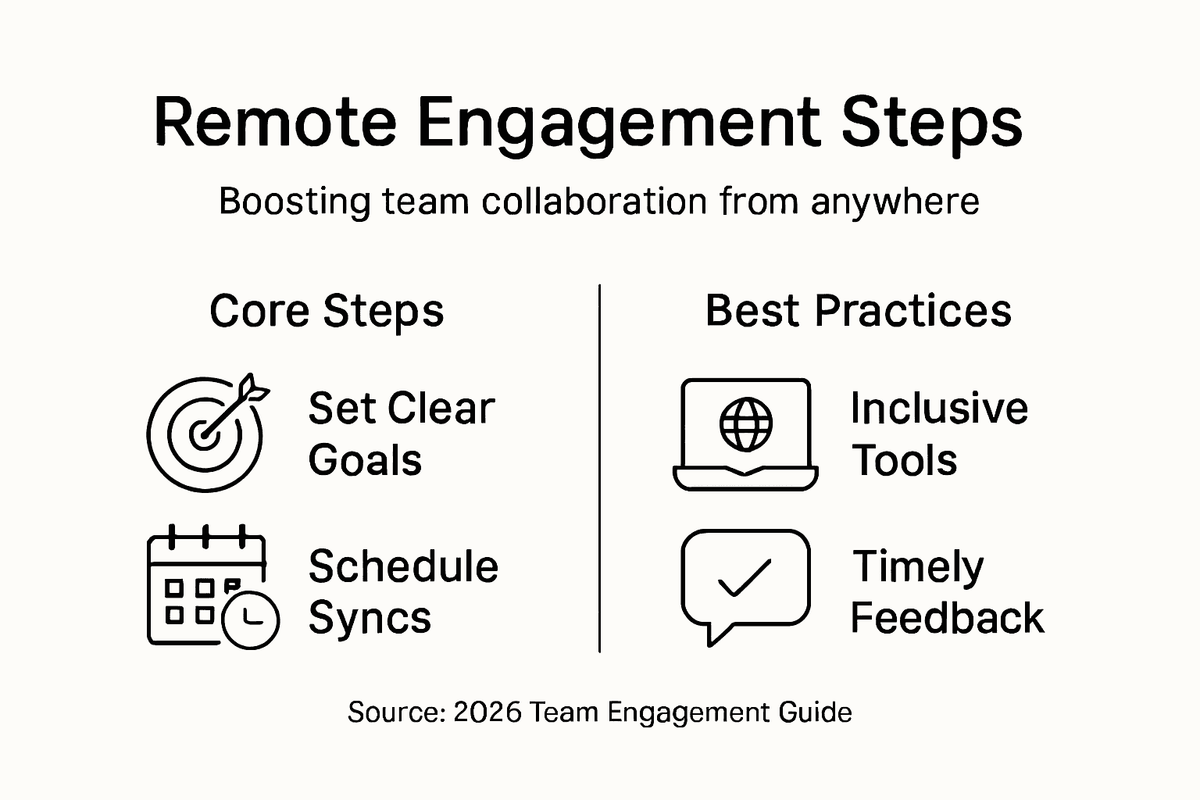
Pro tip: When running remote engagement activities, schedule them during your team's core overlap hours, provide clear technical setup instructions 24 hours in advance, and record sessions for anyone who couldn't attend live so participation barriers don't create exclusion.
Major Challenges and Mistakes to Avoid
Engagement initiatives fail more often from preventable mistakes than from lack of effort. Most HR managers understand the value of team engagement conceptually, but execution stumbles when organizations ignore what actually undermines collaboration. The patterns are predictable enough that you can see them coming and sidestep them entirely.
The first major mistake is treating engagement as a one-time event rather than an ongoing practice. Organizations launch a team building initiative, run it successfully, then move on to the next priority and wonder why engagement metrics decline six months later. Engagement isn't something you solve. It's something you maintain through consistent, deliberate practice. Treating engagement initiatives as short-term tasks rather than long-term commitments significantly reduces their impact, which means your strategy needs built-in sustainability from day one. This is why regular, recurring engagement activities work better than sporadic grand gestures. A monthly quiz competition with team-specific questions creates ongoing connection. An annual offsite, even an excellent one, fades quickly without reinforcement.
The second trap is underestimating how much leadership behavior shapes engagement. You can design perfect engagement strategies, but if your leaders aren't visibly committed, teams sense the hypocrisy immediately. Common engagement failures stem from communication gaps, unclear goals, lack of trust, and insufficient leadership involvement, which means leaders need to participate in engagement activities themselves rather than delegating them to HR. When the VP joins the team quiz game, it signals that this matters. When they skip it, they signal that it doesn't. Leaders also need to close the feedback loop by demonstrating that insights from engagement activities actually influence decisions. If teams express concerns during engagement moments, those concerns need visible follow-up. If teams share creative ideas through interactive activities, those ideas need evaluation and response.
Another critical mistake is ignoring the shift in employee expectations. In 2026, hybrid work models and shifting employee expectations require authentic communication and real-time feedback mechanisms rather than annual surveys and broadcast messaging. Your team members expect two-way communication, not monologues. They expect to see that their input creates change, not disappears into a black hole. They expect engagement tools that actually respect their time and intelligence rather than feeling like forced fun. This means your engagement approach must include mechanisms for capturing feedback during activities, responding to it quickly, and showing what you did with it.
Finally, avoid the mistake of deploying engagement tools without proper context or preparation. Tools work best when teams understand why you're using them, what you hope to accomplish, and how results will be used. Rolling out a quiz game without explaining its purpose, running it poorly, then abandoning it because "teams didn't engage" misses the entire point. The tool itself isn't what creates engagement. Your intentional use of it to surface collaboration, celebrate wins, and reinforce team culture is what matters.
Pro tip: Before launching any engagement initiative, get explicit buy-in from your senior leadership team and define measurable success criteria beyond "team members seemed to have fun"—this prevents initiatives from becoming one-off activities and creates accountability for sustained impact.
Elevate Your Team Engagement with Customizable Interactive Experiences
Facing the challenge of building genuine collaboration across remote or multinational teams requires tools that go beyond simple surveys or one-time events. As highlighted in the article, authentic team engagement thrives on shared goals, real-time interaction, and personalized content that reflects your team’s unique culture. If you want to avoid the common pitfalls of generic engagement initiatives and create sustainable connections that boost team performance and trust, you need a solution built for flexibility and meaningful participation.
Quizado offers a powerful platform designed specifically for teams like yours. Our customizable quiz games let you bring your organization’s branding, inside jokes, and specific team goals directly into interactive experiences that work across devices and time zones. Whether your team prefers collaborative play or friendly competition, Quizado’s engaging formats and remote control features help turn every session into a memorable bonding moment.
Explore how Quizado’s customizable team-building tools can transform your engagement strategy today.
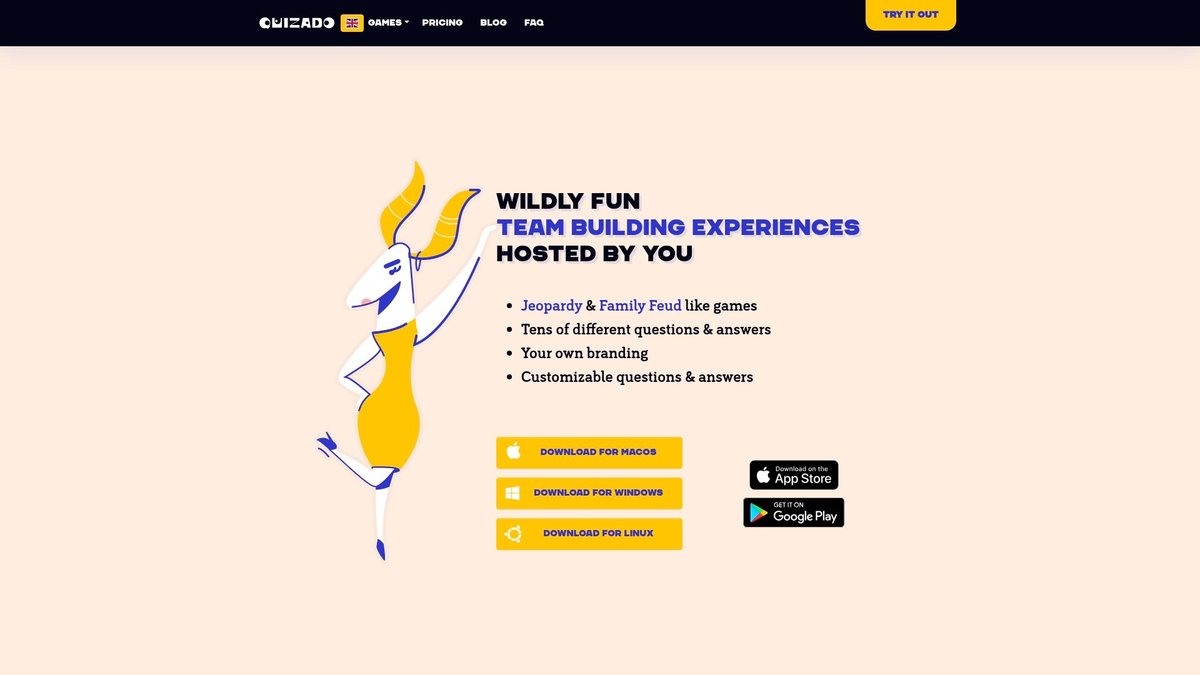
Don’t settle for short-lived engagement events. Start building ongoing team connection with Quizado and watch your multinational teams thrive with authentic collaboration and energized participation. Visit https://quizado.com now to create your first quiz experience and unlock the full potential of your team.
Frequently Asked Questions
What are team engagement strategies?
Team engagement strategies are structured approaches organizations use to foster collaboration and commitment among team members, helping them work together effectively toward shared goals.
How can I improve team engagement in a remote working environment?
Improving team engagement remotely requires intentionality. Implement structured activities, encourage regular communication, and create opportunities for team bonding through interactive experiences that foster connection despite physical distance.
What role does leadership play in team engagement?
Leadership plays a crucial role in team engagement. Leaders must visibly commit to engagement initiatives, actively participate, and ensure that feedback from team members influences decisions and actions within the organization.
What are the common mistakes to avoid when implementing team engagement initiatives?
Common mistakes include treating engagement as a one-time event, underestimating leadership's impact, ignoring employee expectations for communication, and deploying engagement tools without proper context or preparation.
Host a quiz with your group
Find a hosting setup for your venue, company, classroom or activity group.