In this post+
Most American workplaces overlook how team games can transform daily collaboration. Organizations that use structured games often see a remarkable boost in trust and communication skills. In fact, these interactive experiences can lift team performance and satisfaction. If you want your American team to connect, communicate, and thrive, understanding the true purpose and impact of workplace games is essential.
Table of Contents
- Defining Team Games in The Workplace
- Types of Team Games for Corporates
- Core Benefits for Employee Engagement
- How Team Games Foster Collaboration
- Common Mistakes in Team Game Implementation
Key Takeaways
| Point | Details |
|---|---|
| Team Games Enhance Collaboration | Structured interactive experiences improve communication and trust among team members, fostering better overall team dynamics. |
| Diverse Game Types Address Organizational Needs | Different categories of team games, such as simulations and role-playing, can be tailored to enhance specific skills relevant to organizational goals. |
| Employee Engagement and Satisfaction Improve | Utilizing team games boosts employee motivation and cohesion, leading to higher productivity and a better workplace culture. |
| Avoid Common Implementation Mistakes | Ensure games have clear objectives and voluntary participation to prevent negative employee experiences and disengagement. |
Defining Team Games in the Workplace
Team games in corporate settings represent structured interactive experiences designed to enhance collaboration, communication, and organizational dynamics. Unlike traditional training methods, these games transform workplace learning into engaging, participatory activities that drive team performance. Organizational-dynamic games specifically serve as serious tools that teach critical workplace skills by simulating complex interpersonal and strategic challenges.
At their core, workplace team games are carefully crafted activities that go beyond simple entertainment. They are strategic interventions engineered to develop specific team competencies such as problem solving, communication, trust building, and collective decision making. Researchers have discovered that structured game experiences can significantly impact team dynamics. For instance, a recent study on board game interactions demonstrated how carefully designed games can enhance team flow experiences and increase overall workplace satisfaction.
Effective team games typically share several key characteristics. They are:- Purposefully designed with clear learning objectives- Interactive and requiring active participant engagement- Structured to promote collaborative problem solving- Capable of revealing individual and group behavioral patterns- Adaptable to different team sizes and organizational contexts
The ultimate goal of team games is not just momentary entertainment, but sustainable skill development and team cohesion. By creating controlled environments where teams can experiment, communicate, and learn together, organizations can foster more resilient, adaptive, and high-performing workforce ecosystems.
Types of Team Games for Corporates
Corporate team games represent a diverse ecosystem of interactive experiences designed to address specific organizational development objectives. Business simulations serve as a critical foundational category, offering strategic training environments that replicate complex workplace scenarios and challenge teams to make collaborative decisions under simulated pressure.
These team games can be broadly categorized into several key types:- Strategic Simulation Games: Complex scenarios mimicking real-world business challenges- Problem-Solving Challenges: Structured activities requiring collective analytical thinking- Communication-Based Games: Exercises focusing on interpersonal skills and information exchange- Role-Playing Scenarios: Interactive experiences where team members adopt different organizational roles- Digital Collaborative Platforms: Online interactive environments testing remote teamwork skills
The 7 Best Team Building Games for Stronger Workplace Teams demonstrate how carefully selected games can transform workplace dynamics. Strategic games like business simulations go beyond simple entertainment, providing nuanced learning experiences that develop critical organizational competencies such as strategic thinking, resource allocation, and collaborative decision making.
These team games are not merely recreational activities but sophisticated learning instruments. They create controlled environments where teams can experiment with different approaches, reveal underlying group dynamics, and develop more sophisticated collaborative skills without real-world consequences. By integrating structured play into professional development, organizations can build more resilient, adaptable, and high-performing teams.
Core Benefits for Employee Engagement
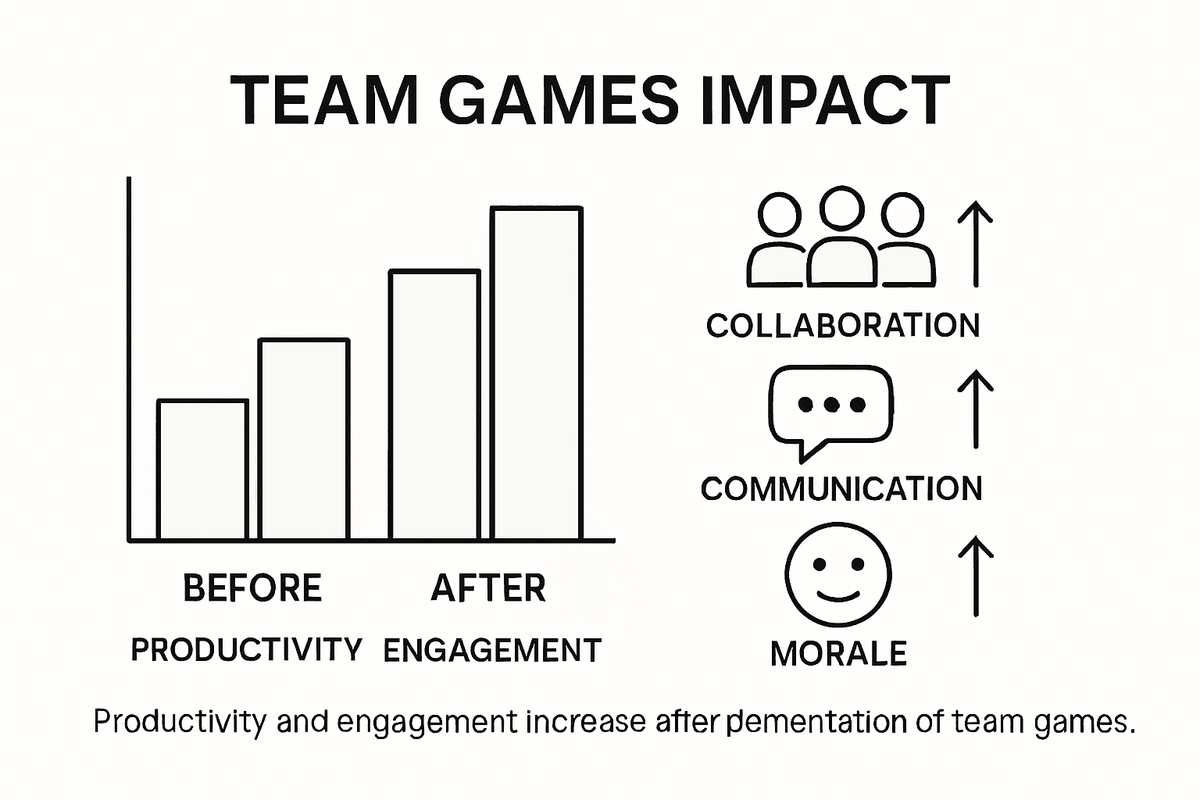
Employee engagement represents a critical organizational metric that directly impacts productivity, retention, and overall workplace culture. Research on video games in workplace settings reveals compelling evidence that strategic interactive experiences can significantly enhance employee motivation and satisfaction, transforming traditional engagement approaches.
Key benefits of team games for employee engagement include:- Stress Reduction: Creating positive emotional environments- Team Cohesion: Building stronger interpersonal connections- Communication Skills: Improving collaborative interactions- Problem-Solving Abilities: Developing collective strategic thinking- Motivation Enhancement: Providing alternative performance recognition channels

Team video gaming research demonstrates remarkable potential for improving workplace dynamics. A randomized controlled trial highlighted how structured gaming experiences can substantially increase team productivity and interpersonal understanding. By introducing playful, low-stakes competitive environments, organizations create opportunities for employees to interact authentically beyond traditional hierarchical boundaries.
The 7 Essential Team Engagement Activities for Workplace Success underscore the transformative power of intentional engagement strategies. Successful implementation requires thoughtful design that aligns game experiences with organizational culture, ensuring activities feel meaningful rather than superficial. When executed strategically, team games become powerful tools for building resilient, connected, and high-performing workplace communities.
How Team Games Foster Collaboration
Workplace collaboration is a complex dynamic that requires intentional strategies to develop and maintain. Scientific research on workplace play reveals that interactive experiences can dramatically transform how teams communicate, problem-solve, and interact with one another.
Key mechanisms through which team games enhance collaboration include:- Breaking Hierarchical Barriers: Creating environments where titles and positions become less significant- Developing Shared Language: Establishing common communication frameworks- Building Trust: Generating positive shared experiences- Encouraging Vulnerability: Allowing team members to see different aspects of each other's personalities- Practicing Problem-Solving: Simulating complex challenges in low-stakes environments
Workplace sports programs demonstrate remarkable potential for improving team dynamics, with structured physical and interactive activities showing significant improvements in social health and collaborative capabilities. The How to Design Team Games for Effective Collaboration guide highlights that successful collaboration emerges not from mandated interactions, but from carefully designed experiences that make teamwork feel natural and engaging.
Ultimately, team games work by creating shared narratives and experiences that transcend traditional workplace communication. They transform collaboration from a theoretical concept into a lived experience, allowing team members to develop genuine connections, mutual understanding, and collective problem-solving skills that extend far beyond the game itself.
Common Mistakes in Team Game Implementation
Implementing team games requires nuanced understanding and strategic planning. Workplace activities that feel mandatory can inadvertently create negative experiences, transforming potentially positive team-building efforts into sources of employee stress and disengagement.
Common implementation mistakes include:- Forced Participation: Removing voluntary engagement options- Lack of Clear Objectives: Running games without specific developmental goals- Inappropriate Game Selection: Choosing activities misaligned with team dynamics- Inconsistent Facilitation: Failing to provide proper guidance and structure- Neglecting Psychological Safety: Creating competitive environments that feel threatening
Icebreaker design principles reveal that team games must be purposefully constructed to genuinely engage participants. The Complete Guide to Successful Team-Building Tips emphasizes that effective team experiences require careful consideration of individual preferences, team composition, and organizational culture.
Successful team game implementation demands empathy, flexibility, and a deep understanding of human dynamics. Organizations must recognize that no single approach works universally. The most effective team games are those designed with genuine intent to foster connection, understanding, and collaborative potential, rather than serving as superficial corporate mandates.
Elevate Corporate Success with Engaging Team Games
The article highlights how team games are essential tools for fostering collaboration, enhancing communication, and building trust within corporate teams. If your organization struggles with employee engagement or wants to break down hierarchical barriers while developing problem-solving and strategic thinking skills, customizable team-building games can provide the interactive solutions you need. By transforming work dynamics into playful, meaningful experiences, these games turn teams into cohesive and high-performing units.

Discover how Quizado offers a versatile platform tailored for corporate environments seeking to boost employee motivation and team cohesion through quiz-based games inspired by familiar formats like Jeopardy and Family Feud. With features such as team configuration, remote smartphone control, and branded visual interfaces, Quizado empowers managers to create engaging activities that reinforce collaboration and shared goals. Experience firsthand how structured gameplay can break down communication barriers and build trust by visiting Quizado today and explore how to bring personalized team games to your workforce for lasting impact.
Frequently Asked Questions
What are team games in the workplace?
Team games in the workplace are structured interactive experiences designed to improve collaboration, communication, and team dynamics. They serve as engaging learning activities that focus on developing critical skills such as problem-solving, trust-building, and collective decision-making.
How do team games enhance employee engagement?
Team games enhance employee engagement by creating positive emotional environments that reduce stress, foster team cohesion, and improve communication skills. They also provide opportunities for informal recognition and motivation through playful, low-stakes competitive experiences.
What types of team games can be implemented in a corporate setting?
In a corporate setting, team games can include strategic simulation games, problem-solving challenges, communication-based games, role-playing scenarios, and digital collaborative platforms. Each type is designed to address specific organizational development goals and enhance collaboration.
What are some common mistakes to avoid when implementing team games?
Common mistakes include forcing participation, lacking clear objectives, choosing inappropriate games, inconsistent facilitation, and neglecting psychological safety. To be successful, it is important to consider team dynamics and ensure games feel engaging rather than mandatory.
Recommended
Turn these ideas into a team event
Prepare an office quiz or remote game with a shared screen, phone participation and a host on your team.