Offline games boost bar and restaurant guest engagement
Digital fatigue is rising faster than most venue managers realize. Searches for screen fatigue have climbed steadily over the past five years, with guests craving authentic, face-to-face interactions instead of staring at phones. Offline games deliver exactly what modern patrons want: genuine social connection, mental breaks from screens, and memorable experiences that keep them coming back. For bars and restaurants struggling to fill midweek seats, offline entertainment options like trivia nights and interactive games offer a proven path to boost engagement, increase revenue, and create the kind of atmosphere that turns first-time visitors into regulars.
Table of Contents
- Why Offline Games Matter In Today's Entertainment Landscape
- Core Benefits Of Offline Games For Bars And Restaurants
- Popular Offline Games And Their Operational Advantages
- Maximizing Revenue And Guest Engagement With Offline Games
- Enhance Your Venue's Guest Experiences With Proven Offline Game Solutions
- Frequently Asked Questions
Key takeaways
| Point | Details |
|---|---|
| Digital fatigue drives demand | Over 80% of Gen Z adults experience frustration with digital life, creating opportunities for offline entertainment |
| Revenue impact is substantial | Venues hosting trivia nights can earn more per guest and sell more extras |
| Social interaction increases | Offline games give guests more time interacting with each other than traditional bar experiences |
| Operational simplicity matters | Modern offline game systems require minimal maintenance and can stay busy during peak hours |
Why offline games matter in today's entertainment landscape
Guests are exhausted from constant screen exposure. The numbers tell a compelling story: over 80% of Gen Z adults report frustration with their digital lives, despite being the most tech-native generation. This paradox creates a unique opportunity for venue managers who recognize that entertainment doesn't always need a glowing rectangle.
Offline games address this fatigue by providing mental relief through tangible, present-moment experiences. When guests participate in trivia competitions or board game tournaments, they engage different cognitive pathways than scrolling social media. The social connection feels authentic because it requires eye contact, verbal communication, and shared laughter over a physical space.
Venues implementing offline game strategies report measurable improvements in guest behavior. Patrons stay longer, order more rounds, and return with friends who heard about the experience. The atmosphere shifts from isolated individuals checking phones to collaborative teams debating answers and celebrating victories together.
Consider these key advantages offline games deliver:
- Reduced screen dependency creates space for genuine conversation
- Competitive elements spark energy and excitement in previously quiet venues
- Regular events build community and establish predictable traffic patterns
- Lower barriers to participation compared to digital platforms requiring downloads or accounts
"The best entertainment experiences remove friction between people rather than adding technological layers. Offline games strip away the digital intermediary and let human connection happen naturally."
This shift matters particularly for midweek traffic when venues traditionally struggle to attract crowds. Interactive trade show games demonstrate how offline formats capture attention in competitive environments, and the same principles apply to hospitality settings. Guests seeking relief from digital overload will choose venues offering that respite, creating loyalty that transcends price sensitivity or convenience factors.
Core benefits of offline games for bars and restaurants
The business case for offline games rests on four measurable pillars: social interaction, atmosphere enhancement, customer satisfaction, and revenue growth. Each benefit compounds the others, creating a virtuous cycle that transforms venue economics.
Social interaction time increases dramatically when guests participate in offline games. Guests spend more time interacting during game-based events than during standard bar visits. This extended engagement translates directly to higher per-guest spending as patrons order additional drinks and food while playing. The competitive element keeps energy levels high, preventing the mid-evening lull that typically sends guests home early.
Atmosphere transformation happens almost immediately when offline games begin. The venue shifts from background music and scattered conversations to focused energy and shared experiences. This change attracts attention from passersby and creates social proof that draws additional guests inside. The buzz becomes self-reinforcing as more participants generate louder reactions and more visible excitement.
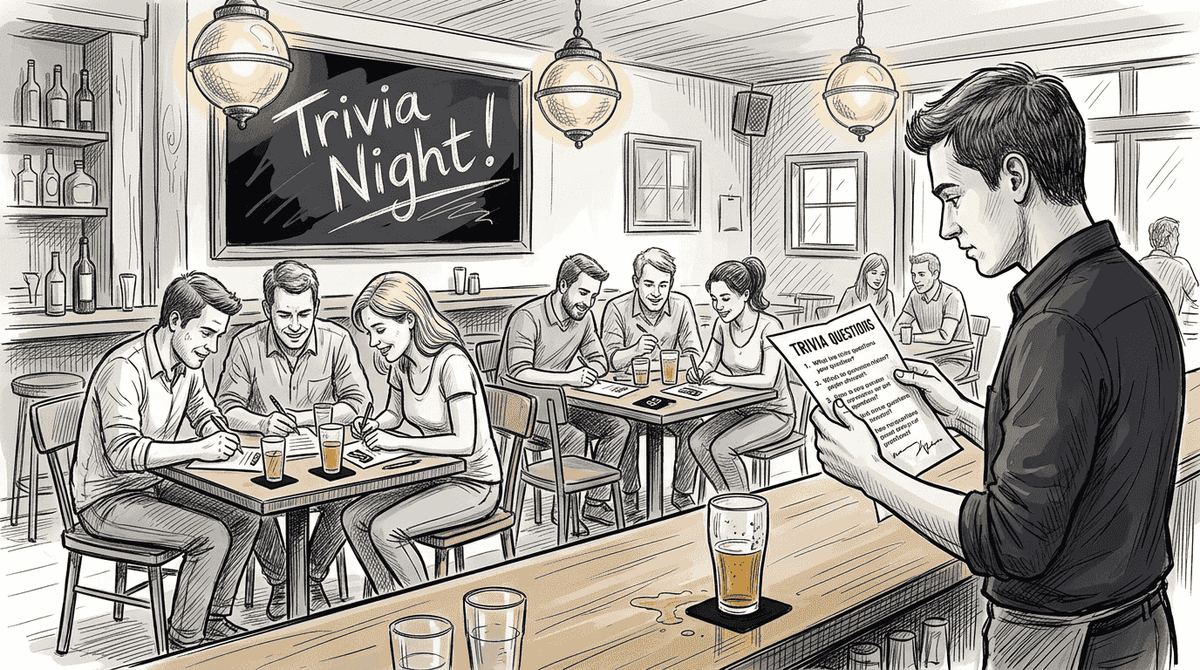
Customer satisfaction scores climb alongside engagement metrics. Guests who take part in offline game events also tend to be more satisfied with their visit. Satisfied customers become vocal advocates, spreading word-of-mouth recommendations that traditional advertising cannot replicate.
Revenue impact extends beyond immediate sales. Trivia nights boost midweek traffic by creating destination events that fill otherwise slow periods. Regular game nights can bring more weekday covers, with many guests arriving specifically for the entertainment rather than choosing the venue coincidentally.
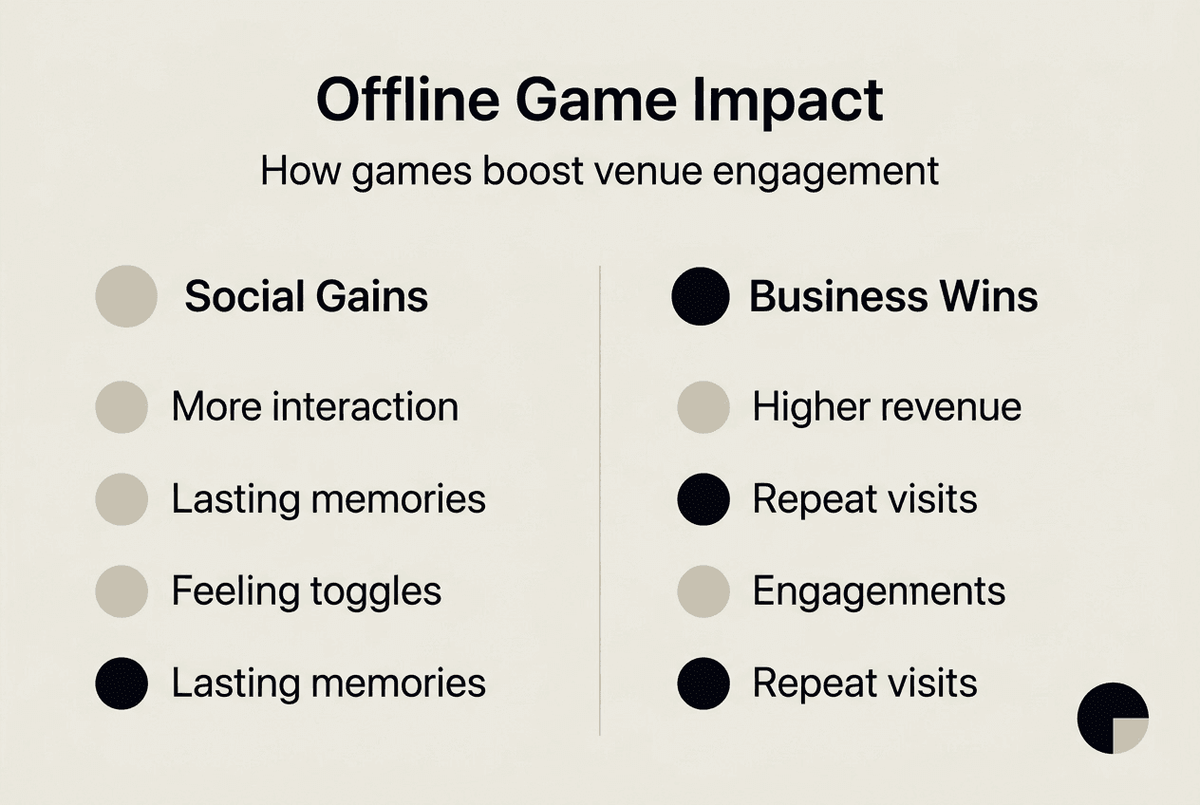
| Metric | Standard Service | With Offline Games | Improvement |
|---|---|---|---|
| Social interaction time | Shorter | Longer | More interaction |
| Customer satisfaction | Good | Better | Higher |
| Midweek traffic | Quiet | Busier | More covers |
| Average check size | Lower | Higher | Bigger checks |
Pro Tip: Start offline game events during your slowest service period to minimize operational disruption while maximizing impact. Once the format proves successful, expand to additional nights based on guest demand rather than attempting a full-week rollout immediately.
The key to maximizing these benefits lies in seamless integration. Offline games should enhance your existing atmosphere rather than fighting against it. Hosting trivia nights requires matching game intensity to venue energy levels, ensuring the entertainment complements rather than overwhelms your established vibe.
Popular offline games and their operational advantages
Different offline game formats deliver distinct operational profiles and guest experiences. Understanding these differences helps venue managers select options matching their space constraints, budget parameters, and target demographics.
Trivia competitions dominate the offline game landscape for good reason. They require minimal physical space, accommodate variable group sizes, and scale easily across different venue capacities. Modern trivia systems like AMI offer 20 diverse game categories with pricing structures 20-25% lower than traditional hosted events. The all-day access model allows venues to offer entertainment during lunch service, happy hour, and evening periods without additional cost.
Interactive video game installations provide different advantages. ValoArena installations show how short, active games can keep a play area in use during peak hours. The quick turnover accommodates high guest volumes while the physical activity component creates memorable experiences that passive entertainment cannot match. Maintenance requirements remain minimal, with most systems requiring only weekly cleaning and monthly calibration checks.
Board game libraries offer the most flexible implementation option. Guests appreciate the variety and nostalgia factor, while venues benefit from low startup costs and zero technical requirements. The challenge lies in inventory management and replacement costs as popular games experience wear from repeated use.
Consider these format characteristics when planning your offline game strategy:
- Trivia competitions: High scalability, low space requirements, predictable scheduling
- Interactive video games: Premium positioning, physical engagement, quick turnover
- Board game libraries: Maximum variety, minimal technical needs, inventory management required
- Hybrid approaches: Combine formats to serve different guest preferences and dayparts
| Game Type | Setup Cost | Monthly Maintenance | Guest Capacity | Average Duration |
|---|---|---|---|---|
| Trivia system | $200-500 | $50-100 | 20-100+ | 90-120 min |
| Video game station | $8,000-15,000 | $100-200 | 2-6 per unit | 2-5 min |
| Board game library | $500-2,000 | $50-150 | 2-8 per game | 30-90 min |
Pro Tip: Match game selection to your venue's peak capacity and guest demographics. High-turnover formats like interactive video games work best in venues with standing room and younger crowds, while board games suit intimate spaces with longer average visit times.
The operational simplicity of modern offline game systems removes traditional barriers to implementation. Interactive game hosting no longer requires dedicated staff or technical expertise, allowing venues to add entertainment value without proportional increases in labor costs. This efficiency makes offline games accessible even for smaller establishments operating on tight margins.
Maximizing revenue and guest engagement with offline games
Strategic implementation transforms offline games from simple entertainment into profit centers that subsidize operational costs and generate incremental revenue streams. The most successful venues treat game nights as products requiring the same attention to pricing, marketing, and optimization as their food and beverage offerings.
Revenue diversification starts with membership and ticketing models. Board game clubs demonstrate how tiered membership plans create predictable recurring revenue while event ticket sales generate upfront cash flow. Basic memberships might offer priority seating and score tracking, while premium tiers include merchandise, exclusive events, and food and beverage credits. This structure can raise average revenue per user compared to walk-in-only models.
Sponsorship opportunities add another revenue layer. Local businesses pay premium rates to sponsor trivia categories, game stations, or tournament prizes. These partnerships offset equipment costs while providing sponsors with engaged audiences in relaxed settings. The key is matching sponsor categories to guest demographics, ensuring relevance that enhances rather than disrupts the experience.
Cost optimization happens through strategic purchasing and scheduling. Bulk buying game equipment and negotiating annual service contracts reduce per-unit costs by 10-15%. Smart scheduling maximizes venue utilization during traditionally slow periods, spreading fixed costs across more revenue-generating hours. A venue paying $3,000 monthly rent generates better returns hosting games during empty Tuesday afternoons than leaving the space unused.
Implement these revenue-maximizing strategies systematically:
- Establish clear pricing tiers for different participation levels and membership benefits
- Create upsell opportunities through branded merchandise, premium seating, and food and beverage packages
- Schedule games during low-traffic periods to maximize incremental revenue without cannibalizing peak service
- Develop sponsorship packages offering businesses targeted access to engaged local audiences
- Track per-event metrics to identify highest-performing formats and optimize future scheduling
| Revenue Strategy | Implementation Cost | Expected Return | Payback Period |
|---|---|---|---|
| Membership plans | $500 setup | Steadier income per guest | Varies by venue |
| Event ticketing | $200 setup | Extra revenue per event | Varies by venue |
| Sponsorships | $300 setup | Monthly sponsor income | Varies by venue |
| Merchandise sales | $1,000 inventory | Added margin | Varies by venue |
Common pitfalls to avoid:
- Overpricing entry fees before establishing event quality and reputation
- Neglecting to capture guest contact information for future marketing
- Failing to train staff on game rules and troubleshooting procedures
- Implementing too many game formats simultaneously, diluting focus and resources
Pro Tip: Start with a single game format and perfect the execution before expanding. Guests remember flawless experiences with limited options more fondly than chaotic events offering excessive variety.
The financial impact compounds over time as regular events build community and establish your venue as a destination. Trivia boosts retention by creating habits and social connections that transcend price sensitivity. Guests return because they value the experience and relationships, not just the food and drinks. This loyalty insulates venues from competitive pressure and economic downturns that devastate establishments relying solely on transactional relationships.
Enhance your venue's guest experiences with proven offline game solutions
The evidence supporting offline games as engagement and revenue drivers is overwhelming. Venues implementing strategic game programs report measurable improvements across every operational metric that matters: traffic, check averages, satisfaction scores, and repeat visit rates. The challenge shifts from whether to implement offline games to which solutions best match your specific venue characteristics and guest preferences.
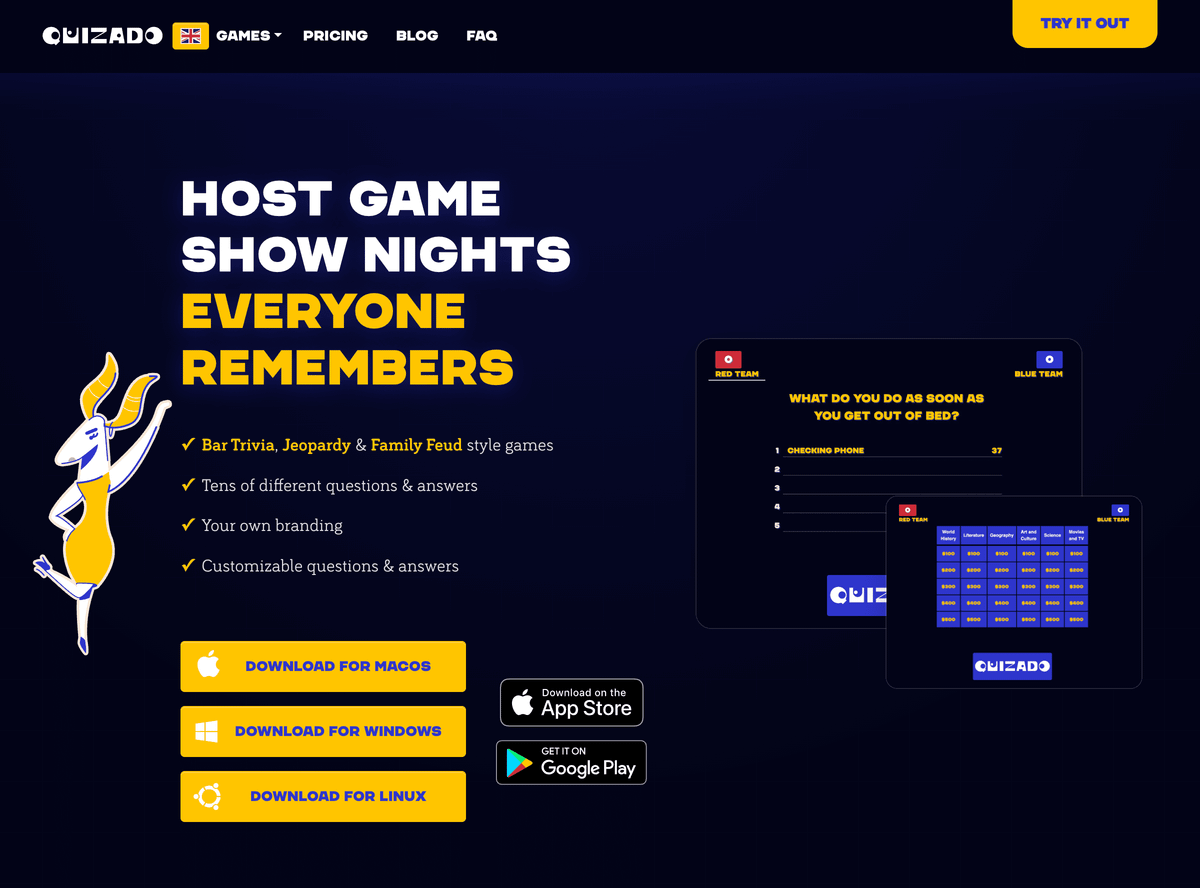
Quizado offers interactive game hosting solutions designed specifically for bars, restaurants, and event spaces seeking professional-quality entertainment without technical complexity. The platform recreates classic game show experiences through intuitive software that works reliably even in venues with unreliable WiFi. Customizable branding, extensive question libraries, and smartphone-based controls eliminate the friction that prevents many venues from hosting engaging game nights. Explore how Quizado's in-person game shows can transform your slowest service periods into your most profitable and memorable guest experiences.
Frequently asked questions
What are offline games and why are they effective in venues?
Offline games are entertainment activities that don't require internet connectivity or personal devices beyond basic participation tools. They include trivia competitions, board games, interactive video games, and physical challenges. Their effectiveness stems from reducing digital fatigue while increasing face-to-face social interaction. Venues benefit from longer guest stays, higher per-visit spending, and stronger community building compared to passive entertainment options.
How do offline games increase revenue for bars and restaurants?
Offline games drive revenue through multiple channels: increased traffic during slow periods, higher average check sizes from extended visits, membership and ticketing fees, sponsorship income, and merchandise sales. Regular game nights can bring more midweek covers and higher average checks. The entertainment creates destination appeal that reduces price sensitivity and builds loyal customer bases less vulnerable to competitive pressure.
Can offline games fit into busy venue schedules without disrupting service?
Absolutely. Strategic scheduling places games during traditionally slow periods like Tuesday and Wednesday evenings or weekend afternoons. This approach maximizes incremental revenue without competing with peak service times. Many venues start with monthly events before expanding to weekly formats based on demand. Modern game systems require minimal staff involvement, allowing servers to focus on service while automated systems manage scoring and progression.
What are the typical costs to implement offline game events?
Costs vary significantly by format. Digital trivia systems range from $200-500 for setup with $50-100 monthly fees. Interactive video game stations require $8,000-15,000 upfront investment with $100-200 monthly maintenance. Board game libraries cost $500-2,000 initially with $50-150 monthly replacement budgets. Most venues recoup initial investments within 3-6 months through increased traffic and higher per-guest spending during game events.
How do I choose which offline games will appeal to my guests?
Start by analyzing your current guest demographics and visit patterns. Younger crowds prefer fast-paced, competitive formats like video games and speed trivia. Older guests gravitate toward strategy board games and traditional trivia categories. Survey existing customers about entertainment preferences and run pilot events testing different formats. Track participation rates, satisfaction scores, and revenue impact to identify winners worth expanding. Match game complexity and duration to your typical visit length and venue atmosphere.
What makes offline games more engaging than digital entertainment options?
Offline games remove the isolation inherent in personal device usage. Participants engage through verbal communication, physical presence, and shared emotional experiences rather than individual screen interactions. The tangible, present-moment nature creates stronger memory formation and emotional connection. Competitive elements spark genuine reactions and bonding impossible through passive digital consumption. Guests remember the people they played with and the experiences they shared, building community that keeps them returning long after the game ends.
Recommended
Run your next trivia night with Quizado
Prepare the rounds, invite players by QR code and show live scores on your venue’s screen.

Bring your group together for a game
Try a free starter game, then choose the format and plan for your group.
Trusted by 5,000+ hosts