In this post+
Nearly 70 percent of American team leaders say finding meaningful engagement in hybrid teams is more challenging than in-person teamwork. As remote work remains common across North America, rethinking your approach to team building has never been more urgent. This article guides you through creative strategies to choose game themes that actually spark cross-team connection, align with organizational goals, and bring out the best in every American workplace.
Table of Contents
- Step 1: Assess Team Interests And Organizational Goals
- Step 2: Analyze Available Game Formats And Customization Options
- Step 3: Match Themes To Team Dynamics And Company Branding
- Step 4: Test Theme Appeal With A Sample Session
- Step 5: Evaluate Feedback And Finalize The Game Theme
Quick Summary
| Key Takeaway | Explanation |
|---|---|
| 1. Assess Team Interests Thoroughly | Conduct surveys and discussions to align team dynamics with organizational goals for engaging game themes. |
| 2. Explore Game Formats and Customizations | Match identified team interests with available game formats that allow for customization and meet learning objectives. |
| 3. Align Game Themes with Company Culture | Integrate company branding and team dynamics to create a cohesive and engaging game experience. |
| 4. Validate Theme with Sample Sessions | Conduct pilot sessions to gather honest feedback and assess engagement before full implementation. |
| 5. Systematically Evaluate Feedback | Use structured feedback analysis to refine the game theme based on participant insights and preferences. |
Step 1: Assess Team Interests and Organizational Goals
Successfully selecting engaging team game themes requires a strategic approach that balances individual preferences with broader organizational objectives. This critical first step involves conducting a thorough assessment that aligns team dynamics with meaningful gameplay experiences.
Research demonstrates the importance of tailoring game interventions to specific team contexts. A recent academic study highlighted how digital game-based interventions can enhance team adaptation by carefully matching gameplay elements to team members' roles and organizational goals. In practice, this means gathering comprehensive insights through targeted surveys, team discussions, and organizational performance reviews. Consider creating a multi-dimensional assessment that explores team members' interests across several dimensions: preferred interaction styles, professional development goals, current team challenges, and personal motivation triggers.
Start by designing a confidential survey that captures both quantitative and qualitative data. Ask team members to rate their interests in different game themes, communication preferences, and potential learning objectives. Simultaneously, consult organizational leadership to understand strategic goals such as improving cross-department collaboration, enhancing problem-solving skills, or boosting team morale. The intersection of individual preferences and organizational needs will reveal the most compelling game themes.
Pro tip: Create a collaborative spreadsheet where team members can anonymously contribute game theme ideas and vote on their top preferences to increase engagement and ownership in the selection process.
Step 2: Analyze Available Game Formats and Customization Options
Now that you have assessed team interests and organizational goals, the next crucial step is exploring the diverse game formats and customization options that can transform your team building experience. Understanding the landscape of available game designs will help you select the most compelling and effective approach for your specific team dynamics.
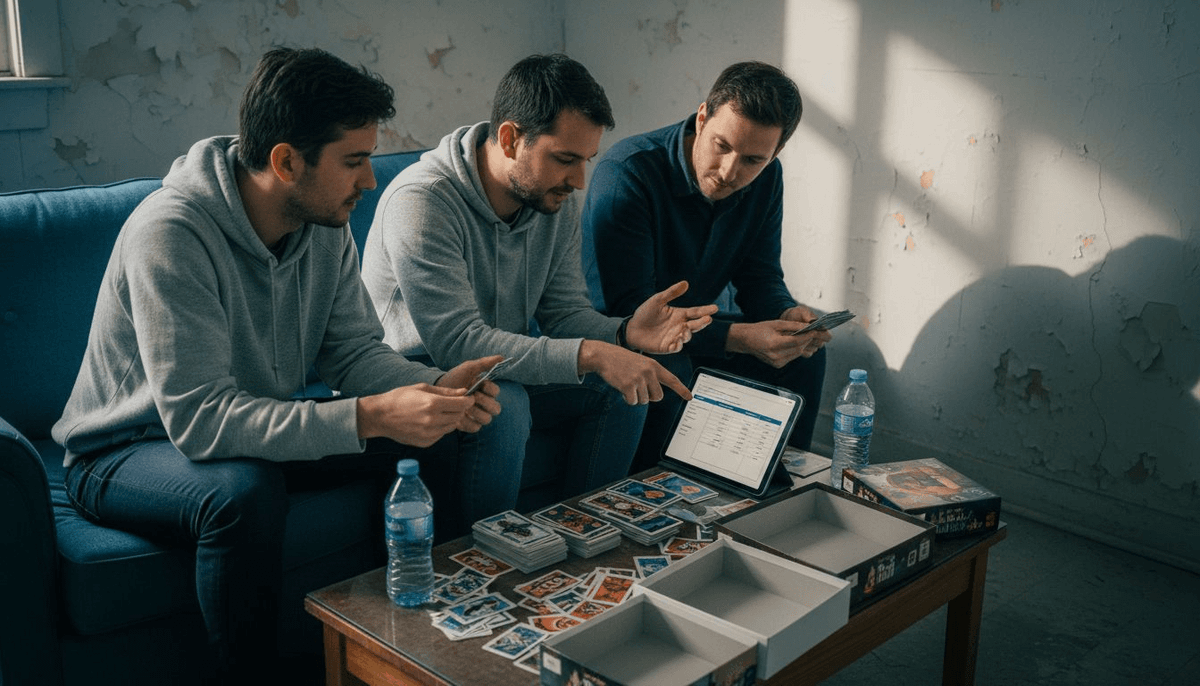
Contemporary gamification research reveals a rich spectrum of game formats designed to engage teams in meaningful ways. These range from traditional quizzes and competitive challenges to more complex cooperative gameplay experiences. Each format offers unique opportunities for team interaction and skill development. The key is to match the game format not just to your team's preferences, but to specific learning objectives and organizational goals. A systematic literature review suggests that effective game design requires carefully blending narrative elements, game mechanics, and thematic customization to create truly engaging experiences.
To select the right game format, start by mapping your identified team interests against available customization options. Consider factors like difficulty levels, interactive mechanics, narrative complexity, and potential for personalization. Some platforms offer extensive customization allowing you to adapt game themes, adjust challenge levels, and incorporate specific organizational contexts. Look for tools that permit branding integration, allow multiple difficulty settings, and support different team sizes and interaction styles. Your goal is to find a game format flexible enough to be tailored precisely to your team's unique characteristics and developmental needs.
Here’s a summary of key factors to consider when mapping team interests to game customization options:
| Factor | Description | Impact on Game Selection |
|---|---|---|
| Difficulty Level | Adjust how challenging the game is | Supports various skill levels |
| Narrative Complexity | Select the depth of story elements | Engages teams with creative strengths |
| Interactive Mechanics | Choose game controls and interactions | Enhances participation and engagement |
| Team Size Adaptation | Fit for small or large groups | Ensures equal involvement for all |
| Branding Integration | Incorporate company visuals or values | Reinforces company identity and culture |
Pro tip: Request demo versions or trial runs of potential game formats to test their adaptability and ensure they genuinely match your team's engagement style before making a final selection.
Step 3: Match Themes to Team Dynamics and Company Branding
Successfully creating an engaging team game experience requires carefully aligning the game theme with both your team's unique interpersonal characteristics and your organization's core identity. This nuanced approach transforms a simple activity into a powerful team building and cultural reinforcement tool.
Research on digital game interventions demonstrates that game themes can significantly enhance team adaptation when strategically designed to mirror team roles and organizational culture. When matching themes, consider both psychological and professional dimensions. Analyze your team's communication styles, problem solving approaches, and collective personality. A competitive sales team might thrive with strategy based challenges, while a creative marketing group could engage more with narrative driven collaborative experiences.
To create meaningful alignment, integrate your company's branding elements into team game themes by incorporating company colors, mission statement language, or core value references. This approach transforms the game from a simple activity into a subtle reinforcement of organizational identity. Seek themes that not only entertain but also subtly communicate company culture, creating an immersive experience that feels authentic and purposeful. Look for game formats that allow deep customization enabling you to weave your organizational narrative seamlessly into the gameplay.
The table below compares common game themes for teams and how they align with typical organizational goals:
| Game Theme Type | Best For Team Type | Supports Organizational Goal |
|---|---|---|
| Competitive Quiz | Sales and operations | Boosts problem-solving skills |
| Narrative Quest | Marketing and creative | Enhances cross-team collaboration |
| Strategy Puzzle | Leadership groups | Develops critical thinking |
| Collaborative Race | Mixed departments | Improves morale and unity |
Pro tip: Create a quick survey asking team members to describe the company culture in three words to help identify themes that will genuinely resonate with your specific team dynamics.
Step 4: Test Theme Appeal with a Sample Session
Validating your selected game theme requires a strategic approach that goes beyond theoretical planning. A sample session allows you to empirically assess how your chosen theme resonates with team members and identifies potential refinement opportunities before full implementation.
Academic research on game testing emphasizes the critical importance of playtesting with target users to evaluate engagement and usability. Organize a pilot session with a representative group of team members that reflects your broader organizational demographics. During this session, create an environment that encourages honest feedback by establishing psychological safety. Invite participants to experience the game prototype and simultaneously observe their interactions, emotional responses, and level of enthusiasm. Pay attention to nonverbal cues such as body language, engagement levels, and spontaneous conversations that emerge during gameplay.
Structure your sample session to capture comprehensive insights through multiple feedback mechanisms. Prepare a structured survey with both quantitative rating scales and open ended questions that probe deeper into participants experiences. Ask specific questions about theme relevance, entertainment value, learning potential, and alignment with company culture. Consider recording the session video if participants consent, allowing you to review subtle interaction dynamics that might not be immediately apparent. The goal is not just to validate the theme but to uncover nuanced opportunities for customization that can transform a good game experience into an exceptional one.
Pro tip: Select sample session participants from different departments and seniority levels to ensure a diverse perspective that represents your entire organizational ecosystem.
Step 5: Evaluate Feedback and Finalize the Game Theme
Transforming your initial game theme concept into a refined, engaging experience requires a systematic and thoughtful approach to collecting and analyzing participant feedback. This final step is crucial for ensuring your team game meets the highest standards of engagement and organizational relevance.
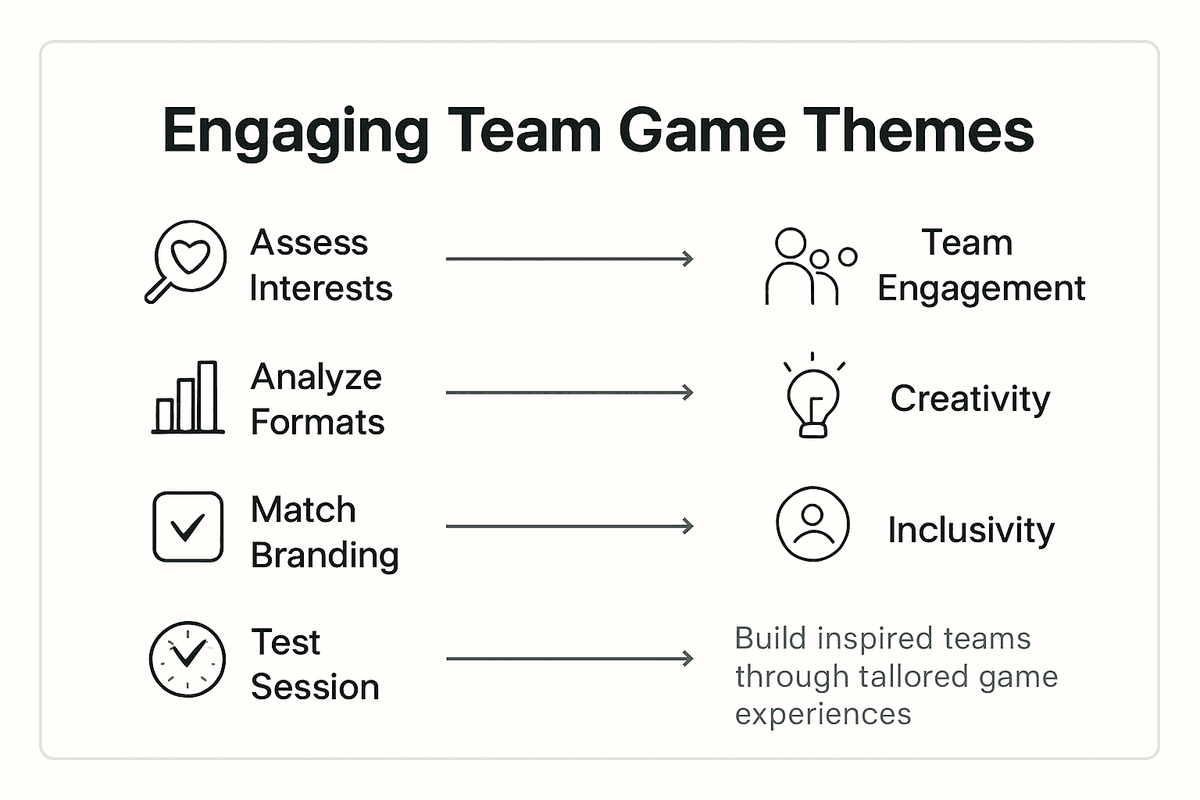
Advanced feedback evaluation techniques demonstrate the power of iterative feedback cycles in improving game design. Begin by categorizing the feedback collected during your sample session into clear, actionable segments such as theme relevance, gameplay mechanics, entertainment value, and alignment with company culture. Look for patterns and consistent themes across different participant responses rather than focusing on individual outlier comments. Create a weighted scoring system that prioritizes feedback based on its potential impact on team engagement and learning objectives.
Develop a comprehensive evaluation matrix that allows you to objectively assess each piece of feedback. Assign specific weights to different types of input and create a scoring rubric that helps you make data driven decisions about theme modifications. Consider conducting a second round of feedback with a smaller, more focused group to validate any significant changes you are contemplating. Systematic review approaches recommend involving multiple stakeholders to ensure a comprehensive and balanced final game theme that resonates across different organizational levels.
Pro tip: Create a visual feedback dashboard that allows team leaders to see real time insights and trends emerging from the game theme evaluation process.
Elevate Your Team Building With Customizable Game Themes
Selecting team game themes that truly engage and inspire your team can be a complex challenge. This article highlights the importance of aligning game themes with team dynamics, organizational goals, and company branding to boost collaboration and morale. If you want to transform these insights into an actionable solution, customizable quiz games offer the perfect blend of fun and purposeful engagement. Platforms that support theme customization, team configuration, and branding integration empower managers to create memorable experiences that connect directly with their teams' unique characteristics.
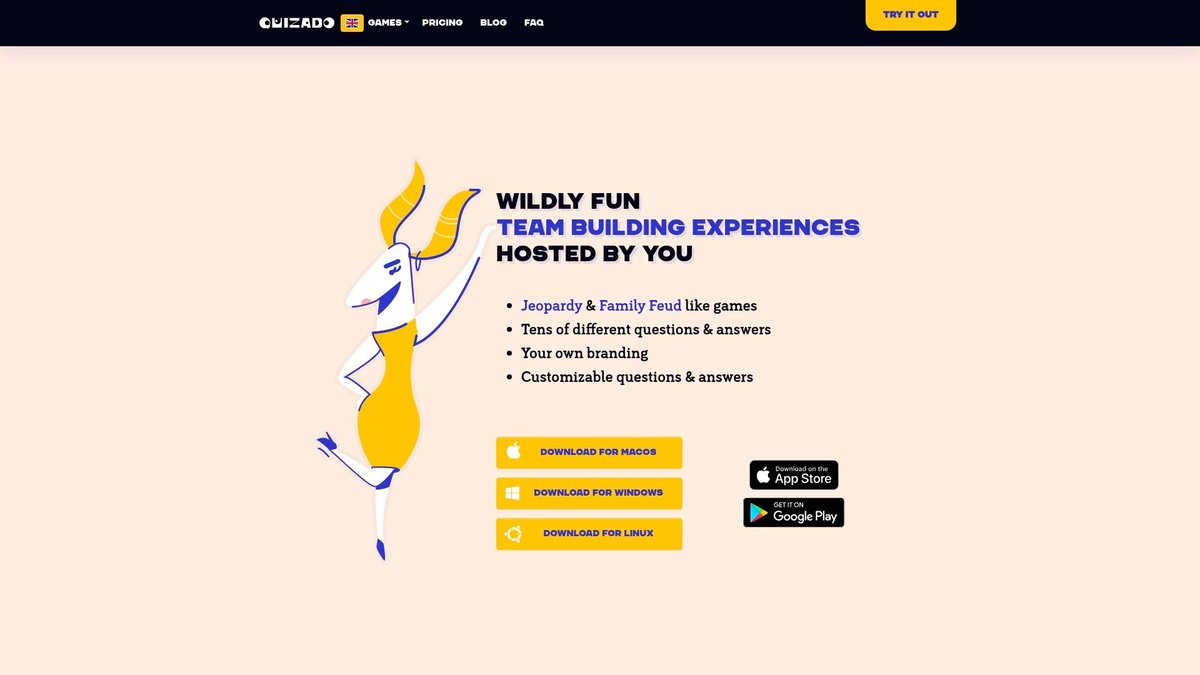
Explore how customizable work-themed games from Quizado.com can simplify the process of selecting and tailoring game experiences that resonate deeply with your team. With seamless support across macOS, Windows, and Linux and features like team control via smartphones and branded visuals, you can foster genuine team unity while reinforcing company culture. Start crafting your personalized quiz game today at Quizado.com and turn insightful theory into engaging practice now.
Frequently Asked Questions
How can I assess my team's interests for game theme selection?
To assess your team's interests, create a confidential survey that captures their preferences regarding game themes, interaction styles, and learning objectives. Use this information to align individual preferences with the overall organizational goals.
What factors should I consider when analyzing game formats?
When analyzing game formats, focus on difficulty levels, narrative complexity, interactive mechanics, team size adaptation, and branding integration. Choose formats that can be customized to match your team's unique dynamics and developmental needs.
How do I match game themes to my company's branding?
To match game themes to your company’s branding, incorporate company colors, values, and mission statements into the game’s design. This creates a cohesive experience that aligns the gameplay with the organizational culture.
What steps should I take to validate a game theme before full implementation?
To validate a game theme, conduct a sample session with a representative group from your team, encouraging honest feedback throughout the gameplay. Afterward, gather and analyze feedback to identify areas for refinement before finalizing the theme.
How can I effectively evaluate feedback from a sample session?
Evaluate feedback by categorizing it into actionable segments such as theme relevance and gameplay mechanics. Use a scoring system to prioritize the feedback based on its impact on engagement and make data-driven decisions for necessary adjustments.
Recommended
Host a quiz with your group
Find a hosting setup for your venue, company, classroom or activity group.