In this post+
Group quizzes are changing the way American teams build skills and knowledge together. Collaborative learning helps people remember more than solo study. For any American organization, finding practical ways to spark team discussion and boost engagement is not a simple task. This guide unpacks why group quizzes matter and reveals practical strategies to use this approach for stronger team growth.
Table of Contents
- Defining Group Quizzes For Teams
- Popular Types Of Group Quiz Formats
- Core Benefits For Team Development
- Implementing Effective Group Quizzes
- Risks And Mistakes To Avoid
Key Takeaways
| Point | Details |
|---|---|
| Collaborative Learning | Group quizzes enhance teamwork by fostering communication and leveraging diverse perspectives for problem-solving. |
| Engagement and Participation | Effective quiz design ensures all team members contribute, preventing social loafing and enhancing overall participation. |
| Skill Development | Group quizzes cultivate critical interpersonal skills such as leadership and negotiation, promoting holistic team growth. |
| Avoiding Common Pitfalls | Careful planning is necessary to prevent unequal participation and groupthink, ensuring a positive collaborative experience. |
Defining Group Quizzes for Teams
Group quizzes represent a powerful collaborative learning technique where teams work together to solve challenges, answer questions, and demonstrate collective knowledge. Unlike traditional individual assessments, group quizzes transform testing into an interactive, engaging experience that promotes communication and shared understanding.
At their core, group quizzes are formative assessment tools designed to facilitate peer instruction and deeper learning. According to academic research on collaborative learning strategies, these interactive experiences enable participants to discuss, debate, and collectively reach conclusions. Team members contribute different perspectives, leveraging individual strengths to solve complex problems more effectively than they could alone.
The mechanics of group quizzes typically involve small teams collaborating in real time to answer a series of questions across various topics. This approach encourages active participation, critical thinking, and knowledge sharing. Researchers have found that collaborative quiz strategies enhance understanding by promoting discussion and collective problem solving. Participants learn not just from providing answers, but from hearing alternative viewpoints and reasoning strategies from their teammates.
Teams can implement group quizzes in multiple formats - from in person workshops to virtual meetings, using digital platforms that support interactive question and answer sessions. The key is creating an environment where communication, mutual respect, and collaborative learning are prioritized.
Pro Team Building Tip: Design group quizzes with questions that require multiple perspectives and encourage healthy debate, ensuring every team member feels motivated to contribute their unique insights.
Popular Types of Group Quiz Formats
Group quizzes have evolved into diverse formats that cater to different team dynamics and learning objectives. From classic trivia competitions to strategic knowledge assessments, these interactive experiences offer multiple approaches to engaging team members and fostering collaborative learning.
Trivia League Formats represent one of the most popular group quiz styles. Quiz leagues are structured competitive events where teams compete systematically, typically rotating between home and away matches. These competitions often feature multiple rounds covering diverse topics, allowing teams to showcase their collective knowledge and strategic thinking.
Another prevalent group quiz format is the thematic challenge, where teams tackle questions centered around specific domains like company history, industry trends, or professional skills. These targeted quizzes help organizations reinforce learning objectives while making knowledge acquisition entertaining. Digital platforms now enable teams to customize quiz experiences, incorporating multimedia elements, timed challenges, and interactive scoring mechanisms that keep participants highly engaged.
Teams can also explore competitive quiz formats such as rapid-fire rounds, elimination-style contests, and collaborative problem solving challenges. Team building quizzes on virtual platforms have become increasingly sophisticated, allowing remote and in-person teams to connect through shared intellectual experiences. These formats break down communication barriers and encourage participants to leverage their diverse expertise.

Pro Team Engagement Tip: Design quiz formats that rotate team roles, ensuring every member gets opportunities to lead, contribute, and shine during group quiz experiences.
Here's a summary of popular group quiz formats and their unique features:
| Format Type | Key Characteristics | Engagement Method | Ideal Use Case |
|---|---|---|---|
| Trivia League | Structured rounds, diverse topics | Systematic team competition | Team-building and knowledge breadth |
| Thematic Challenge | Domain-specific, multimedia | Custom digital platforms | Reinforcing targeted learning |
| Competitive Format | Rapid-fire, elimination, problems | Timed or collaborative rounds | Boosting participation and quick thinking |
Core Benefits for Team Development
Group quizzes serve as powerful catalysts for comprehensive team development, transforming traditional learning and collaboration approaches into dynamic, interactive experiences. By creating structured environments that challenge and engage team members, these interactive assessments drive meaningful skill enhancement and organizational growth.
Group work builds critical interpersonal skills such as leadership, negotiation, and time management. These fundamental competencies extend far beyond simple knowledge testing, enabling team members to develop nuanced communication strategies and collaborative problem solving techniques. Participants learn to articulate ideas clearly, listen actively, and synthesize diverse perspectives into cohesive solutions.
Collaborative learning experiences allow teams to explore multiple viewpoints and deepen collective understanding. Through structured quiz interactions, team members discover how individual strengths can be integrated to achieve superior outcomes. This process naturally breaks down communication barriers, encourages mutual respect, and builds psychological safety within work environments.
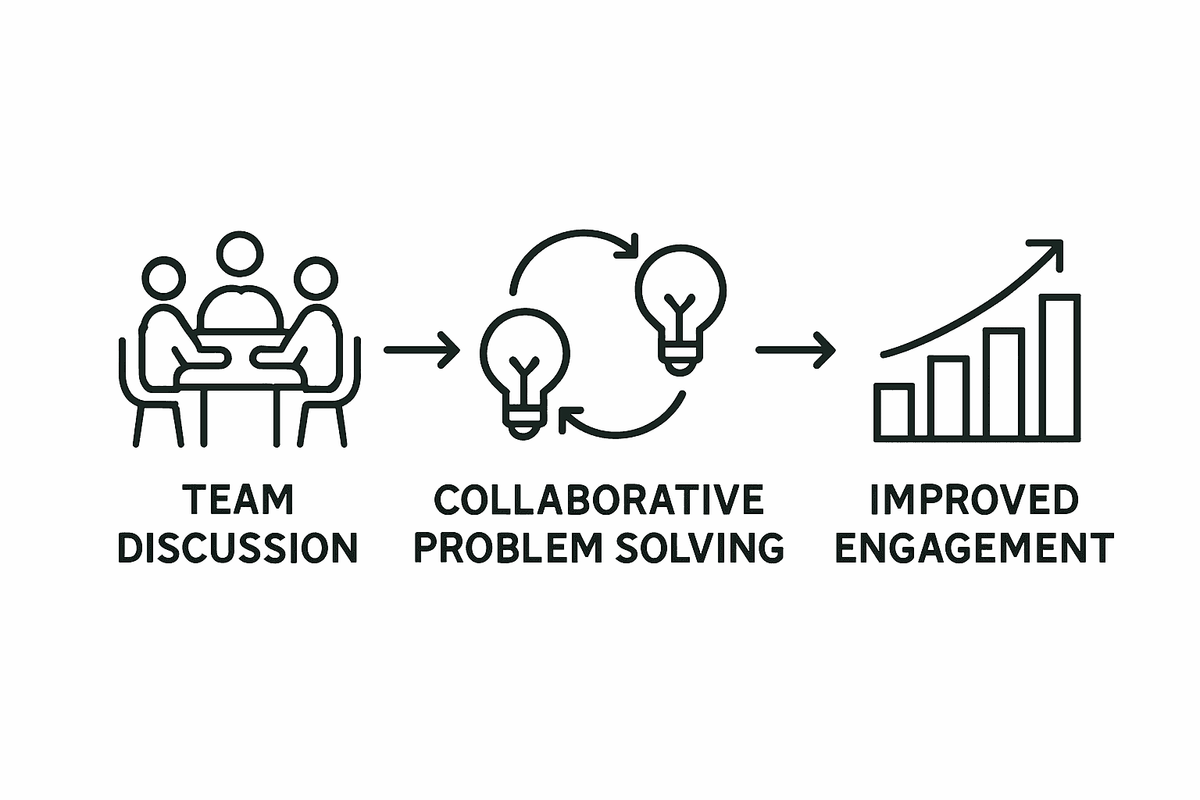
Beyond skill development, group quizzes generate tangible organizational benefits by fostering a culture of continuous learning and shared knowledge. Teams that regularly engage in these interactive experiences demonstrate increased adaptability, stronger interpersonal connections, and enhanced problem solving capabilities. The competitive yet supportive nature of group quizzes transforms potential workplace tensions into opportunities for mutual growth and understanding.
Pro Team Development Tip: Design group quiz experiences that intentionally rotate team roles, ensuring every member experiences leadership, analysis, and support functions to maximize skill diversity and personal growth.
Compare the core benefits of group quizzes for team development:
| Benefit Area | How Group Quizzes Help | Lasting Impact on Teams |
|---|---|---|
| Interpersonal Skills | Promotes leadership and clarity | Fosters strong communication |
| Collective Knowledge | Integrates diverse viewpoints | Builds shared understanding |
| Problem Solving | Encourages discussion and debate | Enhances adaptive thinking |
Implementing Effective Group Quizzes
Creating successful group quizzes requires strategic planning, thoughtful design, and a deep understanding of team dynamics. The goal is to craft an experience that challenges participants, promotes collaboration, and generates meaningful learning outcomes across diverse professional environments.
Effective group quiz implementation involves designing complex questions that cannot be easily divided or solved through individual efforts. These questions must be deliberately constructed to require group discussion, consensus building, and collaborative problem solving. By preventing simple task allocation, teams are forced to engage deeply, share perspectives, and develop collective reasoning strategies.
Practical quiz techniques include using interactive tools like digital worksheets and response systems to capture team responses and facilitate real-time engagement. Modern quiz platforms enable teams to record collective answers, track participation, and generate immediate feedback. These technologies transform traditional assessment methods by creating interactive, dynamic learning environments that encourage active participation and knowledge sharing.
Successful group quiz design also demands careful attention to team composition, question complexity, and evaluation methods. Balanced teams with diverse skill sets and complementary strengths tend to perform more effectively. Questions should be strategically crafted to require multiple perspectives, critical thinking, and collaborative analysis. Grading approaches must recognize both individual contributions and collective team performance, ensuring fair and motivational assessment strategies.
Pro Quiz Design Tip: Create quiz questions that intentionally have multiple potential interpretations, compelling teams to discuss, debate, and collectively arrive at nuanced solutions.
Risks and Mistakes to Avoid
Group quizzes, while powerful team-building tools, can quickly derail without careful planning and proactive management. Understanding potential pitfalls is crucial for creating positive, productive collaborative experiences that genuinely enhance team dynamics.
Common challenges in group activities include unequal participation, social loafing, and potential team conflicts. These dynamics can emerge when quiz structures fail to account for individual team member differences. Dominant personalities might monopolize discussions, while more reserved team members become passive observers. This unbalanced engagement undermines the core purpose of collaborative learning and can create underlying team tensions.
Preventing unequal participation requires intentional activity design that creates multiple engagement pathways. Quiz formats must be structured to ensure every team member has meaningful opportunities to contribute. This might involve rotating roles, creating sub-team challenges, or designing questions that explicitly require diverse perspectives and skills.
Additional risks include potential groupthink, where teams prioritize harmony over critical analysis, and cognitive bias, which can limit creative problem solving. Effective quiz design must intentionally introduce elements that challenge automatic thinking, encourage respectful debate, and create psychological safety for expressing divergent viewpoints. This approach transforms potential risks into opportunities for deeper team understanding and growth.
Pro Risk Management Tip: Implement a rotating facilitation model where different team members lead quiz segments, ensuring balanced participation and preventing any single individual from dominating group interactions.
Unlock Stronger Teamwork with Custom Group Quizzes
If your team struggles with engagement or finding fun, interactive ways to build collaboration the group quiz method described in "Why Group Quizzes Boost Teamwork and Engagement" is your solution. Group quizzes overcome common challenges like unequal participation and groupthink by encouraging active discussion and multiple viewpoints, transforming ordinary work groups into dynamic teams with stronger communication skills and shared understanding.

Experience this transformation yourself on Quizado where you can create customized team quiz games that fit your company culture. Whether you want to host online events or in-person sessions, our platform offers flexible options like remote control with smartphones and personalized branding to make every quiz memorable. Explore formats inspired by popular games in our free time category and discover how easy it is to keep your team engaged. Take action today to enhance teamwork through engaging quizzes designed to motivate every member and unlock your team’s potential.
Frequently Asked Questions
What are group quizzes?
Group quizzes are collaborative learning activities where teams work together to answer questions and solve challenges, fostering communication and shared understanding among team members.
How do group quizzes enhance team engagement?
Group quizzes promote active participation, critical thinking, and knowledge sharing, encouraging team members to engage deeply with one another while solving problems collaboratively.
What types of formats can group quizzes have?
Group quizzes can take various forms, including trivia leagues, thematic challenges focused on specific topics, and competitive formats like rapid-fire rounds that stimulate interaction among team members.
What are the key benefits of using group quizzes for team development?
Group quizzes enhance interpersonal skills, build collective knowledge, and improve problem-solving capabilities, contributing to a culture of continuous learning and collaboration within teams.
Host a quiz with your group
Find a hosting setup for your venue, company, classroom or activity group.