In this post+
Most american tech organizations still struggle with siloed teams and disengaged employees despite investing in traditional team-building approaches. As growing enterprises compete on a global stage, finding new ways to promote genuine collaboration is becoming a top priority. Mindful teamwork offers a modern solution, with research showing up to 35 percent improvement in team adaptability and innovation when mindfulness is integrated into daily interactions. Discover how intentional practices can transform team culture and drive real results.
Table of Contents
- Defining Mindful Teamwork In Organizations
- Core Elements And Practices Of Mindful Teams
- Impact On Collaboration And Communication
- Fostering Trust, Safety, And Innovation
- Common Barriers And How To Overcome Them
Key Takeaways
| Point | Details |
|---|---|
| Mindful Teamwork Enhances Communication | It fosters open dialogue and empathetic interactions, reducing misunderstandings among team members. |
| Psychological Safety is Crucial | Creating a safe environment encourages innovation and allows team members to share ideas without fear of ridicule. |
| Cultivate Emotional Intelligence | Training in mindfulness and emotional regulation improves team dynamics and problem-solving capability. |
| Address Teamwork Barriers | Identifying and overcoming obstacles like poor communication and cultural misunderstandings is essential for effective collaboration. |
Defining Mindful Teamwork in Organizations
Mindful teamwork represents a transformative approach to organizational collaboration that goes beyond traditional team building. Emerging research on team dynamics reveals it as a sophisticated practice of collective awareness and intentional interaction. At its core, mindful teamwork involves team members cultivating a shared state of present-moment consciousness, where individual perceptions merge into a unified organizational understanding.
The fundamental characteristics of mindful teamwork include non-judgmental processing, collective attention, and synchronized awareness. Teams practicing this approach create an environment where psychological safety flourishes, enabling members to communicate openly without fear of criticism. Unlike conventional team interactions that might be reactive or competitive, mindful teamwork emphasizes mutual understanding, active listening, and collaborative problem solving. Validated organizational research models demonstrate that such teams develop remarkable resilience and adaptive capabilities when confronting complex workplace challenges.
Practical implementation of mindful teamwork requires deliberate strategies. Organizations can foster this approach through structured practices like collective meditation sessions, shared reflection periods, and communication protocols that prioritize empathetic dialogue. Training programs that teach mindfulness techniques, encouraging team members to develop both individual and collective awareness, can significantly transform workplace interactions. By integrating mindfulness into team dynamics, companies create environments where creativity, mutual respect, and collaborative intelligence become natural organizational strengths.
Here's a summary of how mindful teamwork benefits organizations:
| Area of Impact | Mindful Teamwork Outcome | Business Benefit |
|---|---|---|
| Communication | Open, empathetic dialogue | Fewer misunderstandings |
| Team Resilience | Adaptive problem solving | Faster response to challenges |
| Creativity | Enhanced collaborative ideas | Innovative solutions |
| Workplace Culture | Psychological safety | Higher employee engagement |
| Decision Making | Collective present awareness | More effective, less biased choices |
Pro tip: Start team meetings with a two-minute collective breathing exercise to center group attention and establish a mindful, collaborative mindset.
Core Elements and Practices of Mindful Teams
Mindful teams are distinguished by their sophisticated approach to collective interaction and problem solving. Comprehensive research on contemplative practices reveals specific techniques that transform team dynamics, emphasizing intentional awareness and emotional intelligence. These practices go beyond traditional teamwork models by cultivating a deeper, more nuanced understanding of group collaboration.
The core elements of mindful teams include several critical components: emotional regulation, collective attention, empathetic communication, and adaptive resilience. These teams employ specific practices such as focused attention meditation, loving-kindness exercises, and open-monitoring techniques that enhance interpersonal skills. By integrating these contemplative approaches, teams develop heightened abilities to navigate complex workplace challenges, maintain composure under pressure, and respond to organizational demands with greater creativity and flexibility.
Practical implementation of mindful team practices requires structured approaches. Organizations can develop these skills through targeted training programs that include guided meditation sessions, reflective dialogue workshops, and communication protocols designed to promote psychological safety. Team leaders play a crucial role in modeling mindful behaviors, creating environments that encourage present-moment awareness, non-judgmental listening, and collaborative problem solving. Techniques like group breathing exercises, shared reflection periods, and mindfulness-based stress reduction workshops can systematically build the collective capacity for more intentional and effective teamwork.
Pro tip: Implement a monthly "mindful team check-in" where team members share insights about their collaborative experiences and practice collective reflection techniques.
Impact on Collaboration and Communication
Mindful communication fundamentally transforms how teams interact and collaborate in organizational settings. Research on mindful interaction dynamics demonstrates that purposeful, nonjudgmental communication significantly enhances cooperative orientation and emotional regulation. Teams that embrace mindful communication techniques create environments where open dialogue, mutual understanding, and collective problem solving become natural workplace behaviors.
The impact of mindful communication extends beyond simple conversational techniques. Comprehensive organizational research reveals that mindfulness protocols can systematically improve group processes, reducing communication barriers and fostering creativity across diverse team environments. Key benefits include enhanced emotional intelligence, reduced interpersonal friction, improved active listening skills, and a more inclusive approach to collaborative work. By cultivating present-moment awareness and non-reactive communication, teams develop the capacity to navigate complex workplace challenges with greater empathy and strategic insight.
Practical implementation of mindful communication requires intentional strategies. Organizations can develop these skills through targeted training programs that focus on communication protocols, emotional awareness workshops, and structured reflection exercises. Critical practices include teaching team members active listening techniques, encouraging non-judgmental dialogue, and creating safe spaces for authentic expression. These approaches help teams move beyond surface-level interactions, enabling deeper understanding, more effective problem solving, and a more cohesive organizational culture that values genuine human connection.
Pro tip: Introduce a weekly "communication reset" where team members practice five minutes of guided mindful listening, focusing entirely on understanding each other without interruption or immediate response.
Fostering Trust, Safety, and Innovation
Psychological safety represents the foundational bedrock of high-performing teams, creating an environment where innovation can truly flourish. Groundbreaking research on team dynamics demonstrates that teams with robust psychological safety experience significantly higher levels of innovative behavior, directly linked to open communication and interpersonal trust. This safety allows team members to take intellectual risks, share unconventional ideas, and challenge existing assumptions without fear of ridicule or professional repercussions.
Comprehensive studies on team psychology confirm that interpersonal trust is not just a soft skill, but a critical organizational capability. When teams cultivate a climate of psychological safety, they unlock extraordinary potential for collective learning and adaptive problem solving. Key elements of this trust-based environment include transparent communication, mutual respect, constructive feedback mechanisms, and a shared commitment to continuous improvement. By normalizing vulnerability and treating mistakes as learning opportunities, organizations can transform traditional hierarchical structures into dynamic, collaborative ecosystems.
Building trust and safety requires deliberate, systemic approaches. Leaders must actively model vulnerability, create structured opportunities for open dialogue, and establish clear expectations around respectful communication. This involves developing organizational practices that reward collaborative thinking, recognize collective achievements, and provide safe channels for expressing diverse perspectives. Training programs focused on emotional intelligence, active listening, and conflict resolution can systematically build the interpersonal skills necessary for creating psychologically safe team environments that drive innovation and organizational resilience.
Pro tip: Implement a monthly "vulnerability session" where team members share professional challenges or learning experiences, reinforcing that transparency and mutual support are core organizational values.
Common Barriers and How to Overcome Them
Teamwork challenges are complex and multifaceted, requiring nuanced strategies for effective resolution. Systematic research on organizational barriers reveals four primary obstacles that consistently impede team performance: poor communication, lack of trust, unclear role definitions, and cultural misunderstandings. Understanding these barriers is the first critical step toward developing targeted interventions that can transform potential team dysfunctions into opportunities for growth and collaboration.
Comprehensive studies on global team dynamics highlight the intricate nature of team barriers, particularly in multicultural environments. Language differences, communication style variations, and divergent cultural practices can create significant friction. Successful teams develop adaptive communication strategies that transcend these differences, implementing flexible approaches such as cultural competence training, establishing clear communication protocols, and leveraging technology to bridge potential gaps. By creating an environment of mutual understanding and respect, organizations can convert potential barriers into sources of team strength and diversity.
Overcoming these barriers requires a multifaceted approach that combines leadership intervention, targeted training, and systemic organizational support. Key strategies include developing robust onboarding processes that clarify team roles and expectations, creating psychological safety through transparent communication, and implementing continuous learning programs that help team members develop cross-cultural competencies. Leaders must actively model inclusive behaviors, provide constructive feedback mechanisms, and create structured opportunities for team members to understand and appreciate their diverse perspectives and working styles.
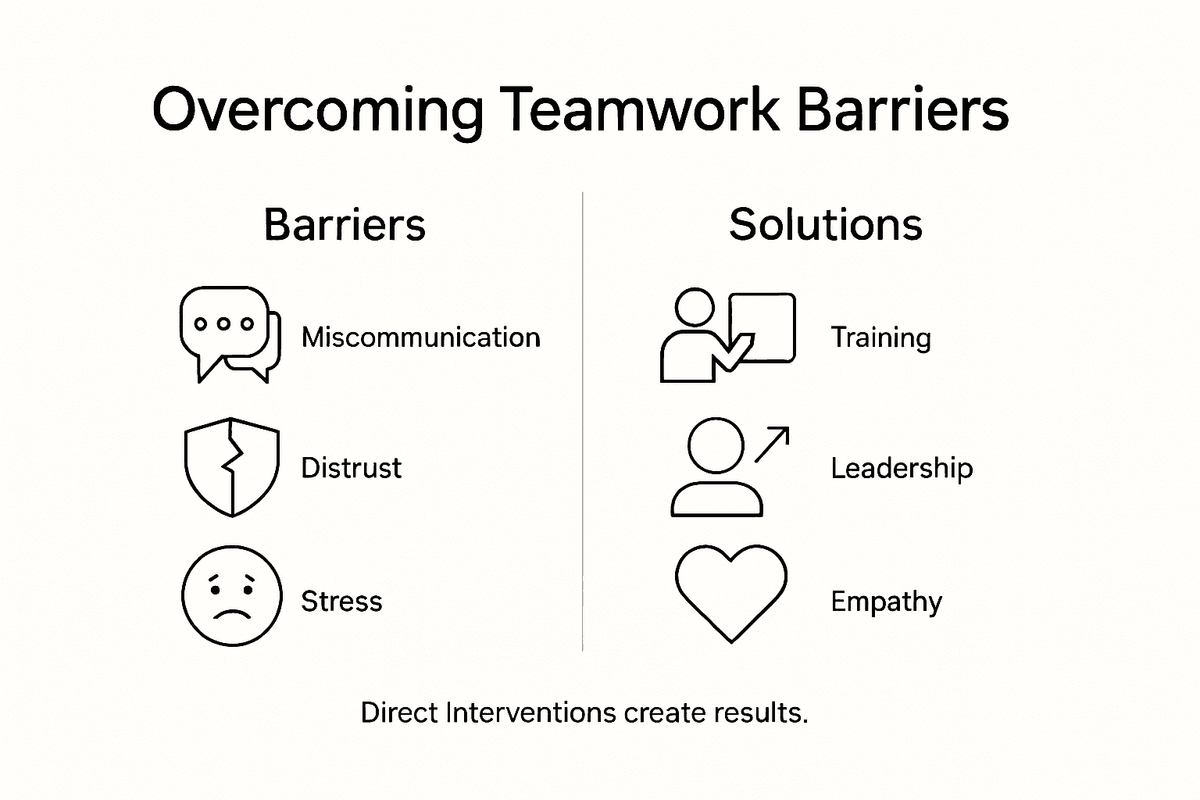
This table compares core barriers to teamwork and effective overcoming strategies:
| Teamwork Barrier | Example Situation | Best Overcoming Strategy |
|---|---|---|
| Poor Communication | Missed deadlines | Adopt structured feedback practices |
| Lack of Trust | Withholding information | Regular trust-building exercises |
| Unclear Roles | Duplicate tasks | Role definition during onboarding |
| Cultural Misunderstanding | Differing working styles | Cross-cultural competence workshops |
Pro tip: Conduct quarterly cross-cultural communication workshops that help team members understand and appreciate different communication and working styles, transforming potential barriers into collaborative opportunities.
Elevate Your Team Culture with Mindful Engagement
The article highlights that mindful teamwork thrives on psychological safety, open communication, and adaptive collaboration. Yet many organizations struggle with barriers like poor communication and lack of trust that weaken these essential elements. If your team faces these challenges or aims to boost creativity and resilience through intentional, present-moment awareness, there is a powerful way to transform your team culture.

Boost trust and collaboration by integrating engaging, customizable team-building experiences from Quizado. Our innovative platform offers interactive quiz games designed to foster open dialogue and collective attention while making teamwork fun and meaningful. With flexible options for online or in-person play, smartphone remote controls, and personalized branding, Quizado turns mindful teamwork principles into engaging group practices. Start creating a culture where psychological safety, empathy, and creative problem solving are natural outcomes. Visit Quizado now to explore how your team can experience these benefits through tailored game-based exercises that spark genuine connection and collaboration.
Frequently Asked Questions
What is mindful teamwork?
Mindful teamwork is a collaborative approach that emphasizes collective awareness and intentional interaction among team members, fostering an environment of open communication and mutual understanding.
How does mindful teamwork benefit workplace culture?
Mindful teamwork enhances workplace culture by promoting psychological safety, reducing misunderstandings, and encouraging creativity and collaboration, which lead to higher employee engagement and innovation.
What practices can organizations implement to foster mindful teamwork?
Organizations can implement practices such as collective meditation sessions, empathetic dialogue protocols, and structured reflective exercises to encourage mindfulness among team members.
How can communication improve through mindful teamwork?
Mindful teamwork promotes non-judgmental and empathetic communication, which reduces interpersonal friction, enhances emotional intelligence, and encourages active listening among team members, leading to more effective collaboration.
Recommended
Turn these ideas into a team event
Prepare an office quiz or remote game with a shared screen, phone participation and a host on your team.