
In this post+
Remote work reveals unique challenges that traditional team-building cannot solve alone. For HR managers navigating large multinational teams, sustaining motivation across continents often means grappling with miscommunication and uneven engagement. Customizable interactive quizzes present a new way forward, offering tailored solutions that adapt to team needs, spark active participation, and drive real progress in even the most distributed workplaces.
Table of Contents
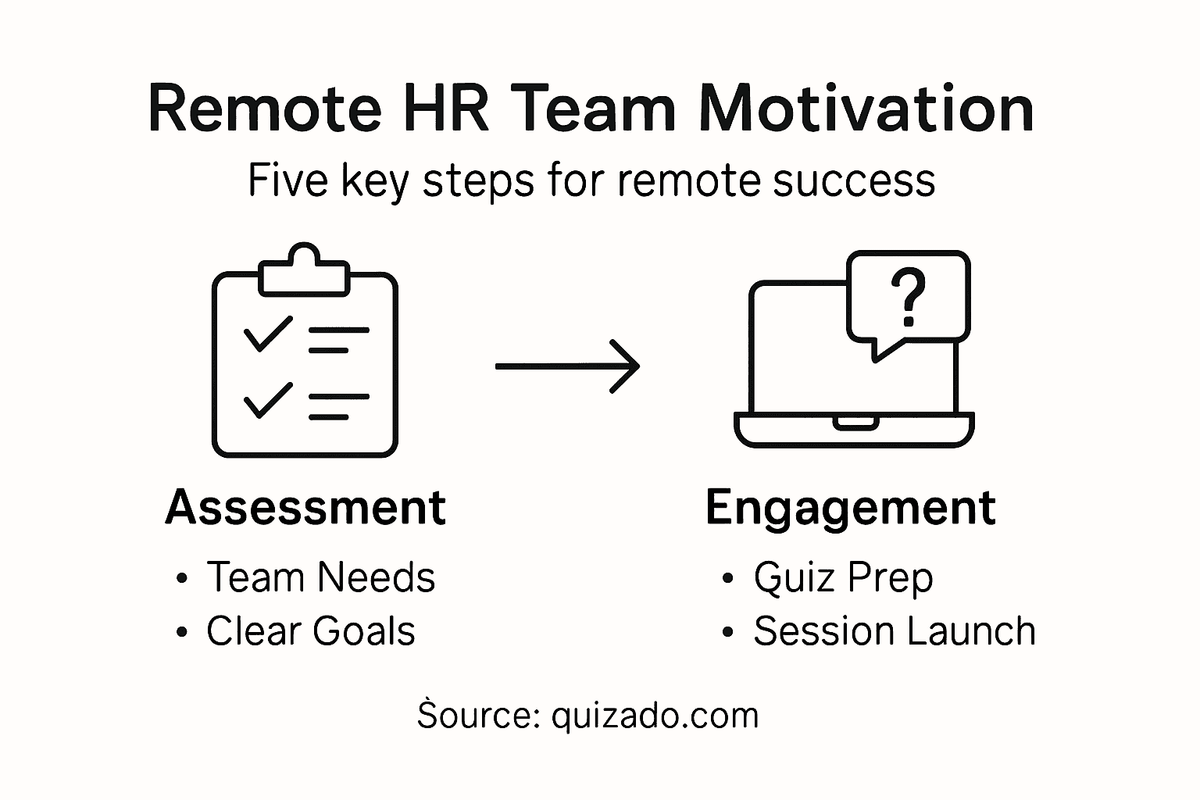
- Step 1: Assess Team Needs And Set Clear Goals
- Step 2: Configure And Customize Engaging Quiz Experiences
- Step 3: Launch Interactive Sessions To Spark Participation
- Step 4: Monitor Engagement And Gather Immediate Feedback
- Step 5: Evaluate Team Outcomes And Refine Approaches
Quick Summary
| Key Point | Explanation |
|---|---|
| 1. Assess team needs thoroughly | Conduct one-on-one assessments of communication and collaboration challenges to identify specific gaps and individual stressors. |
| 2. Set clear, measurable goals | Establish specific and measurable goals that address identified challenges, ensuring they align with organizational objectives for remote teams. |
| 3. Design engaging quiz experiences | Create quizzes with diverse question formats and personalized branding to maintain interest and engage team members effectively. |
| 4. Monitor engagement and gather feedback | Observe participation metrics and send quick surveys after sessions to gather insights about team experiences and potential improvements. |
| 5. Evaluate and refine approaches | Review both quantitative and qualitative outcomes post-quiz to identify what works and adjust strategies for future sessions accordingly. |
Step 1: Assess team needs and set clear goals
Before you can motivate your remote team, you need to understand what's actually happening in their work lives. This step involves getting specific about your team's current state, identifying gaps, and establishing goals that will drive real progress.
Start by conducting a thorough assessment of your team's situation. Look at three critical areas: how your team communicates, what their performance metrics show, and where collaboration is breaking down. Are your people struggling to stay connected across time zones? Are they uncertain about project priorities? Do they feel isolated from the broader team? Assessing communication gaps and collaboration challenges gives you concrete data rather than assumptions. Schedule one-on-one conversations with team members to understand their perspective. Ask about their biggest frustrations, what support they need, and what's working well. You'll uncover patterns that individual performance data alone won't reveal. Maybe your marketing team feels disconnected from engineering, or your newer employees don't know how to reach leadership for guidance. These conversations are where real insight lives.
Next, consider the specific stressors your remote workers face. Working from home creates unique pressures that office environments don't have. Someone might be struggling with isolation while another feels burned out from constant availability. One person thrives with flexible schedules while another needs structure. Understanding these individual differences lets you tailor your approach rather than applying one-size-fits-all solutions. Once you have this assessment data, set clear goals that address what you've discovered. Your goals should be specific and measurable, directly aligned with your organizational objectives. Instead of "improve communication," try "reduce email response time to 4 hours" or "establish weekly department synchronization calls." Goals that structure accountability and boost productivity work because they're concrete and measurable. Your goals should also account for remote work dynamics. Time zone differences, asynchronous communication needs, and the lack of spontaneous collaboration all require intentional goal-setting. Think about whether your targets make sense for a distributed workforce. Can your team realistically achieve these goals without everyone being online at the same time? Should some goals focus on documentation, recorded feedback, or async project updates?
Pro tip: Document your assessment findings in a simple spreadsheet or shared document, then share anonymized themes with your team so they see their input shaped the goals you're setting.
Step 2: Configure and customize engaging quiz experiences
Now that you understand your team's needs and have clear goals in place, it's time to design the quiz experiences that will actually engage your remote workers. This step transforms your assessment into an interactive tool that drives motivation, communication, and team connection.
Start by defining your quiz objectives based on the goals you set in the previous step. Are you trying to strengthen communication between departments? Build trust among new team members? Increase cross-functional knowledge sharing? Your objectives should directly support your larger organizational goals. Once you're clear on what you want to achieve, select quiz themes and branding that resonate with your team. This is where personality comes in. A creative agency might use a design thinking theme, while an engineering team might prefer a problem solving angle. Your branding should feel authentic to your company culture, not forced. You can incorporate your company logo, color schemes, and even team inside jokes into the quiz interface. This personalization makes the experience feel intentional rather than generic.

Question format variety is what keeps people engaged. Diverse question formats maintain interest throughout the experience, so don't rely solely on multiple choice questions. Mix in true or false questions, short answer formats, and scenario based challenges. For a remote team spread across time zones, consider questions that spark meaningful conversation or reflection. Maybe you ask teams to guess company trivia, solve collaborative puzzles, or answer questions about team values and culture. The question variety prevents the quiz from feeling like a traditional exam and instead makes it feel like a shared experience where learning happens naturally.
Before you launch, test everything thoroughly. Send the quiz to a few trusted team members and watch how they interact with it. Do the questions load properly? Is the timer working correctly? Can people see scores and results? Are the questions actually motivating or do they fall flat? Testing catches technical issues, but it also helps you gauge whether your questions will actually land with your audience. Sometimes a question that seems clever in your head doesn't land the same way when people are actually playing. That's valuable information before you deploy it across your entire team. When you test, also check that your quiz setup works across different devices and internet connections since your remote team might be joining from various locations and setups.
Pro tip: Build in a debrief moment after the quiz where team members can discuss what they learned or share their reactions, turning the quiz into a springboard for meaningful conversation rather than just a competition.
Step 3: Launch interactive sessions to spark participation
Your quiz is ready, and now comes the moment that determines whether all your planning pays off. Launching your interactive sessions effectively is about creating the right atmosphere, removing barriers to participation, and making sure people feel comfortable jumping in. This step turns your carefully designed quiz into a genuine team experience.
Start with a strong opening that frames why you are doing this. Don't just say "let's play a quiz." Instead, connect it back to your team goals. Maybe you say something like "Today we're testing how well our cross-functional teams really know each other" or "This quiz will help us identify knowledge gaps and celebrate what we already know." When people understand the purpose, they engage differently. They stop thinking about performance and start thinking about connection and learning. Set clear expectations about how the session will work. Will teams compete? Will individuals answer questions? How long will it take? Will scores be public or private? Transparency about the format removes anxiety and lets people focus on participation rather than worrying about surprises.
During the session itself, use techniques that build momentum and keep energy high. Virtual icebreakers and real-time polls encourage active participation and help people settle into the experience. Start with an easy question or a fun icebreaker to get everyone confident and comfortable answering. This is especially important for remote teams where people might feel hesitant to speak up on camera. Once the energy is building, you can introduce more challenging questions or competitive elements. Pay attention to who's participating and who's quiet. Sometimes your quietest team members have the most valuable insights but need an explicit invitation to share. Maybe ask direct questions or create breakout room discussions where smaller groups can collaborate before sharing back to the full team. Gamified learning approaches and scenario based activities make the experience feel natural and engaging rather than forced or uncomfortable.
Timing matters more than you might think. Remote sessions work best when they're focused and energetic rather than drawn out. Consider running your session for 30 to 45 minutes maximum. This keeps people engaged and prevents the digital fatigue that comes from longer video meetings. Schedule at a time that works for your distributed team. If you have people across multiple time zones, you might need to run the session twice or record it for asynchronous participation. Acknowledge that not everyone can make a live session, and that's okay. The goal is participation, not perfect attendance.
Pro tip: Have a conversation starter ready for after the quiz ends, like discussing surprising answers or asking people what they learned about their teammates, so the moment doesn't feel abrupt when the quiz finishes.
Here's a summary of techniques for engaging remote teams during quizzes:
| Technique | Purpose | Example Application |
|---|---|---|
| Icebreakers | Lower anxiety and boost participation | Start with a fun or easy question |
| Scenario-based questions | Encourage discussion and critical thinking | Pose team-specific challenges |
| Breakout rooms | Promote collaboration in small groups | Discuss answers privately, then share back |
| Gamification elements | Increase motivation and friendly competition | Scoreboards or team prizes |
| Debrief moments | Foster deeper learning and reflection | Group discussion after the quiz |
Step 4: Monitor engagement and gather immediate feedback
The quiz has ended, but your work isn't finished. This is the critical moment where you capture what actually happened and what your team is thinking. Monitoring engagement and gathering feedback immediately after your session gives you real data about whether your approach is working and what needs adjustment for next time.
Start by observing what happened during the session itself. Which questions generated the most discussion? When did energy dip? Who participated actively and who held back? If you're using a quiz platform, look at the participation metrics. How many people attended? How long did people stay engaged? What was the completion rate? These numbers tell a story about whether your quiz design and delivery hit the mark. But numbers alone don't reveal the full picture. You also need qualitative information about how people felt. Send a brief feedback survey immediately after the session while it's still fresh in people's minds. Ask simple questions like "What was your favorite part?" "Did you learn anything surprising about your teammates?" "What would make this better next time?" Keep it short. A five question survey takes less than two minutes and dramatically increases response rates compared to longer surveys. Quality communication and idea sharing during interactive sessions provide valuable insights into whether your team felt genuinely engaged or if they were just going through the motions.
Consider conducting a few quick one-on-one check-ins with team members, especially those who were quiet during the session. Sometimes people hold back in group settings for reasons that won't show up in anonymous surveys. Maybe someone felt uncomfortable on camera, or they were dealing with a distraction at home, or they have valuable ideas they're hesitant to share publicly. These conversations help you understand context. You might discover that your quietest participant actually found the experience meaningful but just processes things differently than your outgoing team members. Structured feedback mechanisms supported by digital communication tools help you build relationships with your team while gathering the information you need. Use what you learn to iterate. If people said the questions were too difficult, make them more accessible next time. If energy dropped at the 30-minute mark, shorten your session. If someone mentioned they wished there was more time for discussion, build in more breakout conversations. This isn't about being perfect on the first try. It's about showing your team that their feedback actually matters and that you're constantly improving the experience based on what they tell you.
Also pay attention to the subtler signals. Did people stay longer than required? Did conversations continue after the quiz ended? Did anyone mention the experience to you later unprompted? These organic signs of engagement often matter more than formal metrics because they indicate whether people found genuine value in what you created. Real engagement shows up in how people talk about the experience when no one is officially asking them to participate.
Pro tip: Create a simple shared document where you track feedback themes across multiple sessions so you can spot patterns and make data-informed decisions about what's actually resonating with your team over time.
This table compares quantitative and qualitative feedback methods in evaluating team quiz sessions:
| Feedback Method | Strengths | Limitations |
|---|---|---|
| Participation metrics | Immediate, objective data | Misses personal experiences |
| Post-session surveys | Quickly captures opinions | May lack context for issues |
| One-on-one check-ins | Reveals deeper insights | Time-intensive to conduct |
| Observing organic behaviors | Detects genuine engagement | Open to interpretation |
Step 5: Evaluate team outcomes and refine approaches
You've conducted your quiz sessions, gathered feedback, and observed how your team responded. Now comes the phase where you analyze what actually worked and what needs adjustment. Evaluating outcomes isn't about assigning grades or determining winners. It's about understanding whether your motivation strategy is moving the needle on the goals you set at the beginning.
Start by looking at the concrete data you collected. Did your engagement metrics improve compared to previous team activities? Are people more connected across departments now? Has communication improved in ways you can measure? Look at attendance rates, participation levels, and completion rates. Compare these to your baseline. If you ran a similar activity before implementing your quiz strategy, how do the numbers compare? Beyond the numbers, examine the qualitative outcomes. Did people actually build stronger relationships? Are there signs of improved collaboration? Do team members mention the experience positively in other contexts? Sometimes the most valuable outcomes show up not in metrics but in shifted behavior. Maybe your remote team is now reaching out across time zones more freely, or quieter employees are speaking up in meetings. Continuous performance communication through one-on-one and team meetings helps you understand whether your approach is genuinely moving engagement forward.
Now assess what specifically drove the positive outcomes. Were there particular questions that sparked the best conversations? Did certain team pairings work better than others? Was timing a factor in participation rates? Which elements of your quiz design resonated most? Understanding these details matters because it helps you replicate what worked. If your engineering team engaged way more during the technical trivia questions, that tells you something important about what motivates them. If your team valued the post-quiz discussion more than the competition itself, that's valuable insight about your culture. Take this understanding and refine your approach for the next session. Maybe you adjust the question types, change the team structure, run it at a different time of day, or focus more on the debrief conversation. Using data-driven approaches to evaluate employee engagement and collaboration outcomes helps you make intentional refinements rather than random guesses.
Consider also what didn't work and why. Did certain questions fall flat? Did technical issues disrupt the flow? Did people seem fatigued or distracted at certain points? Negative feedback is just as valuable as positive feedback because it tells you what to change. Maybe you discovered that your team feels uncomfortable with public scoring, or that your chosen time slot conflicts with their daily rhythm, or that your questions weren't relevant to their actual work. These insights are gold. They guide your next iteration toward something that fits your team better. Create a simple document that captures your key learnings from this session. Include what worked, what didn't, and what you want to try differently next time. Share this reflection with your team if appropriate. When people see that their feedback directly shaped your next approach, it reinforces that their voice matters and that you're genuinely committed to continuous improvement.
Pro tip: Schedule a follow-up team activity in two to three weeks rather than waiting months between sessions, so you can test refinements quickly and build momentum around your motivation strategy.
Energize Your Remote Team Motivation with Customized Quiz Experiences
Motivating a remote team requires clarity, connection, and creative engagement that goes beyond traditional meetings. This article highlights challenges like communication gaps, isolation, and maintaining energy in virtual settings while emphasizing tailored goal setting and interactive approaches such as gamification and debrief moments. If you want to transform these insights into tangible outcomes, consider leveraging a platform built specifically for remote team success.
Discover how quizado.com offers a seamless solution to align your team with your motivation goals by creating engaging, branded quiz games that capture attention and promote collaboration. With features like flexible team configuration, multi-device control, and a rich question bank, you can tailor every session to your unique company culture and measured objectives. Start bridging communication gaps and boosting participation today by visiting Quizado online platform. Don’t wait to turn your remote motivation strategy into an interactive team-building success story.
Frequently Asked Questions
How can I assess my remote team's needs for effective motivation?
Start by conducting one-on-one conversations with team members to identify their challenges and frustrations. Gather data on communication gaps and collaboration issues to tailor your motivation strategies based on their actual needs.
What types of goals should I set to motivate my remote team?
Set specific and measurable goals that align with your organizational objectives, such as reducing email response time to 4 hours or establishing weekly department calls. Clear goals provide direction and accountability for your team.
How should I design engaging quiz experiences for my remote team?
Define clear objectives for your quizzes based on your team's goals, and incorporate diverse question formats to keep them engaged. For example, mix multiple choice, true or false, and scenario-based challenges to foster interaction and learning.
What techniques can enhance participation during remote quiz sessions?
Start your quiz with an engaging icebreaker to build comfort and set clear expectations regarding participation. Implement breakout sessions for small group discussions to encourage collaboration and make the experience more interactive.
How do I evaluate the success of my remote team quizzes?
Monitor engagement metrics such as attendance and participation rates, and gather immediate feedback through short surveys. Analyze both quantitative data and qualitative insights to identify what worked well and what needs improvement for future sessions.
What steps can I take to refine my team motivation approaches?
After evaluating outcomes, document what worked and what did not, then apply these insights to future sessions. For instance, if participants enjoyed certain question formats, incorporate more similar questions in your next quiz to improve engagement.
Host a quiz with your group
Find a hosting setup for your venue, company, classroom or activity group.