
In this post+
More than 85 percent of American corporate teams now operate partially or fully remote, presenting a challenge for HR managers who want meaningful connection beyond physical offices. As large multinational organizations expand globally, the need for innovative team-building solutions becomes urgent. This article explores how customized digital quiz experiences can transform remote collaboration, offering fresh interactive strategies that nurture engagement and deepen teamwork for American businesses and beyond.
Table of Contents
- Defining Digital Team Bonding In Organizations
- Popular Types Of Digital Team Bonding Activities
- Key Features Of Effective Online Team Bonding
- Technological Requirements And Best Practices
- Risks And Common Mistakes To Avoid
- Comparing Digital Versus In-Person Team Bonding
Key Takeaways
| Point | Details |
|---|---|
| Digital Team Bonding Enhances Connections | Implementing structured, technology-enabled activities fosters strong relationships among remote team members. |
| Mix of Activities is Essential | Combining various formats, like gaming and problem-solving, keeps team engagement high and prevents burnout. |
| Technological Infrastructure is Critical | Investing in robust digital platforms ensures effective communication and collaboration across diverse team needs. |
| Recognize Risks and Plan Accordingly | Address common pitfalls like communication overload and neglecting cultural differences to maximize bonding effectiveness. |
Defining Digital Team Bonding in Organizations
Digital team bonding represents a strategic approach to cultivating connection and collaboration among remote and distributed workforce members through technology-enabled interactive experiences. Modern organizations increasingly recognize that building strong interpersonal relationships cannot be limited by physical distance, requiring innovative solutions that transcend traditional in-person team-building methods.
At its core, digital team bonding involves deliberately designed activities and platforms that enable employees to interact, communicate, and develop meaningful professional relationships through digital channels. Corporate team interaction technologies have evolved dramatically, providing sophisticated tools that simulate the spontaneity and engagement of face-to-face interactions. These technologies integrate social media capabilities, collaborative platforms, and interactive gaming elements to create shared experiences that foster trust, understanding, and collective identity among geographically dispersed team members.
Organizational research demonstrates that effective digital team bonding goes beyond simple communication, serving as a critical mechanism for enhancing operational performance and innovation. Strategic team development approaches reveal that companies investing in robust digital interaction strategies experience significant improvements in team cohesion, productivity, and overall organizational effectiveness. By creating intentional opportunities for connection, businesses can transform potential digital isolation into a dynamic, collaborative environment that transcends physical limitations.
Pro tip: Rotate digital team bonding activities quarterly to maintain engagement and prevent participant fatigue, ensuring each experience feels fresh and genuinely interactive.
Popular Types of Digital Team Bonding Activities
Digital team bonding activities have evolved dramatically, offering diverse strategies for organizations to maintain connection and engagement in remote work environments. These activities are not merely social interactions, but strategic tools designed to build trust, enhance communication, and create shared experiences among geographically dispersed team members.
Virtual team collaboration methods can be categorized into several dynamic formats that cater to different team preferences and organizational goals. Key digital team bonding activities include:
- Online Gaming Challenges: Interactive multiplayer games that encourage teamwork and friendly competition
- Virtual Problem-Solving Sessions: Collaborative workshops where teams tackle complex scenarios together
- Digital Escape Rooms: Immersive experiences requiring collective strategy and communication
- Remote Trivia Contests: Knowledge-based activities that blend entertainment with team learning
- Virtual Coffee Breaks: Informal video meetings simulating spontaneous workplace conversations
Research indicates that successful digital bonding experiences blend synchronous and asynchronous interactions. E-leadership strategies demonstrate that mixing structured professional activities with informal social gatherings significantly improves team dynamics and maintains organizational culture in remote settings. The key is creating opportunities for genuine connection that transcend digital barriers.

Pro tip: Rotate activity formats every quarter and collect team feedback to continuously refine and personalize your digital team bonding approach.
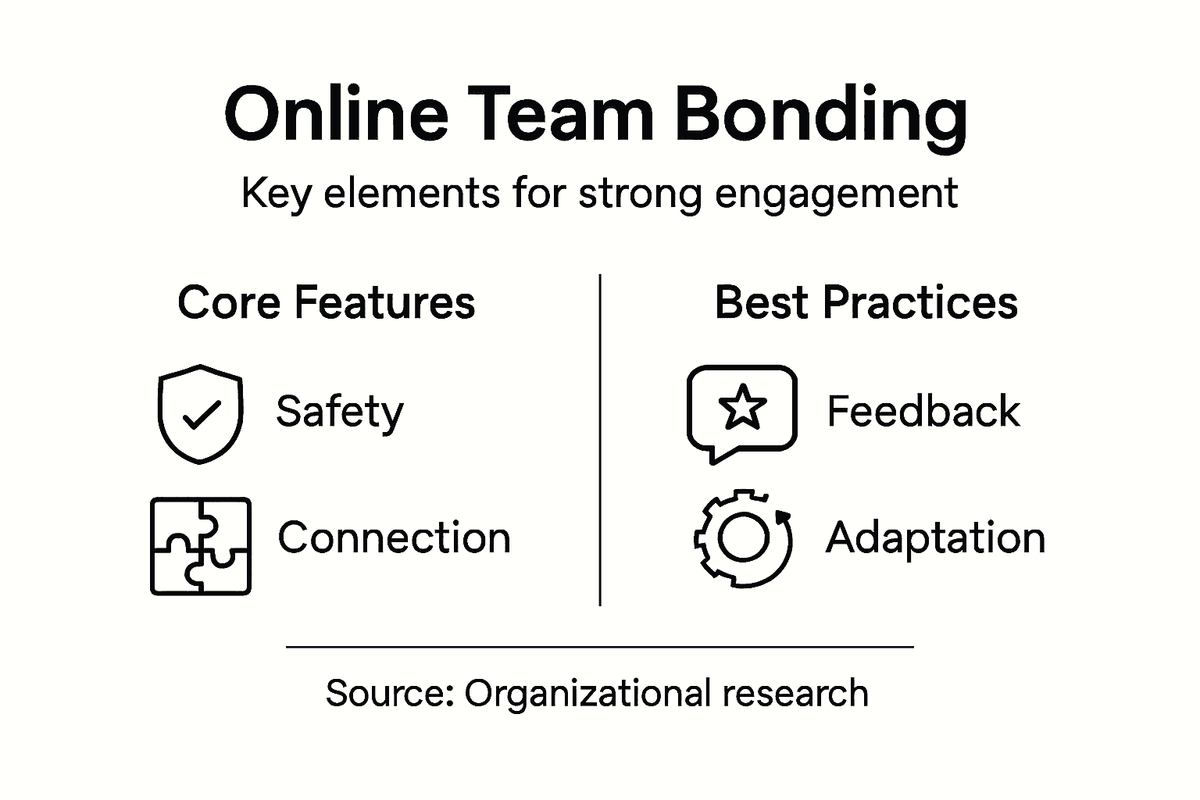
Key Features of Effective Online Team Bonding
Effective online team bonding transcends simple digital interactions, requiring sophisticated strategies that cultivate genuine human connection in virtual environments. Modern organizations must design experiences that bridge geographical distances while creating meaningful emotional and professional relationships among team members.
Online team interaction technologies reveal several critical features that distinguish exceptional digital team bonding experiences. These essential characteristics include:
- Psychological Safety: Creating environments where team members feel comfortable expressing ideas without fear of judgment
- Synchronous Interaction: Real-time communication tools that simulate spontaneous workplace conversations
- Emotional Connection: Activities designed to build trust and rapport beyond transactional work interactions
- Adaptive Communication: Platforms supporting multiple communication styles and preferences
- Consistent Engagement: Regular, structured opportunities for team members to connect informally
Beyond technological capabilities, organizational team development strategies emphasize that successful digital bonding requires intentional design. Effective approaches integrate technological tools with human-centered experiences that recognize individual team members' unique communication needs and psychological dynamics.
Pro tip: Conduct quarterly surveys to assess team bonding effectiveness and continuously adapt your digital interaction strategies based on participant feedback.
Technological Requirements and Best Practices
Successful digital team bonding demands a strategic approach to technological infrastructure that goes beyond basic communication tools. Organizations must invest in comprehensive digital platforms that seamlessly integrate multiple communication channels and support diverse team interaction needs.
Digital collaboration platforms require several critical technological capabilities to enable effective remote team engagement. Key technological requirements include:
- Cross-Platform Compatibility: Tools that work across different devices and operating systems
- High-Quality Video Communication: Reliable video conferencing with minimal latency
- Interactive Collaboration Features: Shared workspaces, real-time document editing, and screen sharing
- Robust Security Protocols: End-to-end encryption and secure access controls
- Intuitive User Interfaces: Minimal learning curve for team members
Cutting-edge digital technologies emphasize the importance of creating an integrated technological ecosystem that supports both structured work processes and informal team interactions. Successful implementations focus on technologies that facilitate not just communication, but genuine connection and collaborative problem-solving across geographical boundaries.
This table summarizes business impacts of key technological features required for effective digital team bonding:
| Technological Feature | Business Impact |
|---|---|
| Cross-Platform Compatibility | Ensures all team members can participate |
| High-Quality Video Communication | Improves clarity and reduces miscommunication |
| Interactive Collaboration Tools | Enhances productivity and engagement |
| Robust Security Protocols | Protects company data and privacy |
| Intuitive User Interfaces | Reduces training time and frustration |
Pro tip: Conduct annual technology audits to evaluate and upgrade your digital collaboration tools, ensuring they continue to meet evolving team communication needs.
Risks and Common Mistakes to Avoid
Digital team bonding efforts can quickly derail without careful planning and strategic implementation. Recognizing potential pitfalls is crucial for organizations seeking to create meaningful virtual connections that genuinely enhance team dynamics and organizational culture.
Virtual team engagement challenges reveal several critical risks that can undermine digital team bonding initiatives. Key risks and common mistakes include:
- Technological Exclusion: Marginalizing team members with limited technical skills
- Communication Overload: Excessive digital interactions leading to burnout
- Lack of Clear Objectives: Conducting activities without specific team development goals
- Inconsistent Participation: Uneven engagement across different team members
- Neglecting Cultural Differences: Failing to accommodate diverse communication styles
Digital collaboration risks emphasize that successful team bonding requires more than just technological solutions. Organizations must develop nuanced approaches that recognize individual team member needs, create inclusive environments, and provide structured yet flexible interaction opportunities. The most effective strategies balance technological tools with human-centered design, ensuring that digital experiences feel authentic and meaningful.
Pro tip: Conduct periodic anonymous surveys to identify and address potential barriers to digital team engagement, allowing continuous refinement of your team bonding approach.
Comparing Digital Versus In-Person Team Bonding
Team bonding strategies have dramatically transformed with technological advancements, challenging traditional assumptions about interpersonal connection and collaboration. Modern organizations must navigate the nuanced landscape of digital and physical interaction to create meaningful team experiences that transcend geographical limitations.
Team interaction modalities reveal distinctive strengths and limitations for both digital and in-person approaches. Key comparative dimensions include:
Here's a concise summary of how digital and in-person team bonding compare across key dimensions:
| Dimension | Digital Team Bonding | In-Person Team Bonding |
|---|---|---|
| Accessibility | Connects global remote teams | Limited by physical location |
| Engagement Flexibility | Fits varying schedules | Fixed times and locations |
| Cost Considerations | Low travel and venue expenses | Higher event and travel costs |
| Team Connection Depth | Fosters trust over time | Builds rapid emotional rapport |
| Spontaneity | Scheduled or partially organic | More frequent unplanned moments |
| Adaptability | Easily customized for team needs | Less flexible due to logistics |
- Geographic Accessibility: Digital platforms enable global team connections
- Emotional Depth: In-person interactions offer richer non-verbal communication
- Cost Efficiency: Virtual activities typically require lower financial investment
- Participation Flexibility: Online formats support diverse scheduling needs
- Spontaneity: Physical gatherings facilitate more organic interactions
Hybrid team engagement strategies suggest that the most effective approach combines digital and in-person elements. Organizations should design flexible frameworks that leverage technological tools while preserving the irreplaceable human elements of face-to-face connection, creating comprehensive team bonding experiences that adapt to evolving workplace dynamics.
Pro tip: Implement a rotating strategy that alternates between digital and physical team bonding activities to maintain engagement and accommodate diverse team preferences.
Strengthen Your Remote Teams with Engaging Digital Bonding
Building trust and connection across a remote workforce can feel challenging. The article highlights the importance of purposeful digital team bonding to boost engagement, trust, and collaboration among distributed teams. Common hurdles include maintaining emotional connection, ensuring consistent participation, and offering fresh interactive experiences that go beyond simple communication.
At quizado.com, we solve these challenges by providing customizable, interactive quiz game experiences designed to inspire teamwork and fun. Whether your teams need an energizing virtual coffee break or a strategic problem-solving event, our platform supports a variety of formats ideal for remote engagement. Our tools empower managers to tailor activities to their team’s unique needs and brand identity within the work category.

Discover how interactive quiz games can become your next powerful digital team bonding activity. Visit quizado.com now to explore flexible solutions that keep your team connected and excited to collaborate. Start creating memorable moments today and turn remote work into meaningful team success.
Frequently Asked Questions
What is digital team bonding?
Digital team bonding refers to activities and experiences designed to foster connection and collaboration among remote team members using technology. It aims to build meaningful professional relationships beyond physical distances.
What are some popular digital team bonding activities?
Popular activities include online gaming challenges, virtual problem-solving sessions, digital escape rooms, remote trivia contests, and virtual coffee breaks, which help build trust and enhance communication.
What are the key features of effective online team bonding?
Effective online team bonding incorporates psychological safety, synchronous interaction, emotional connection, adaptive communication, and consistent engagement to create meaningful experiences that enhance team dynamics.
How can organizations avoid common mistakes in digital team bonding?
To avoid mistakes, organizations should ensure inclusivity for all team members, maintain clear objectives for activities, prevent communication overload, foster consistency in participation, and respect cultural differences in communication styles.
Host a quiz with your group
Find a hosting setup for your venue, company, classroom or activity group.