In this post+
Remote meetings often leave teams feeling disconnected and uninspired. Finding ways to spark genuine collaboration and keep everyone engaged can be a real challenge, especially when screens replace face to face interaction. You want your team to bond, learn, and communicate more effectively, but most virtual activities fall flat.
This list reveals creative team game ideas that transform digital gatherings into interactive, memorable experiences. You'll discover activities that encourage communication, foster problem solving, and help your team connect on a deeper level. These actionable strategies promote participation and create opportunities for laughter, learning, and teamwork you won't get from standard meetings.
Get ready to explore proven approaches that work for remote teams, helping you build stronger relationships and ramp up engagement with every session.
Table of Contents
- 1. Interactive Quiz Games For Team Challenges
- 2. Virtual Scavenger Hunts To Encourage Collaboration
- 3. Online Escape Rooms For Problem-Solving Practice
- 4. Icebreaker Bingo For Quick Team Connections
- 5. Trivia Tournaments Using Custom Question Banks
- 6. Role-Reversal Games To Boost Empathy
- 7. Themed Game Shows For Branding And Fun
Quick Summary
| Takeaway | Explanation |
|---|---|
| 1. Use Interactive Quiz Games for Team Building | These games foster collaboration, boost morale, and improve communication among remote teams through engaging question-based challenges. |
| 2. Implement Virtual Scavenger Hunts for Engagement | Scavenger hunts encourage creativity and collaboration, allowing team members to learn about each other in a fun, interactive manner. |
| 3. Organize Online Escape Rooms for Problem Solving | Escape rooms provide an immersive experience that simulates workplace dynamics, enhancing team problem-solving skills in a low-pressure environment. |
| 4. Adapt Icebreaker Bingo for Social Connections | This game transforms introductions into enjoyable interactions, helping participants form meaningful connections beyond surface-level conversation. |
| 5. Create Themed Game Shows for Team Learning | Game shows blend entertainment with education, reinforcing company values and enhancing team collaboration through playful competition. |
1. Interactive Quiz Games for Team Challenges
Interactive quiz games have emerged as a powerful strategy for transforming virtual team interactions from mundane meetings into dynamic collaborative experiences. By leveraging engaging online quiz platforms, teams can break down communication barriers and inject energy into remote work environments.
These knowledge-based challenges are more than just entertainment they are sophisticated team-building tools designed to foster collaboration, boost morale, and create shared experiences. When employees participate in quiz-style competitions, they develop stronger interpersonal connections while simultaneously exercising critical thinking and problem-solving skills.
The mechanics of interactive quiz games are straightforward yet incredibly effective. Participants are grouped into teams, presented with a series of questions spanning various topics like company knowledge, industry trends, or general trivia. This format encourages communication, strategic thinking, and collective problem solving. Players must collaborate, discuss potential answers, and make decisions as a unified group.
To implement these games successfully, managers should focus on creating inclusive experiences that accommodate different skill levels and knowledge backgrounds. This might involve designing questions with varying difficulty levels, ensuring everyone feels comfortable participating, and maintaining a supportive atmosphere that prioritizes fun over strict competition.
Pro tip: Choose quiz themes that reflect your team's unique culture and interests to maximize engagement and create memorable shared experiences.
2. Virtual Scavenger Hunts to Encourage Collaboration
Virtual scavenger hunts have emerged as an ingenious method for transforming remote team interactions into dynamic collaborative experiences. These interactive challenges go far beyond simple games, offering a unique opportunity to build team connections through creative and engaging activities.
The core mechanism of virtual scavenger hunts involves presenting team members with a series of playful challenges that require them to explore their immediate environment, locate specific items, or complete quirky tasks. By encouraging participants to move, think creatively, and share their discoveries, these hunts break down the digital barriers that often limit remote team interactions.
Designing an effective virtual scavenger hunt requires strategic planning. Managers should create challenges that are inclusive, fun, and promote genuine interaction. These might include tasks like finding an object that represents a personal achievement, capturing a creative photo that illustrates a team value, or locating something in their home that tells an interesting personal story.
The benefits of virtual scavenger hunts extend far beyond simple entertainment. They provide a structured way for team members to reveal aspects of their personality, learn about each other's backgrounds, and develop communication skills in a low pressure environment. By gamifying interaction, these activities help build trust, improve team dynamics, and create memorable shared experiences.
Pro tip: Design scavenger hunt challenges that balance humor, creativity, and professional relevance to maximize team engagement and learning.
3. Online Escape Rooms for Problem-Solving Practice
Online escape rooms represent a revolutionary approach to team building, transforming traditional problem-solving exercises into immersive digital experiences. These interactive challenges offer teams a unique opportunity to develop collaborative problem-solving skills in a dynamic virtual environment.
The mechanics of digital escape rooms involve presenting teams with complex scenarios that require collective intelligence, creative thinking, and strategic communication. Participants must work together to unravel intricate puzzles, decode cryptic messages, and solve interconnected challenges within a specified time frame. This format creates a high engagement environment that mirrors real world workplace problem-solving dynamics.
What makes online escape rooms particularly powerful is their ability to simulate high pressure situations without real world consequences. Teams must communicate effectively, leverage individual strengths, and develop rapid problem solving strategies. Each member brings unique perspectives and skills, transforming the escape room into a microcosm of workplace collaboration.
Successful implementation requires careful design of scenarios that challenge teams while remaining enjoyable and inclusive. Managers should select escape room experiences that balance complexity with accessibility, ensuring all team members can contribute meaningfully regardless of their background or skill set.
Pro tip: Select escape room challenges that reflect your team's actual work complexities to maximize learning and skill transfer.
4. Icebreaker Bingo for Quick Team Connections
Icebreaker Bingo represents a brilliant strategy for transforming awkward team introductions into engaging interactive experiences. By leveraging innovative team connection techniques, organizations can quickly dissolve social barriers and create meaningful workplace relationships.
The game mechanics are refreshingly simple yet powerful. Participants receive customized bingo cards filled with unique personal prompts like "Has traveled internationally" or "Speaks more than two languages." The objective is to mingle with colleagues, asking questions and finding individuals who match the card's descriptions. This approach transforms traditional networking from a forced interaction into a playful scavenger hunt of personal discovery.
What makes Icebreaker Bingo particularly effective is its ability to normalize conversation and reduce social anxiety. By providing a structured framework for interaction, team members feel more comfortable approaching colleagues they might not typically engage with. The game inherently encourages active listening, curiosity, and genuine connection beyond surface level small talk.
Successful implementation requires thoughtful card design that balances professional appropriateness with genuine personal revelation. Managers should craft prompts that are inclusive, interesting, and encourage meaningful dialogue while respecting personal boundaries. The most effective bingo cards create opportunities for surprising shared experiences and unexpected commonalities.
Pro tip: Create bingo cards that reflect your team's unique culture and include a mix of professional and personal discovery prompts to maximize engagement.
5. Trivia Tournaments Using Custom Question Banks
Trivia tournaments represent a powerful strategy for transforming routine team meetings into dynamic, engaging experiences that spark enthusiasm and collective learning. By creating customized quiz experiences, organizations can tap into a potent method of team building that combines entertainment with intellectual challenge.
The magic of trivia tournaments lies in their ability to blend competition with collaborative learning. Managers can design custom question banks that reflect company culture, industry knowledge, or specific team objectives. This personalized approach ensures that the game feels relevant and meaningful rather than generic or disconnected from workplace realities.
Successful implementation requires thoughtful question curation. The ideal trivia tournament includes a mix of difficulty levels, diverse topic areas, and questions that encourage discussion and shared problem solving. Teams can be structured to mix employees from different departments or experience levels, promoting cross functional understanding and breaking down organizational silos.
The competitive element introduces excitement, with teams earning points for correct answers, demonstrating collaborative problem solving, and showcasing collective knowledge. Rapid fire rounds, themed segments, and creative scoring mechanisms can further enhance engagement and maintain high energy throughout the tournament.
Pro tip: Design your trivia questions to reveal unexpected insights about team members while reinforcing organizational values and knowledge.
6. Role-Reversal Games to Boost Empathy
Role reversal games represent a powerful psychological technique for transforming team dynamics by challenging individuals to step outside their typical perspectives. Neuroscientific research reveals that these exercises fundamentally rewire interpersonal understanding and emotional intelligence.
The core mechanism of role reversal involves participants deliberately adopting another team member's professional role, communication style, and decision making approach. By physically and mentally embodying a different perspective, individuals gain profound insights into workplace challenges, communication barriers, and underlying motivations that typically remain hidden.
Successful implementation requires creating safe psychological spaces where team members feel comfortable exploring alternative viewpoints without judgment. Scenarios might include managers experiencing frontline worker challenges, sales representatives understanding customer service perspectives, or technical teams comprehending client communication needs. The goal transcends simple perspective taking and aims to build deep mutual understanding.
These games are particularly effective for addressing interpersonal conflicts, improving cross functional communication, and developing emotional intelligence. By experiencing another's professional reality, team members develop more nuanced communication skills, increased empathy, and a holistic understanding of organizational dynamics.
Pro tip: Design role reversal scenarios that are specific to your organization's unique challenges and rotate participants to maximize learning potential.
7. Themed Game Shows for Branding and Fun
Themed game shows offer an electrifying approach to team building that transforms standard corporate interactions into memorable entertainment experiences. Understanding game show dynamics enables organizations to create engaging platforms that simultaneously entertain and educate employees.
The magic of themed game shows lies in their ability to blend organizational learning with playful competition. By designing challenges that reflect company culture, industry knowledge, or specific training objectives, managers can create immersive experiences that feel both professional and incredibly enjoyable.
Successful implementation requires careful thematic alignment. Game shows might incorporate company history trivia, product knowledge challenges, or scenario based problem solving that mirrors real world workplace situations. The key is crafting experiences that feel authentic to your organization while maintaining an element of surprise and excitement.
Beyond entertainment, these game shows serve strategic purposes. They reinforce company values, highlight organizational knowledge, and create opportunities for cross functional interaction. Employees from different departments can collaborate, learn from each other, and build stronger interpersonal connections through shared playful experiences.
Pro tip: Design game show themes that reflect your company culture and incorporate elements of learning, competition, and genuine team connection.
Below is a comprehensive table summarizing the team-building strategies discussed in the article.
| Strategy | Key Implementation Steps | Benefits and Outcomes |
|---|---|---|
| Interactive Quiz Games | Utilize quiz platforms; design diverse questions allowing inclusive participation. | Enhanced team collaboration through engaging activities, improved problem-solving skills, and boosted morale. |
| Virtual Scavenger Hunts | Offer playful tasks requiring creativity and environmental exploration; ensure inclusivity. | Increased team connectivity and trust, creativity, and shared memorable experiences. |
| Online Escape Rooms | Present complex scenarios needing collective problem-solving and strategic thinking while ensuring accessibility. | Elevated problem-solving competencies, deeper collaboration, and simulation of real-world dynamics within engaging situations. |
| Icebreaker Bingo | Design personalized bingo cards providing unique prompts encouraging interaction. | Facilitated introductions and connections, reduced social barriers, and stronger interpersonal relationships. |
| Trivia Tournaments | Develop customizable question banks and themed rounds; balance difficulty levels. | Reinforced organizational knowledge and cross-functional relationships, fostered team spirit, and provided intellectual challenges. |
| Role-Reversal Games | Create realistic scenarios for perspective-shifting experiences; ensure psychological safety. | Improved empathy and emotional intelligence, enhanced communication, and deeper understanding of diverse roles within the team. |
| Themed Game Shows | Craft challenges aligning with company culture and learning objectives; combine education with entertainment. | Strengthened team engagement, promoted organizational learning, and created fun collaborative interactions. |
Elevate Your Team Building with Customizable Interactive Games
Struggling to keep virtual team activities fresh and engaging? The article highlights challenges like breaking communication barriers, fostering collaboration, and making remote interactions memorable through games such as quiz competitions and virtual scavenger hunts. If your goal is to boost morale while encouraging critical thinking and connection, look no further than quizado.com/categories/work for tailored solutions designed for professional teams.
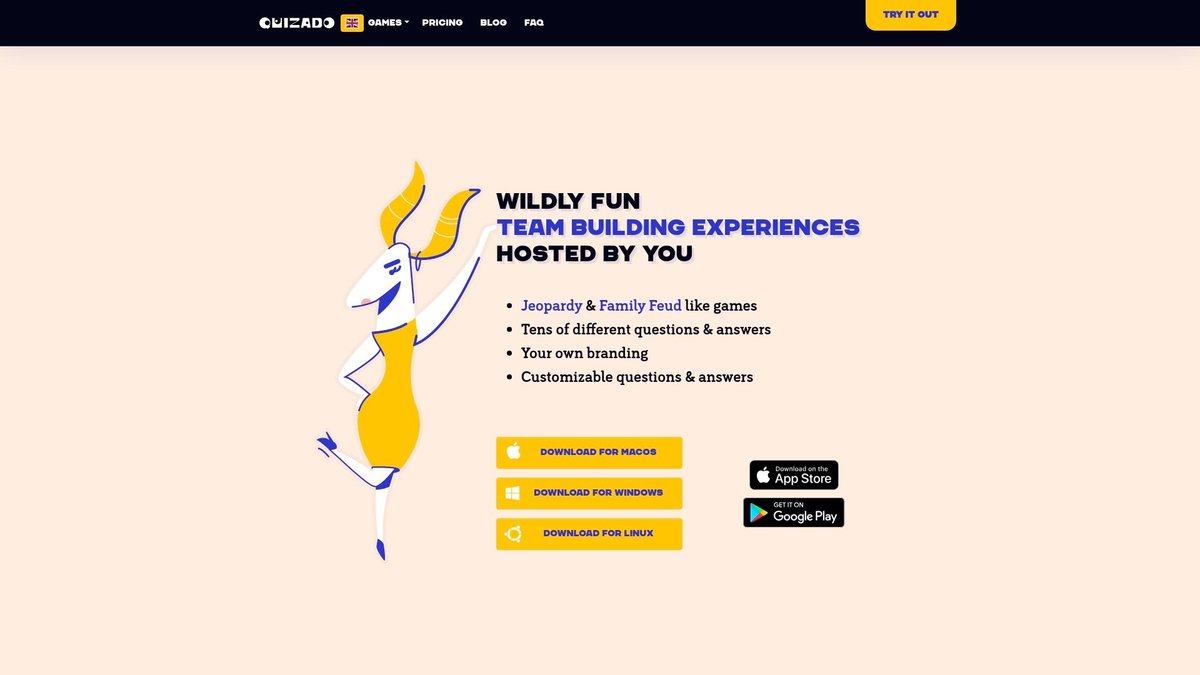
Experience the thrill of hosting dynamic quiz games inspired by popular formats like Jeopardy and Family Feud. Customize your own questions, incorporate your company branding, and configure teams easily across remote or in-person settings. Unlock new levels of collaboration and engagement today by visiting quizado.com. Start transforming your Zoom team-building sessions into interactive celebrations of teamwork that your employees will look forward to again and again.
Frequently Asked Questions
How can I implement interactive quiz games for my remote team?
To implement interactive quiz games, start by selecting a suitable online quiz platform that fits your team's needs. Design questions that cater to different skill levels and topics to ensure everyone can participate comfortably, creating a fun and inclusive experience.
What are some effective themes for virtual scavenger hunts?
Effective themes for virtual scavenger hunts can include categories that encourage personal sharing, such as "Find an object that represents a personal achievement" or "Show something that reflects your hobbies." Tailor the challenges to your team's culture to enhance engagement and connection.
How can online escape rooms help improve team collaboration?
Online escape rooms enhance team collaboration by requiring participants to communicate effectively and leverage each other's strengths to solve complex puzzles. Choose escape room scenarios that mirror real workplace challenges to maximize the learning and skill transfer for your team.
What are essential elements to include when creating Icebreaker Bingo?
When creating Icebreaker Bingo, include unique personal prompts that encourage meaningful conversations, such as "Has traveled internationally" or "Enjoys cooking new recipes." Balance professional and personal topics to create an engaging and inclusive atmosphere for your team.
How can I design a trivia tournament that encourages team bonding?
To design a trivia tournament that fosters team bonding, create custom question banks that reflect your organization's culture and objectives. Include a mix of difficulty levels and topic areas to ensure everyone can contribute while promoting cross-department collaboration.
What role do role-reversal games play in developing empathy among team members?
Role-reversal games help develop empathy by allowing team members to experience the roles and challenges of their colleagues firsthand. Design scenarios relevant to your team's dynamics to provide insights and foster a deeper understanding of interpersonal communication and collaboration.
Turn these ideas into a team event
Prepare an office quiz or remote game with a shared screen, phone participation and a host on your team.