In this post+
Remote teams often struggle with building genuine connection across global offices, leaving many HR managers searching for solutions that go beyond routine video calls. The complexity of international collaboration demands approaches that spark engagement while strengthening trust and communication within distributed groups. By integrating dynamic team games that blend competition and cooperation, you can transform your team’s mindset, turning virtual interactions into opportunities for stronger bonds and lasting motivation.
Table of Contents
- Psychology Behind Team Games And Collaboration
- Types Of Team Games And Their Psychological Impact
- How Team Competition Drives Engagement And Trust
- Building Motivation And Belonging In Remote Teams
- Common Challenges And How To Overcome Them
Key Takeaways
| Point | Details |
|---|---|
| Importance of Team Games | Team games enhance collaboration by developing communication, negotiation, and trust among team members. |
| Types of Team Games | Understanding competitive, cooperative, and mixed game formats helps tailor experiences that boost team dynamics and emotional intelligence. |
| Enhancing Engagement through Competition | Structured competition fosters individual accountability and teamwork, turning potential rivalries into collaborative growth opportunities. |
| Fostering Belonging in Remote Teams | Intentional strategies, including virtual interactions and recognition programs, are essential to cultivate a sense of belonging and motivation in distributed teams. |
Psychology Behind Team Games and Collaboration
Team games represent more than mere entertainment - they are sophisticated psychological tools for understanding and enhancing human collaboration. Complex psychological dynamics reveal that competition and cooperation are intricately linked, driving engagement and performance in team environments.
Understanding these psychological mechanisms requires examining how games create structured environments that naturally encourage interpersonal interaction. When teams participate in strategic games, they develop critical communication skills, learn to negotiate shared goals, and build trust through collaborative problem solving. Research demonstrates that these interactive experiences activate neural pathways associated with empathy, mutual understanding, and collective achievement.
The competitive elements within team games serve as powerful motivational catalysts. By introducing measured challenges and rewards, games transform abstract collaboration concepts into tangible, actionable experiences. Teams learn to balance individual strengths with collective objectives, creating a dynamic where personal achievement and group success become mutually reinforcing. Systematic research on teamwork enhancement confirms that well-designed games can systematically improve communication, problem solving, and interpersonal skills.
Pro tip: Design team games with clear, achievable objectives that require genuine collaboration to succeed, ensuring participants must communicate and support each other to reach the final goal.
Types of Team Games and Their Psychological Impact
Team games exist in multiple formats, each with distinct psychological implications for group dynamics and interpersonal interactions. Team-based game research reveals three primary categories: competitive, cooperative, and mixed team games, each uniquely influencing psychological factors like group cohesion, communication, and emotional intelligence.
Competitive team games introduce challenging scenarios that push participants to maximize individual performance while maintaining group alignment. These games typically create environments where team members must balance personal achievement with collective goals, fostering strategic thinking and adaptive communication skills. Such experiences help participants develop resilience, learn to manage interpersonal tensions, and understand the complex dynamics of performance under pressure.
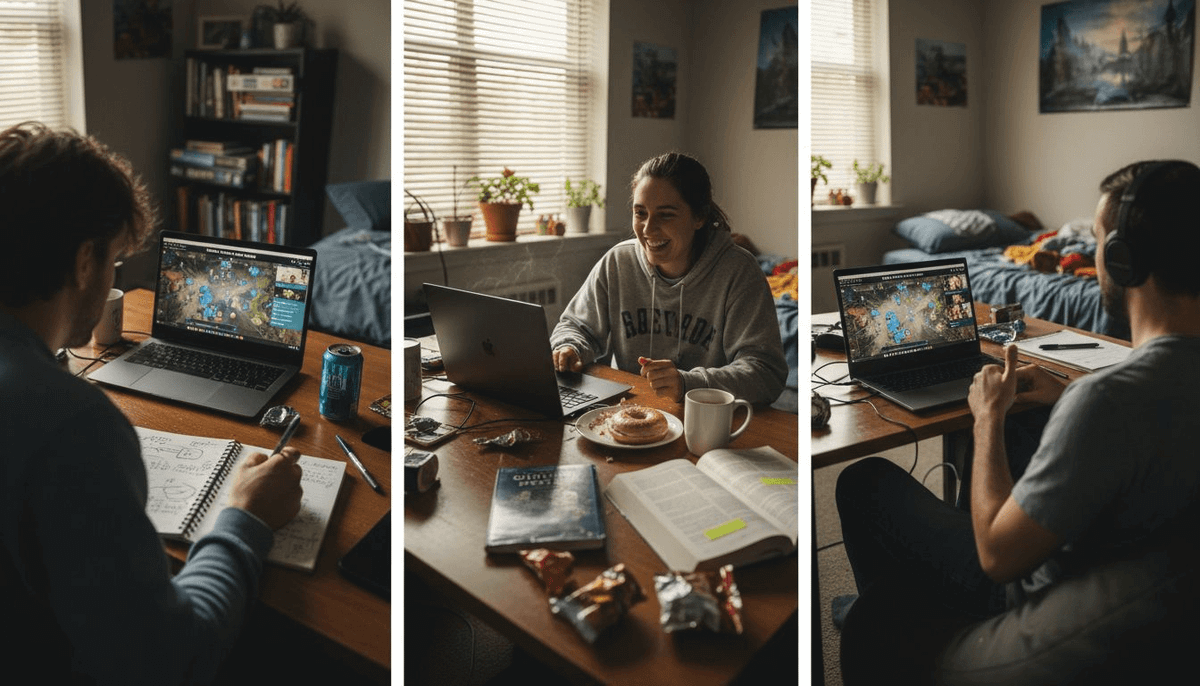
Cooperative and mixed team games offer more nuanced psychological benefits, emphasizing collaboration, mutual support, and collective problem solving. In these game formats, success depends entirely on the team's ability to communicate effectively, distribute tasks strategically, and leverage each member's unique strengths. Customized team game approaches can create tailored experiences that highlight emotional intelligence, empathy, and collective achievement, transforming workplace interactions from transactional to deeply collaborative.
Here's a comparison of primary team game types and their psychological benefits:
| Team Game Type | Psychological Impact | Typical Skill Developed |
|---|---|---|
| Competitive | Boosts motivation, resilience, adaptive communication | Strategic thinking |
| Cooperative | Builds trust, shared empathy, mutual support | Collaborative problem solving |
| Mixed | Develops emotional intelligence, flexibility, group cohesion | Balancing rivalry and teamwork |
Pro tip: Select team games that require multiple skills and perspectives to solve challenges, ensuring no single team member can succeed alone.
How Team Competition Drives Engagement and Trust
Team competition represents a powerful psychological mechanism for driving workplace engagement, transforming interpersonal dynamics through carefully structured challenges. Competitive team dynamics reveal that strategic competition can actually enhance internal cooperation, creating a nuanced environment where challenge becomes a catalyst for collective growth.
The psychological underpinnings of team competition are complex and multifaceted. When teams are presented with competitive scenarios, they naturally develop stronger communication patterns, increased mutual accountability, and heightened emotional investment. Competitive frameworks push individuals to perform beyond their perceived limitations, simultaneously fostering individual excellence and collective synergy. This delicate balance encourages team members to support one another while striving toward shared objectives, effectively transforming potential rivalries into collaborative opportunities.
Team performance research demonstrates that controlled competition can significantly elevate trust levels within groups. By establishing clear, ethical boundaries and shared goals, competitive environments become laboratories for developing sophisticated interpersonal skills. Participants learn to navigate challenges collaboratively, understanding that collective success transcends individual achievements. The psychological mechanisms at play involve creating scenarios where competition becomes a tool for mutual understanding, skill development, and group cohesion.
Pro tip: Design competitive team experiences with transparent rules and shared objectives that reward collaborative problem solving, ensuring competition enhances rather than undermines team unity.
Building Motivation and Belonging in Remote Teams
Remote work presents unique challenges for team cohesion, requiring deliberate strategies to foster connection and engagement. Workplace belonging research underscores the critical importance of creating psychological safety and meaningful social interactions in distributed work environments, where traditional office connections are absent.
Motivation in remote teams emerges from intentional design of collaborative experiences that transcend physical distance. Interactive digital platforms, virtual team building activities, and structured communication protocols can bridge psychological gaps, creating shared experiences that generate a sense of collective identity. By developing engagement mechanisms that feel personal and inclusive, organizations can counteract the isolation inherent in remote work settings, transforming digital interactions into meaningful connections.
Team motivation strategies reveal that belonging is not spontaneous but carefully cultivated. Successful remote teams implement systematic approaches that recognize individual contributions, create opportunities for informal interactions, and establish clear pathways for professional and personal growth. These strategies might include virtual coffee breaks, collaborative problem solving sessions, recognition programs, and transparent communication channels that make every team member feel valued and understood.
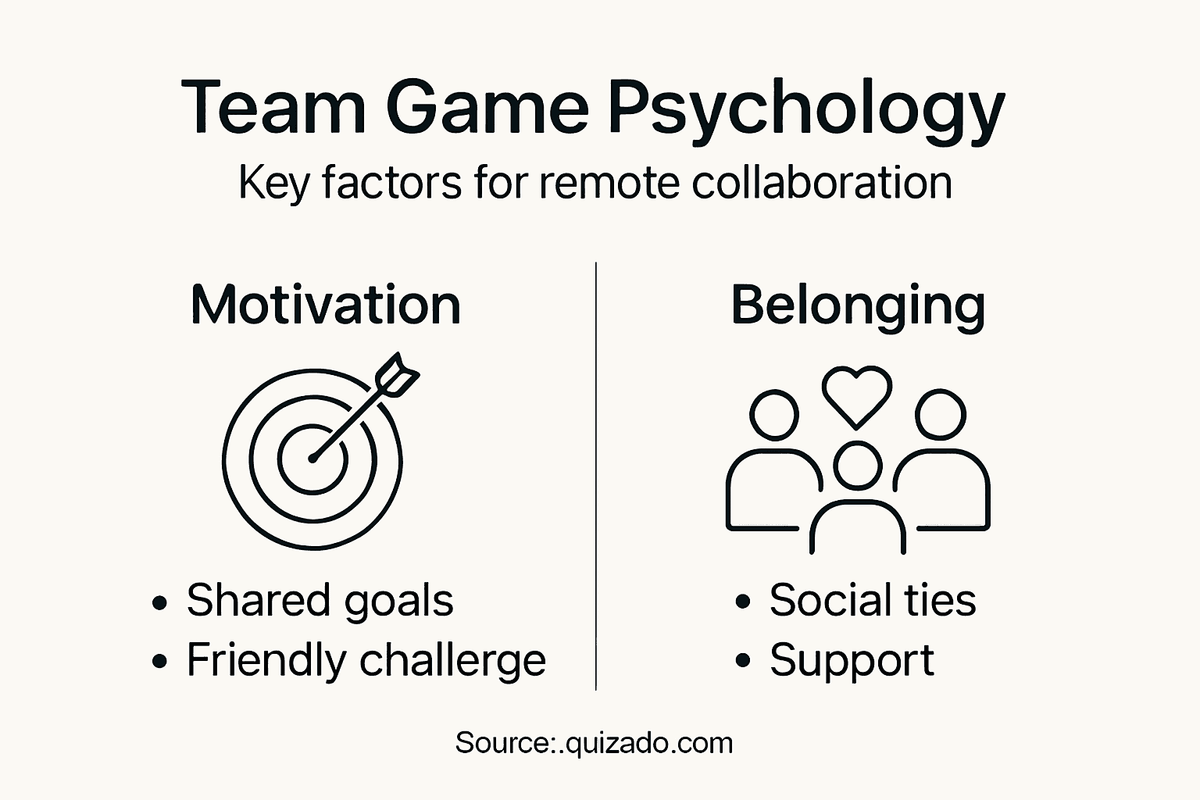
Here are proven strategies to strengthen motivation and belonging in remote teams:
| Strategy | Purpose | Expected Benefit |
|---|---|---|
| Virtual team games | Foster informal connections | Increased sense of belonging |
| Recognition programs | Highlight achievements | Enhanced individual engagement |
| Structured communication rituals | Create predictability | Reduce isolation and increase trust |
Pro tip: Create weekly virtual interaction rituals that blend professional development with personal connection, ensuring team members feel seen and appreciated beyond their immediate work tasks.
Common Challenges and How to Overcome Them
Remote collaboration introduces complex psychological challenges that require strategic and nuanced approaches. Remote working psychological challenges reveal intricate barriers that emerge when traditional workplace interactions are disrupted, demanding innovative solutions for maintaining team cohesion and individual well-being.
Communication barriers represent the most significant obstacle in distributed teams. Time zone differences, technological limitations, and reduced nonverbal cues create potential misunderstandings that can erode team trust and productivity. Effective strategies involve implementing structured communication protocols, utilizing diverse digital collaboration tools, and establishing clear expectations about response times and communication channels. These approaches help create predictable interaction patterns that reduce uncertainty and increase team members psychological comfort.
Team collaboration strategies demonstrate that social isolation can be mitigated through intentional team building activities. Organizations must proactively design experiences that foster connection, create opportunities for informal interactions, and recognize individual contributions. Virtual team games, periodic video check-ins, and collaborative problem solving sessions can transform digital interactions from transactional to genuinely engaging experiences that build meaningful professional relationships.
Pro tip: Implement a rotating leadership model where team members take turns facilitating meetings and team activities, ensuring everyone feels empowered and connected.
Elevate Your Remote Team Collaboration with Interactive Team Games
The article highlights the critical challenge of building motivation and belonging within remote teams by overcoming communication barriers and social isolation through engaging and structured activities. It underscores key pain points such as the need for meaningful connection, psychological safety, and collaborative problem solving to foster trust and emotional investment among distributed team members. Concepts like virtual team games, emotional intelligence, and carefully designed competitive scenarios are central to transforming remote work into an interactive, motivating experience.
At quizado.com, we specialize in delivering customizable team-building game solutions that directly address these challenges. Our platform enables managers and teams to create truly interactive quiz games that encourage communication, collaboration, and shared achievement in both online and hybrid settings. With features like team configuration, smartphone remote controls, and branding customization, you can build virtual game experiences that nurture psychological safety and team cohesion. Explore how customizable team games can foster belonging and spark motivation using entertainment as a powerful vehicle for collaboration.

Start transforming your remote team dynamics today. Visit quizado.com to discover easy-to-use, flexible game formats designed to boost engagement and trust through play. Harness the psychology of team games to overcome distance and create stronger, united teams now.
Frequently Asked Questions
What are the psychological benefits of team games?
Team games enhance collaboration by developing communication skills, trust, and problem-solving abilities. They activate neural pathways related to empathy and collective achievement, fostering a supportive team environment.
How do competitive team games influence motivation in remote teams?
Competitive team games create an engaging atmosphere that motivates individuals by balancing personal and group goals. This structure encourages teams to communicate effectively and support each other, enhancing trust and performance.
What strategies can remote teams implement to foster belonging and motivation?
Remote teams can cultivate belonging through virtual team games, recognition programs, and structured communication rituals. These strategies create opportunities for connection and make each member feel valued in the team.
How can communication barriers in remote collaboration be overcome?
Communication barriers can be addressed by establishing structured communication protocols, using diverse collaboration tools, and setting clear expectations about response times, which help create predictable interaction patterns.
Host a quiz with your group
Find a hosting setup for your venue, company, classroom or activity group.