What is a trivia night? How it boosts weekday sales
Weekday sales dragging at your bar or restaurant? Trivia events can increase weekday attendance, turning empty Tuesday nights into busy ones. Many managers assume trivia nights only appeal to hardcore quiz buffs, but trivia designed for mixed skill levels gets more people taking part. This guide explains what trivia nights are, how they drive revenue, and how to launch your first event with confidence.
Table of Contents
- What Is A Trivia Night? Understanding The Basics
- Why Trivia Nights Work: Business And Community Benefits
- Popular Formats And Game Styles For Trivia Nights
- Technology And Tools To Run A Professional Trivia Night
- Common Misconceptions And Pitfalls To Avoid
- Promotion And Marketing Strategies For Trivia Night Success
- Bringing It All Together: How To Launch Your First Trivia Night
- Discover Quizado: Your Partner For Successful Trivia Nights
- Frequently Asked Questions About Trivia Nights
Key takeaways
| Point | Details |
|---|---|
| Engagement driver | Team-based competitions foster social bonding and friendly rivalry among customers. |
| Revenue booster | Trivia nights can lift weekday attendance, filling slow nights with paying customers. |
| Format flexibility | Options range from pen and paper to high tech buzzer systems, fitting any venue size or budget. |
| Tech reliability | Software that runs the game on its servers survives a reload or a device switch and simplifies hosting logistics. |
| Promotion matters | Effective marketing brings more participants, driving consistent event success. |
What is a trivia night? Understanding the basics
Trivia nights are social quiz competitions where teams answer questions spanning diverse categories like history, pop culture, sports, and science. Typical trivia night teams consist of 5 to 8 players with events lasting 1 to 2 hours, creating the perfect window for food and drink purchases without overstaying venue capacity.
The format naturally promotes customer interaction and collaboration. Teams huddle together, debate answers, and celebrate correct responses, building a community atmosphere that keeps people coming back. Events generally cover 5 to 10 categories with around 100 questions total, balancing challenge with accessibility.
What makes trivia night basics especially effective for bars and restaurants is the inclusive design. You don't need a room full of experts. Teams combine diverse knowledge bases, so the sports fan contributes to athletic questions while the movie buff handles entertainment rounds. This mix ensures everyone feels valuable and engaged.
Key structural elements include:
- Multiple rounds covering different themes or difficulty levels
- Built in breaks between rounds for ordering food and drinks
- Clear scoring systems that maintain competitive tension
- Interactive elements encouraging team discussion and strategy
- Accessible difficulty that rewards knowledge without alienating casual players
Successful hosting trivia nights means understanding this social dynamic. You're not just testing knowledge, you're creating an experience that transforms strangers into teams and turns single visits into weekly traditions.
Why trivia nights work: Business and community benefits
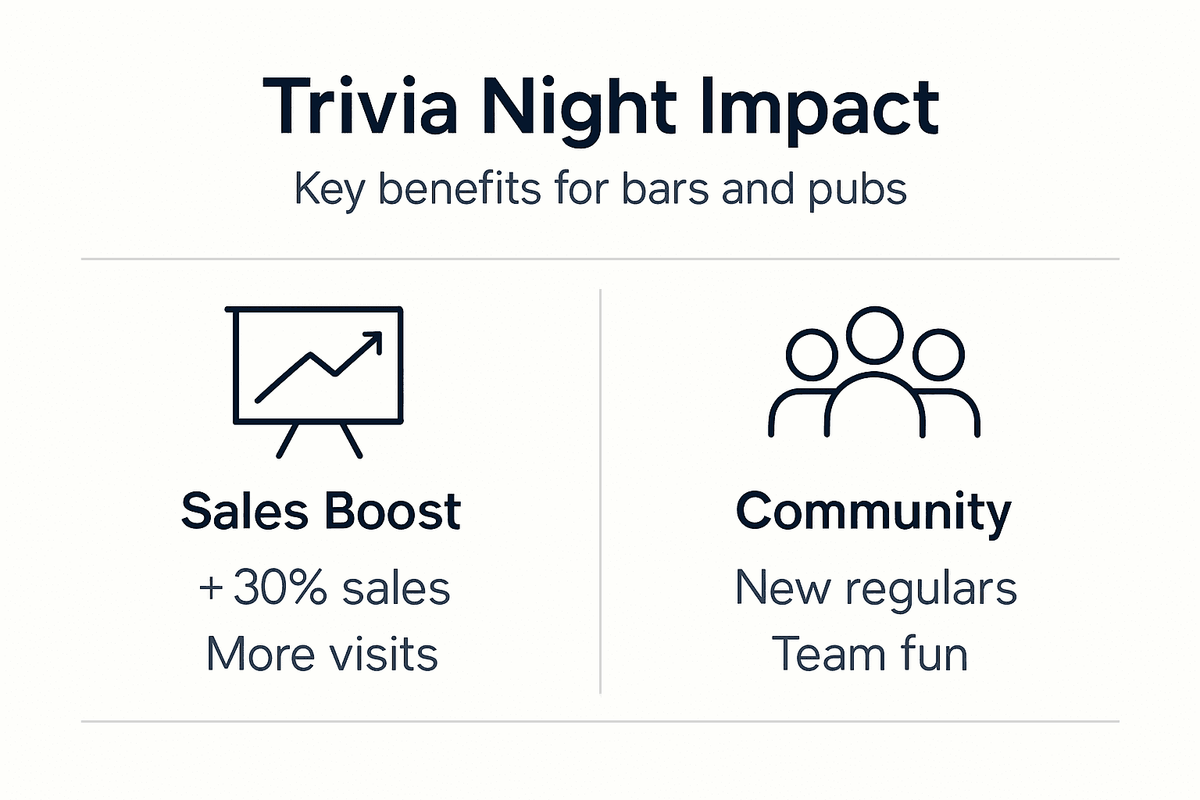
Trivia events can increase weekday bar attendance because they solve a fundamental problem: slow nights. Tuesday through Thursday typically see minimal traffic, but a well promoted trivia night fills seats during these low revenue windows. Teams arrive early to secure tables, stay through multiple rounds, and order consistently throughout the event.
The benefits of trivia nights extend beyond single event attendance. Team based formats lead to more repeat visits, as groups schedule recurring meetups around your trivia schedule. This predictability creates dependable revenue streams and helps staff anticipate busy periods for better scheduling.
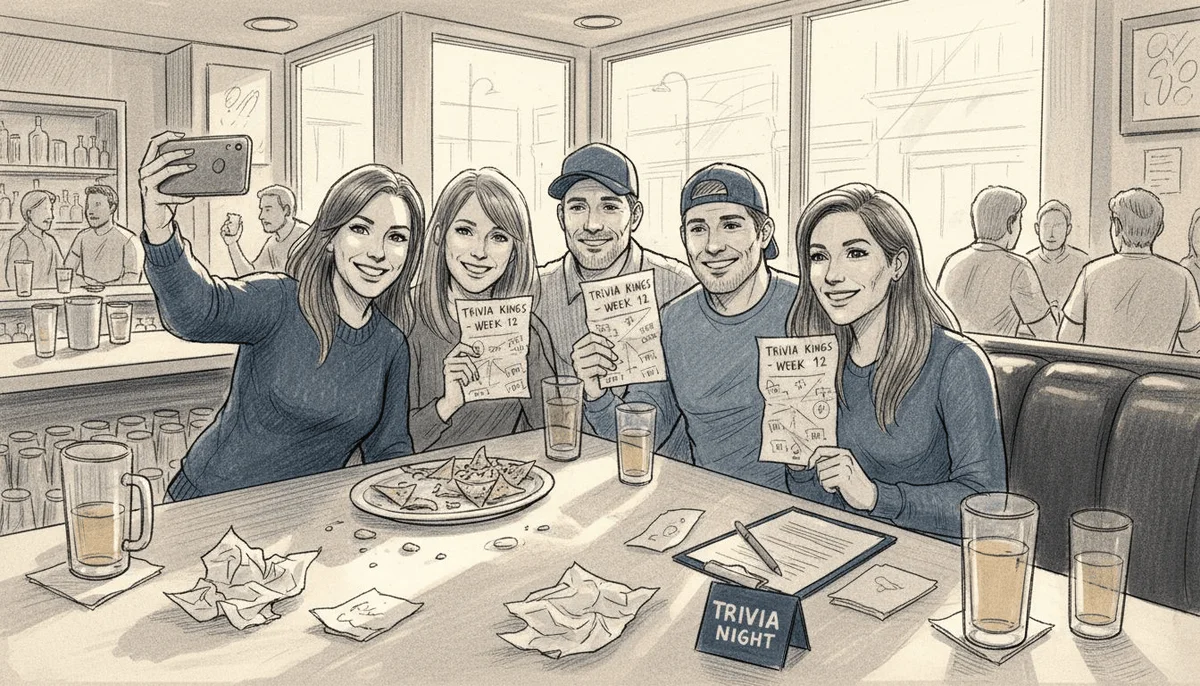
Competitive differentiation matters in crowded markets. While competitors offer standard bar experiences, interactive trivia positions your venue as an entertainment destination. Customers choose you specifically for the experience, not just proximity or price.
Community building drives long term loyalty:
- Regular attendees form friendships beyond their original teams
- Social bonds increase positive word of mouth recommendations
- Teams recruit new members, naturally expanding your customer base
- Friendly rivalries between repeat teams create ongoing engagement
- Consistent events establish your venue as a community gathering space
Pro Tip: Track team names and scores across weeks to build season long leaderboards. This simple addition increases trivia night customer engagement by giving teams reasons to return and improve their standings.
The community building through trivia effect compounds over time. First time visitors become regulars, regulars become advocates, and advocates bring new customers. You're not just hosting an event, you're cultivating a loyal customer ecosystem that sustains revenue during traditionally weak periods.
Popular formats and game styles for trivia nights
Typical trivia night formats include paper answer sheets, Jeopardy style boards, and interactive buzzer systems, each offering distinct advantages for different venue types and audience preferences. Events typically run 30 to 120 minutes with 10 to 100 questions, depending on format complexity and desired pacing.
Paper based formats provide the lowest barrier to entry. Teams write answers on sheets collected after each round, while hosts tally scores between segments. This traditional approach works well for smaller venues but slows pacing and requires manual scoring labor. The benefit is simplicity; you need nothing more than printed questions and answer sheets.
Jeopardy style boards add visual interest and category variety. Teams select questions by category and point value, introducing strategic elements beyond pure knowledge. Setup demands more preparation with organized question banks and display systems, but the familiar TV show format immediately resonates with participants.
Interactive buzzer systems using smartphones deliver the fastest pacing and highest engagement. Teams buzz in to answer, creating excitement and immediate feedback. The technology enables instant scoring and eliminates manual tallying, letting hosts focus on entertainment rather than administration.
| Format | Setup Complexity | Engagement Level | Best For |
|---|---|---|---|
| Paper sheets | Low | Moderate | Small venues, budget starts |
| Jeopardy board | Medium | High | Mid size venues, variety seekers |
| Smartphone buzzers | Low to medium | Very high | Any size, tech friendly crowds |
Choosing the right format influences customer satisfaction and repeat attendance. Slower formats risk losing energy between rounds, while overly complex systems can frustrate participants. Trivia formats for bars should match your venue's technical capabilities and audience expectations.
Pro Tip: Start with a simpler format for your first few events to build hosting confidence, then introduce more complex elements as you identify what resonates with your specific crowd. Test question difficulty with a small group before the live event to avoid rounds that are too easy or impossibly hard.
The ideal format balances entertainment value with operational practicality. Consider your staff's technical comfort, available setup time, and budget when selecting trivia night formats that will deliver consistent, enjoyable experiences.
Technology and tools to run a professional trivia night
Professional trivia software solves the operational headaches that plague manual hosting: scoring errors, pacing issues, technical failures, and content preparation. Software like Quizado runs every game on its servers, so a reload or a device switch does not lose the scores, a critical consideration since many bars and restaurants struggle with inconsistent internet during peak hours.
Server-run games prevent the nightmare scenario where a crashed host device wipes the scores mid round, and a mobile hotspot keeps players online when too many customers overwhelm the venue WiFi. Professional platforms download all content locally, running independently of internet connectivity. This reliability separates successful recurring events from one time disasters that damage your venue's reputation.
Key software features that streamline hosting trivia night with Quizado include:
- Customizable branding with venue logos and color schemes for professional presentation
- Multi team support accommodating venues from intimate spaces to large halls
- Multimedia content mixing text, images, audio, and video questions for variety
- Automated scoring eliminating manual calculation errors and delays
- Ready made question libraries providing 500 plus hours of curated content
Smartphone buzzers transform participant engagement. Instead of raising hands or shouting answers, teams use their phones as controllers, creating a game show atmosphere that elevates the experience beyond traditional pub quizzes. The technology feels modern without intimidating less tech savvy participants.
Ready made question libraries save hours of preparation time weekly. Quality matters significantly; poorly written or outdated questions frustrate participants and damage credibility. Professional platforms provide tested, balanced content that maintains appropriate difficulty across categories.
Pro Tip: Customize 20 to 30% of questions with local references, inside jokes, or venue specific content. This personalization makes events feel unique to your establishment while leveraging professional content for the bulk of questions.
The right technology transforms hosting from a stressful manual process into a smooth, repeatable system. Professional quiz hosting tools let you focus on entertaining customers rather than troubleshooting technical problems or frantically scoring answers between rounds.
Common misconceptions and pitfalls to avoid
The biggest misconception is that trivia only attracts hardcore quiz enthusiasts who dominate competitions and intimidate casual players. Reality shows trivia is not only for trivia enthusiasts but designed for mixed skill levels to maximize participation through team collaboration. A team of five average people with diverse interests outperforms a single expert across varied categories.
Unsuccessful trivia nights often fail due to poor planning or technical issues, not lack of customer interest. These failures typically stem from predictable, avoidable problems that proper preparation eliminates. Understanding common pitfalls helps you launch successfully on the first attempt rather than learning through costly mistakes.
Technical failures represent the most frequent disaster:
- Internet dependent systems crashing during events
- Audio equipment failing for music or video rounds
- Projectors or displays malfunctioning mid game
- Scoring software freezing or losing data
- Inadequate microphone coverage in large venues
Content preparation mistakes damage credibility and participant satisfaction. Questions that are too obscure frustrate teams, while overly easy rounds bore experienced players. Unbalanced difficulty across categories creates unfair advantages. Outdated references make your event feel stale and unprofessional.
"The key to successful trivia is preparation. Test your technology, calibrate question difficulty, and always have backup plans for technical failures. One smooth event builds more loyalty than three problem plagued attempts."
Promotion failures leave you hosting trivia for empty rooms. Starting promotion only days before the event gives teams insufficient time to organize and commit. Vague details about timing, prizes, or format create uncertainty that reduces sign ups. Inconsistent scheduling confuses potential regular attendees about when to show up.
| Pitfall | Impact | Solution |
|---|---|---|
| Poor tech prep | Event crashes, frustrated customers | Use server-run software, keep a backup hotspot, test equipment twice |
| Wrong difficulty | Bored experts or overwhelmed casuals | Mix easy, medium, hard; test with sample group |
| Weak promotion | Empty venue, wasted prep | Start promoting 2 to 3 weeks early across channels |
| Inconsistent schedule | Can't build loyal following | Pick same day/time weekly for predictability |
Effective trivia night promotion starts early with clear, consistent messaging. Teams need advance notice to coordinate schedules, and regular attendees need predictable timing to build attendance into their routines. Avoiding these trivia night misconceptions positions your first event for success rather than requiring multiple attempts to get right.
Promotion and marketing strategies for trivia night success
Early, consistent promotion separates packed venues from disappointing turnouts. Flyers and social media ads can increase team registrations when deployed two to three weeks before events, giving potential participants time to organize teams and commit to attendance. Last minute announcements fail because teams can't coordinate schedules on short notice.
Clear communication eliminates barriers to attendance. Your promotional materials must answer: When does it start? How long will it last? What's the team size? Are there prizes? Is registration required? Ambiguity kills conversions; clarity drives sign ups.
Themed trivia nights attract niche audiences and boost retention. Themed trivia nights tend to keep participants coming back longer than generic formats because themes appeal to specific interests and create anticipation for future topics. A 90s pop culture night draws different crowds than a sports trivia event, helping you diversify your customer base.
Actionable promotion tactics:
- Post eye catching flyers in your venue three weeks before the first event with all essential details
- Create Facebook events and Instagram posts with shareable graphics teams can forward to friends
- Partner with local businesses, gyms, or community groups to cross promote to their audiences
- Send email newsletters to your existing customer list highlighting upcoming trivia schedules
- Offer early registration bonuses like reserved seating or first round drink specials
- Leverage user generated content by encouraging teams to post photos and tag your venue
Consistent branding across promotional channels builds recognition. Use the same color schemes, logos, and messaging style so audiences immediately associate the content with your venue. Professional looking materials signal that you're running a quality event worth attending.
Pro Tip: Create a dedicated trivia night marketing strategies landing page on your website with schedules, rules, and registration options. Share this single URL across all channels to simplify communication and track promotion effectiveness.
Rewards and prizes drive competitive engagement. You don't need expensive giveaways; gift cards to your own venue, free appetizers, or bragging rights on a champion board all motivate participation. The promise of recognition or rewards converts casual interest into committed attendance.
Leveraging multiple promotional channels maximizes reach. Social media captures younger demographics, while flyers in your venue catch walk in traffic. Community partnerships access audiences who might not follow your social accounts. Effective trivia promotion uses diverse tactics to ensure your target audience sees your message regardless of their preferred information sources. Themed trivia nights provide natural promotional hooks that make marketing easier and more compelling.
Bringing it all together: how to launch your first trivia night
Structured steps like choosing format, preparing question sets, using tech for smooth hosting, and promoting openly lead to successful, revenue enhancing trivia nights. Breaking the process into clear phases prevents overwhelm and ensures you address critical elements before your first event.
Launching successfully requires systematic preparation:
- Select your trivia format based on venue size, technical capabilities, and target audience preferences
- Determine optimal team sizes, typically 5 to 8 players, balancing social interaction with table capacity
- Prepare or source question sets covering diverse categories with mixed difficulty levels
- Choose trivia software that runs the game on its servers and keep a mobile hotspot to prevent internet related failures during events
- Promote your event two to three weeks in advance through multiple channels with clear details
- Test all technology, questions, and logistics with a small group before the live event
- Host with professionalism, maintaining energy and smooth pacing throughout all rounds
Format selection impacts everything downstream. A smartphone buzzer system requires different promotion language than a paper based format. Your choice determines equipment needs, staff training, and participant expectations. Match format complexity to your team's current capabilities rather than overreaching on the first attempt.
Question preparation separates amateur from professional events:
- Source 20 to 30% more questions than you'll actually use for flexibility
- Mix easy warmup questions with challenging stumpers to maintain engagement
- Test questions with diverse sample audiences to identify confusing wording
- Organize questions by category and difficulty for smooth flow
- Prepare backup questions for ties or time filling if rounds move faster than expected
Launch your first trivia night with realistic expectations. Your first event will reveal operational improvements for future iterations. Focus on delivering a fun, glitch free experience rather than perfection. Collect feedback from participants to identify what worked and what needs adjustment.
Consistency builds loyal followings. Once you've successfully hosted your first event, immediately announce the next date. Regular schedules train customers to reserve that time slot weekly, creating predictable revenue streams that justify the ongoing effort. Your second and third events will run more smoothly as you refine processes and build hosting confidence.
Discover Quizado: your partner for successful trivia nights
Transforming the strategies in this guide into reality requires reliable tools that simplify hosting while delivering professional experiences. Quizado runs every game on its servers, ideal for bars and restaurants where WiFi reliability varies, so a reload or a device switch never ends your event.
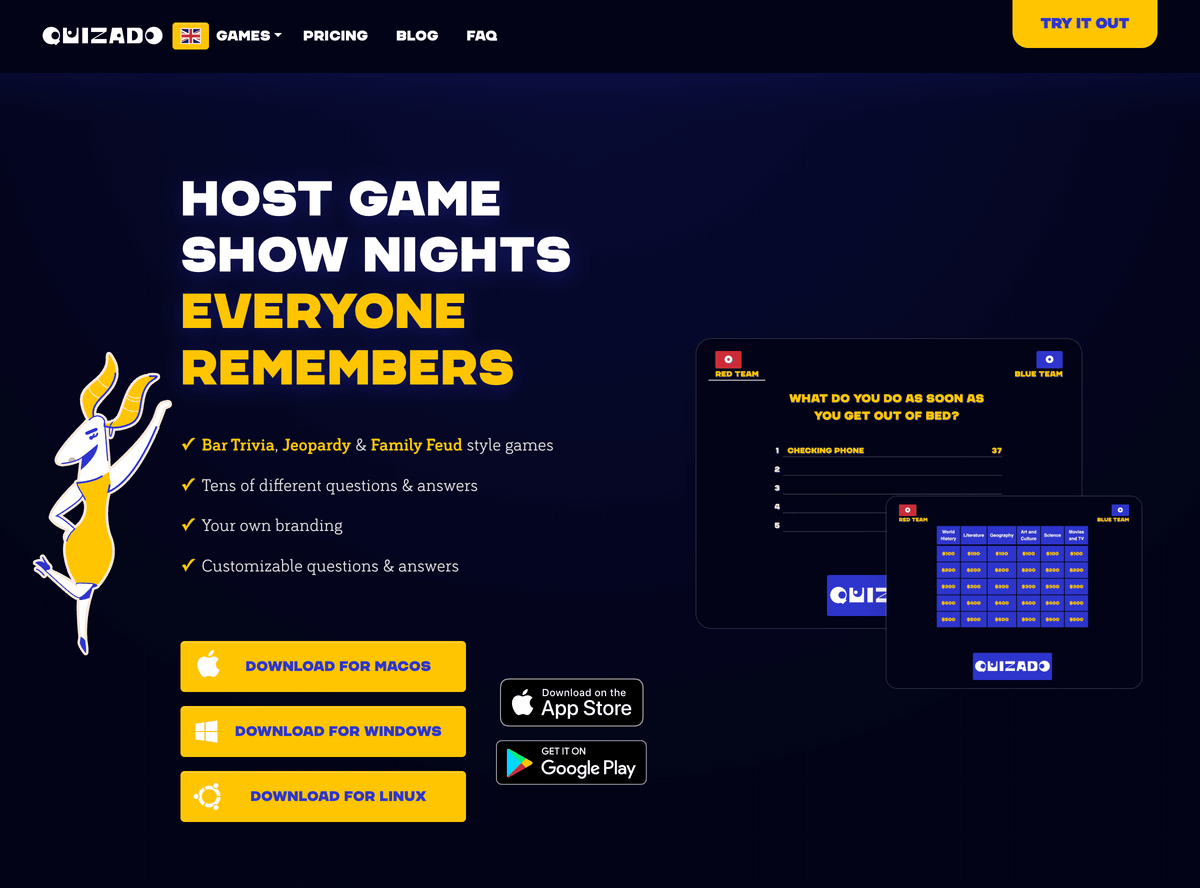
Our platform includes customizable branding, extensive question libraries with over 500 hours of tested content, and multi team support scaling from intimate venues to large halls. Smartphone based buzzers create engaging game show atmospheres without complex equipment, while automated scoring eliminates manual calculation errors that slow pacing.
Venues use hosting trivia nights with Quizado to lift weekday attendance and run consistent, professional events that build loyal customer communities. The platform's intuitive design means you can launch your first event within days, not weeks of preparation.
Explore our professional quiz hosting resources and trivia night software to discover how easy it is to transform slow weekdays into revenue generating entertainment destinations. Start with our free version to experience the platform, then upgrade when you're ready to unlock unlimited questions and advanced features that scale with your success.
Frequently asked questions about trivia nights
What is the ideal team size for a bar trivia night?
Teams of 5 to 8 players work best, balancing diverse knowledge with manageable table sizes. Smaller teams struggle with category coverage, while larger groups create coordination challenges and seating issues. This range ensures everyone contributes without feeling redundant.
How often should I host trivia nights to build a loyal crowd?
Weekly events on the same day and time build the strongest followings because customers incorporate trivia into their regular routines. Consistency matters more than frequency. Monthly events work for testing demand, but weekly scheduling maximizes revenue potential and community building once you've proven the concept.
Can trivia nights work in small bars with limited space?
Absolutely. Small venues often create more intimate, energetic atmospheres that enhance the experience. Limit team numbers to match capacity, promote early registration to manage attendance, and use smartphone buzzers to minimize equipment footprint. Quality beats quantity for building loyal local followings.
What should I do if my venue has poor internet during trivia?
Use trivia software that keeps the game on its servers, so the board and scores survive a reload. This eliminates dependence on WiFi and prevents mid event crashes. Test a reload and a device switch during your preparation run to confirm the game picks up where it left off.
How do I keep trivia nights fresh to maintain customer interest?
Rotate themes monthly, introduce new question categories, vary difficulty levels, and create seasonal tournaments with larger prizes. Mix familiar elements with surprises, like occasional music rounds or visual puzzles. Listen to participant feedback about topics they want covered and adjust accordingly while maintaining your core format's reliability.
Recommended
Host a quiz with your group
Find a hosting setup for your venue, company, classroom or activity group.
Bring your group together for a game
Try a free starter game, then choose the format and plan for your group.
Trusted by 5,000+ hosts