Corporate event gamification guide for engagement in 2026
Many corporate event planners assume gamification means adding superficial games or gimmicks to their programs. Properly implemented gamification can boost engagement and deliver a return you can measure, yet misconceptions persist about what makes these strategies effective. This guide cuts through the confusion by examining evidence-based gamification mechanics, strategic alignment frameworks, and proven best practices that transform ordinary corporate events into engaging experiences that strengthen team bonds and drive real business outcomes.
Table of Contents
- Understanding Gamification Mechanics In Corporate Events
- Aligning Gamification Strategies With Corporate Event Goals
- The Impact And ROI Of Gamification In Corporate Events
- Challenges And Best Practices For Authentic Gamification In Corporate Settings
- Enhance Your Corporate Events With Quizado's Gamification Solutions
- FAQ
Key takeaways
| Point | Details |
|---|---|
| Core mechanics drive engagement | Points, badges, leaderboards, and challenges create competitive and collaborative dynamics that boost participation rates |
| Strategic alignment matters most | Successful gamification starts with clear objectives tied to measurable business outcomes like retention and team bonding |
| ROI is substantial and measurable | Gamified corporate programs can pay back through stronger sales and engagement |
| Authenticity prevents failure | Gimmicky rewards and forced fun undermine intrinsic motivation, while meaningful progress sustains long-term engagement |
| Technology enables personalization | AI-driven customization and hybrid event platforms adapt experiences to individual preferences and participation styles |
Understanding gamification mechanics in corporate events
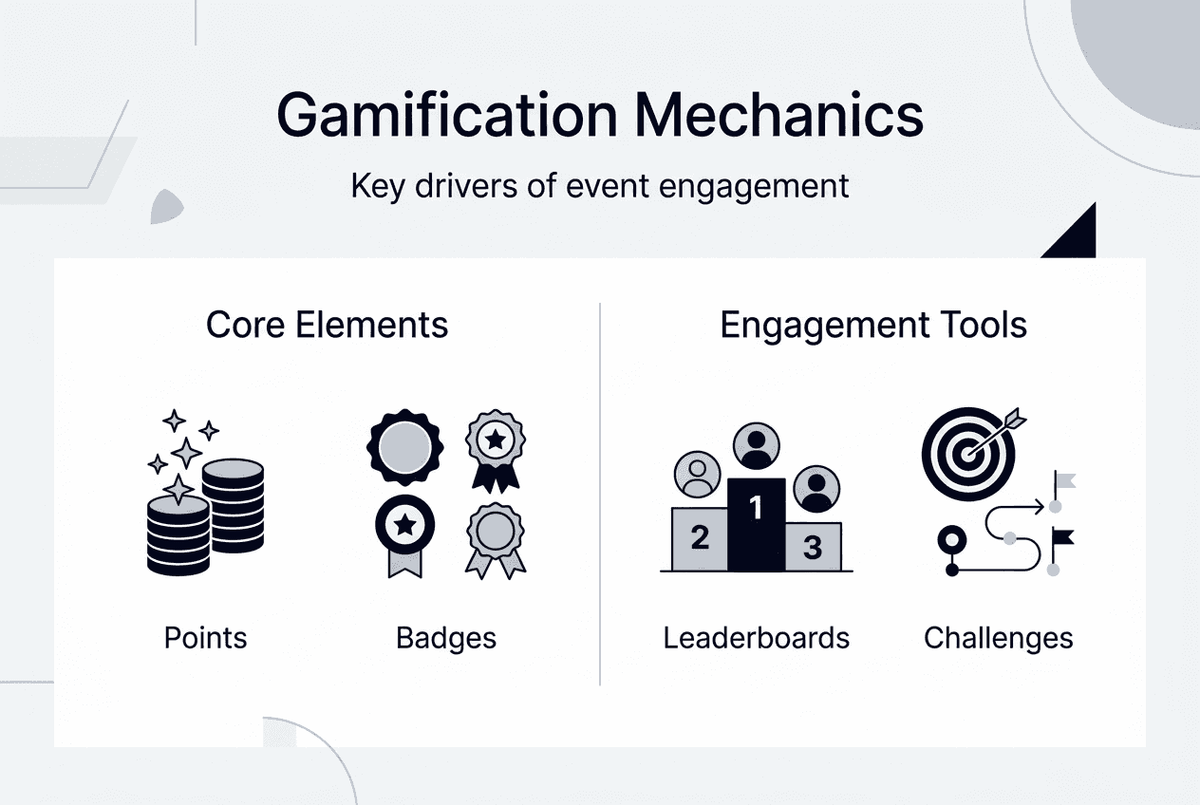
Gamification applies game design elements to non-game contexts, transforming routine corporate events into interactive experiences. The most effective mechanics include points systems that reward participation, badges recognizing achievements, leaderboards displaying rankings, collaborative challenges requiring team coordination, progress bars showing advancement, and level structures creating advancement pathways. These elements tap into psychological drivers like competition, achievement, and social recognition.
Gamification uses points, badges, leaderboards, challenges, and AR/VR to create immersive experiences that feel more like entertainment than work obligations. Augmented reality scavenger hunts send teams exploring venues to find virtual objects, while quiz competitions test knowledge in formats reminiscent of television game shows. Collaborative challenges require cross-functional teams to solve problems together, breaking down departmental silos. Rewards systems distribute prizes based on accumulated points or completed milestones.
These mechanics work because they provide immediate feedback and visible progress. When employees see their names climbing a leaderboard or earn badges for completing training modules, they experience tangible recognition for their efforts. The variety of available mechanics allows planners to customize experiences for different event formats, whether in-person conferences, virtual webinars, or hybrid gatherings combining both. Corporate event games examples demonstrate how adaptable these mechanics can be across industries and organizational cultures.
Pro Tip: Balance competitive elements like leaderboards with collaborative challenges that require teamwork. This dual approach maximizes engagement across different personality types while preventing the alienation of less competitive participants.
The key is matching mechanics to your audience. Sales teams might thrive on competitive leaderboards, while creative departments may prefer collaborative storytelling challenges. Technical teams often enjoy problem-solving quests with clear success criteria. Understanding your participants' preferences ensures mechanics enhance rather than hinder the event experience.
Aligning gamification strategies with corporate event goals
Effective gamification begins with crystal-clear objectives rather than randomly selected game mechanics. Before choosing any gamification elements, define what success looks like: Are you trying to increase knowledge retention from training sessions? Strengthen bonds between remote and in-office teams? Generate networking connections among new hires? Your objectives should align with broader organizational priorities and be measurable through specific metrics.
Best practices include defining clear objectives, personalizing experiences, integrating hybrid technology, and measuring engagement with data analytics. Artificial intelligence enables personalization at scale, adapting challenge difficulty based on individual performance or recommending networking connections based on shared interests. Hybrid event platforms ensure remote participants experience the same gamified elements as in-person attendees, preventing a two-tier experience that undermines inclusion.
Data-driven measurement transforms gamification from novelty to strategic tool. Track metrics like participation rates, time spent in activities, completion percentages, social interactions generated, and post-event survey scores. Compare these against baseline metrics from traditional events to quantify improvement. The best systems capture real-time data that allows mid-event adjustments, ensuring underperforming elements can be modified before the event concludes.
| Approach | Participation Rate | Knowledge Retention | ROI Measurement | Engagement Duration |
|---|---|---|---|---|
| Traditional events | Lower | Fades quickly | Difficult to quantify | Shorter |
| Gamified events | Higher | Lasts longer | Clear metrics via analytics | Longer |
Pro Tip: Use data collected during the event to create personalized follow-up experiences. Participants who excelled at collaborative challenges might receive invitations to cross-functional project teams, while those who engaged deeply with learning content could get advanced training opportunities.
The gamification in the workplace framework emphasizes that technology should serve strategy, not dictate it. Choose platforms and mechanics that support your objectives rather than forcing objectives to fit available tools. This strategic approach ensures every gamified element contributes to measurable outcomes rather than serving as empty entertainment. Understanding your team engagement workflow helps identify where gamification creates the most value.
The impact and ROI of gamification in corporate events
Empirical evidence demonstrates that gamification delivers substantial returns across multiple dimensions. Organizations implementing gamified corporate events often see more engagement, higher participation rates, and improved knowledge retention compared to traditional formats. These improvements can translate into financial outcomes, such as stronger sales results and a better return on team building programs.

| Metric | Traditional Approach | Gamified Approach | Improvement |
|---|---|---|---|
| Event participation | Lower | Higher | More people take part |
| Post-event engagement | Little follow-through | More follow-through | Stronger follow-up |
| Knowledge retention (30 days) | Lower | Higher | Better recall |
| Cost per engaged participant | Higher | Lower | Lower cost |
The financial case extends beyond direct event costs. Gamified onboarding programs reduce time to productivity for new hires by creating engaging learning experiences that accelerate skill development. Training events using game mechanics show higher completion rates and better application of learned concepts in daily work. Team building activities with gamified elements produce stronger interpersonal connections that improve collaboration long after the event concludes.
Measurable benefits include:
- Increased voluntary participation eliminating the need for mandatory attendance policies
- Improved employee morale reflected in engagement survey scores and retention rates
- Enhanced knowledge retention reducing the need for repeated training sessions
- Expanded networking connections creating informal communication channels across departments
- Higher content completion rates for learning objectives and training modules
- Reduced event fatigue through varied, interactive formats that maintain attention
Motivation plays a central role in these outcomes. Gamification taps into intrinsic motivators like mastery, autonomy, and purpose while providing extrinsic rewards like recognition and prizes. This dual motivation system sustains engagement throughout longer events and creates positive associations with corporate learning initiatives. The benefits of team-based games in the workplace extend far beyond the event itself, influencing daily collaboration patterns and communication norms.
Trade show organizers report lower cost per lead when gamification drives booth visits and information collection. Sales kickoff events using competitive elements show stronger pipeline development in subsequent quarters. The importance of team games for corporate culture becomes clear when examining long-term engagement metrics rather than just immediate event feedback.
Challenges and best practices for authentic gamification in corporate settings
Despite proven benefits, gamification initiatives fail when implemented superficially or misaligned with organizational culture. Common pitfalls include excessive competition that creates toxic dynamics rather than healthy rivalry, gimmicky rewards that feel like "chocolate-covered broccoli" (making unpleasant tasks superficially appealing), event fatigue from overuse of similar mechanics, and misalignment with company values that makes gamification feel inauthentic.
Data privacy and compliance present serious considerations, particularly in European markets or organizations handling sensitive information. GDPR compliance is critical when collecting participant data through gamified platforms, requiring clear consent mechanisms and transparent data usage policies. Organizations must ensure leaderboards and public recognition respect privacy preferences, offering opt-out options for employees uncomfortable with public competition.
The distinction between intrinsic and extrinsic motivation determines long-term success. Extrinsic rewards like prizes and recognition provide short-term engagement spikes but don't sustain motivation once removed. Intrinsic motivation, driven by meaningful progress toward valued goals, creates lasting behavior change. Effective gamification emphasizes progress, mastery, and purpose over superficial rewards. When employees see how gamified training directly improves their job performance or how team challenges strengthen relationships they value, engagement becomes self-sustaining.
Key challenges to address:
- Avoiding over-competition that discourages participants who fall behind early
- Ensuring mechanics feel authentic rather than forced or patronizing
- Preventing burnout from excessive gamification across too many workplace activities
- Respecting diverse preferences for competition versus collaboration
- Maintaining data security and privacy throughout gamified experiences
- Balancing fun with professionalism to maintain event credibility
Pro Tip: Secure leadership support and visible participation from executives before launching gamified initiatives. When senior leaders actively engage with gamification mechanics, adoption rates increase significantly and employees perceive the initiative as legitimate rather than gimmicky.
Gamification is not a universal solution applicable to every situation. Complex strategic discussions or sensitive topics like performance reviews rarely benefit from game mechanics. The approach works best for learning, networking, team bonding, and engagement scenarios where increased participation and energy serve clear objectives. Workplace gamification challenges require careful navigation to avoid the pitfalls that undermine otherwise sound initiatives.
Match mechanics to task complexity and audience maturity. Simple point systems work well for straightforward activities, while sophisticated challenges suit experienced teams seeking meaningful tests of their abilities. Ways to boost team morale through interactive approaches demonstrate how thoughtful implementation creates positive outcomes while poor execution generates cynicism.
Enhance your corporate events with Quizado's gamification solutions
Transforming theoretical gamification principles into engaging corporate events requires the right platform and tools. Quizado specializes in creating interactive game show experiences that bring professional-quality gamification to corporate events, team building sessions, and training programs. The platform recreates classic game show formats like trivia competitions and quiz challenges in customizable digital formats that work seamlessly across in-person, virtual, and hybrid events.
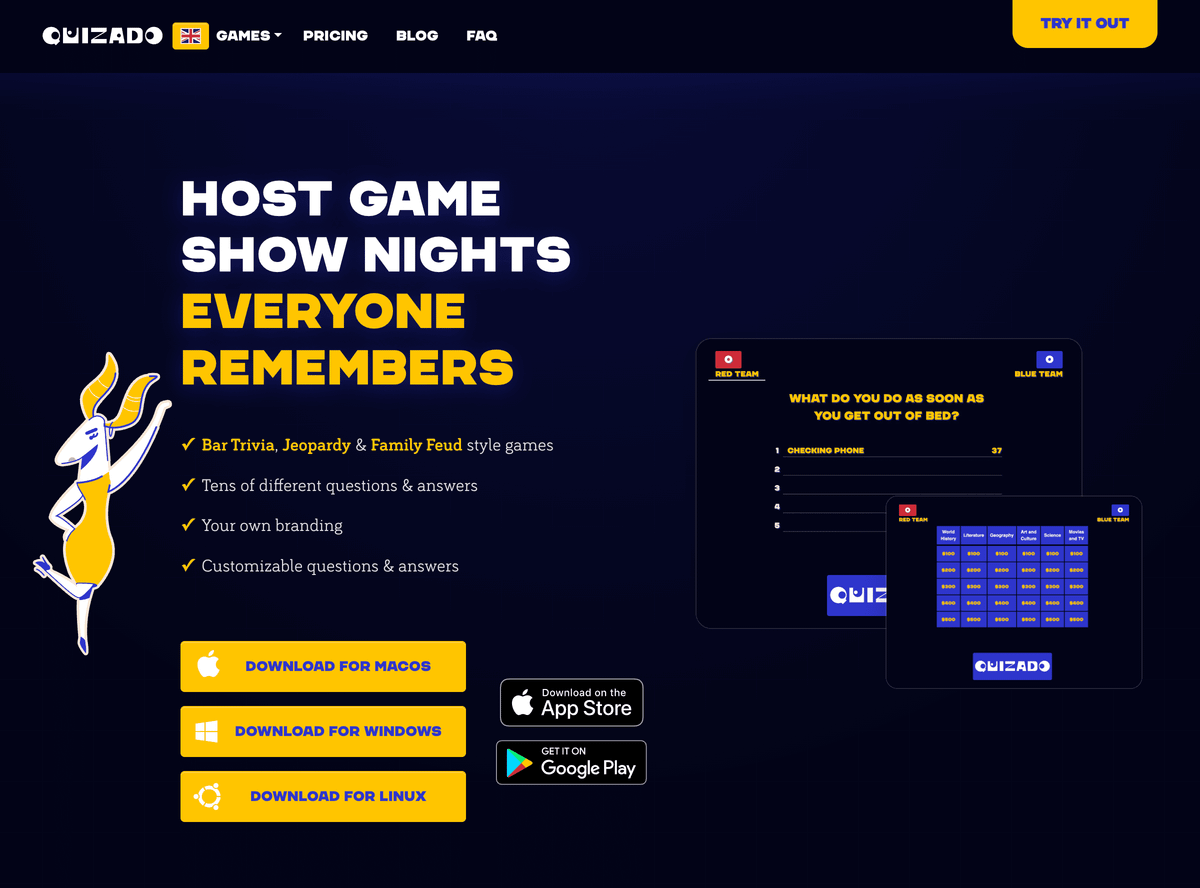
Quizado's features address the practical challenges event planners face: server-run games survive a reload or a device switch, smartphone-based participation eliminates the need for specialized equipment, customizable branding aligns the experience with your organization's visual identity, and ready-made content libraries provide 500+ hours of questions while supporting custom content creation. The platform's analytics dashboard tracks participation metrics, team performance, and engagement patterns, providing the data needed to measure ROI and refine future events.
Key benefits for corporate event planners:
- Boost participation rates through engaging, competitive formats that feel like entertainment
- Enhance team bonding via collaborative challenges requiring cross-functional cooperation
- Measure engagement and ROI with detailed analytics showing participation patterns and outcomes
- Customize experiences to match your organization's culture and event objectives
- Support hybrid events with technology that works equally well for remote and in-person participants
Explore Quizado's corporate gamification solutions to see how the platform transforms ordinary corporate gatherings into memorable experiences. Browse corporate event game examples for inspiration, or discover interactive team morale strategies that deliver lasting impact beyond the event itself. Start planning your next gamified corporate event today.
FAQ
What is corporate event gamification and why is it effective?
Corporate event gamification applies game design elements like points, badges, leaderboards, and challenges to business events, making them more interactive and engaging. It works because these mechanics tap into psychological drivers like achievement, competition, and social recognition, leading to higher participation rates and stronger team bonding. The approach transforms passive attendance into active participation, creating memorable experiences that reinforce learning and strengthen workplace relationships.
How do I align gamification with my corporate event goals?
Start by clearly defining your event objectives, whether that's improving knowledge retention, strengthening team bonds, or increasing networking connections. Choose game mechanics and technology platforms that directly support these goals rather than adding gamification for its own sake. Measure success using relevant metrics like participation rates, knowledge retention scores, or post-event collaboration patterns. Review aligning gamification to goals for detailed frameworks connecting mechanics to outcomes.
What are common mistakes to avoid with gamified corporate events?
Avoid gimmicky rewards that feel like forced fun, often called "chocolate-covered broccoli" where unpleasant tasks get superficial game elements. Don't create overly intense competitions that discourage participants who fall behind early or alienate employees uncomfortable with public competition. Ensure your gamification approach aligns authentically with company culture and values rather than feeling like an imported trend. Respect data privacy requirements, particularly GDPR compliance when operating in European markets. Learn from gamification mistake avoidance strategies to prevent common pitfalls.
Which gamification techniques work best for hybrid corporate events?
App-based leaderboards, augmented reality scavenger hunts, and collaborative quiz competitions work effectively across hybrid formats because they're accessible to both in-person and remote participants. Use platforms with smartphone integration so remote attendees can participate using the same interface as on-site employees. AI-driven personalization enhances the experience by adapting challenge difficulty and recommending connections based on individual preferences regardless of location. Explore hybrid event engagement approaches that create equitable experiences for all participants.
Recommended
Turn these ideas into a team event
Prepare an office quiz or remote game with a shared screen, phone participation and a host on your team.

Bring your group together for a game
Try a free starter game, then choose the format and plan for your group.
Trusted by 5,000+ hosts