How to create team contests that boost bar engagement in 2026
Bars and restaurants constantly search for ways to keep customers engaged beyond just serving food and drinks. Traditional contests often fall flat, failing to generate the excitement and repeat visits you need. Interactive team contests and trivia nights offer a proven solution that transforms ordinary evenings into memorable experiences. This guide walks you through everything you need to know: essential preparation, step-by-step execution, common pitfalls to avoid, and how to measure success so you can continuously improve your events.
Table of Contents
- What You Need Before Creating A Team Contest
- Step-By-Step Process To Design And Run Your Team Contest
- Common Mistakes To Avoid And Troubleshooting Tips
- Measuring Success And Improving Future Contests
- Enhance Your Team Contests With Quizado's Interactive Platform
- Frequently Asked Questions About Creating Team Contests
Key takeaways
| Point | Details |
|---|---|
| Well-designed contests drive engagement | Interactive team contests create memorable experiences that encourage customers to return regularly |
| Preparation determines success | Selecting appropriate contest types, balancing teams, preparing questions, and arranging prizes sets the foundation |
| Active facilitation maintains energy | Clear rules, enthusiastic hosting, and real-time scoring updates keep participants invested throughout the event |
| Common mistakes are preventable | Avoiding unbalanced teams, unclear scoring, and low host energy ensures smooth execution |
| Measurement enables optimization | Tracking attendance, collecting feedback, and analyzing participation patterns helps refine future contests |
What you need before creating a team contest
Successful team contests require thoughtful preparation before your first participant arrives. Start by assessing your venue's physical setup. You need adequate space for teams to gather without crowding, ideally with tables or designated areas where groups can huddle and strategize. Audio equipment matters significantly because participants must hear questions clearly even when the bar gets noisy. A quality microphone system and speakers positioned throughout your space prevent frustration and keep everyone engaged.
Your audio-visual setup should include a large screen or multiple displays visible from every team's position. Contestants need to see questions, scores, and visual content without straining. Good lighting helps too, bright enough for teams to read materials but not so harsh that it kills the atmosphere you've worked to create.
Gather essential materials before event day. Question sets form the backbone of your contest, whether you create custom content or use pre-made libraries. Digital scoring apps streamline tracking and reduce disputes, though traditional scoring sheets work if you prefer analog methods. Consider buzzers or a system where teams can signal answers quickly. Many modern setups use smartphones as controllers, eliminating the need for specialized equipment.
Team size dramatically impacts contest dynamics. Groups of four to six people work best for most bar environments. Smaller teams mean fewer perspectives and less energy, while larger groups create coordination challenges and leave some members disengaged. Balance teams by mixing regulars with newcomers or distributing strong players across groups. Random assignment often works better than letting friends cluster together because it encourages mingling and prevents dominant teams from forming.
Prizes motivate participation but don't need to break your budget. Gift certificates to your establishment encourage return visits and boost future sales. Branded merchandise builds loyalty while advertising your venue. Free drinks or appetizers for winning teams cost you wholesale prices but feel valuable to customers. The key is offering rewards that feel meaningful without creating unsustainable expenses.
Your staff's readiness matters as much as physical preparation. Designate an enthusiastic host who can energize the crowd, explain rules clearly, and handle unexpected situations. This person needs strong public speaking skills and the ability to read the room, adjusting pace and tone based on audience energy. Preparation is key to building balanced and impactful team contests in business or social settings. Train backup staff to manage scoring, handle technical issues, and assist teams with questions about rules or logistics.
Pro Tip: Test all equipment at least two hours before your contest starts. Dead microphone batteries or projector connection issues create awkward delays that kill momentum and frustrate participants who arrived on time.
Create a pre-event checklist covering venue setup, equipment testing, prize preparation, and staff briefing. This systematic approach prevents last-minute scrambling and ensures you're ready to deliver a professional experience. Document what works and what doesn't after each event so future preparation becomes even smoother.
Step-by-step process to design and run your team contest
Designing effective contests starts with choosing the right format for your audience and venue. Trivia contests remain the most popular choice because they're accessible, require minimal physical space, and can cover topics matching your crowd's interests. Physical task contests work well if you have outdoor space or a large area, though they're harder to manage in typical bar settings. Puzzle challenges offer a middle ground, engaging minds without requiring athletic ability.
Each format has distinct advantages. Trivia scales easily from small to large groups and allows you to tailor difficulty levels. Physical contests create high energy and visual interest but may exclude less mobile participants. Puzzles encourage collaboration and work well for quieter crowds who prefer cerebral challenges. Consider rotating formats across different events to keep regular attendees interested.
Once you've selected a format, focus on team preparation. Arrive early to set up registration and explain how team formation will work. If you're assigning teams, use a system that mixes demographics and skill levels. Hand out team number cards or colored wristbands so everyone knows their group at a glance. Give teams five minutes to introduce themselves and choose a team name, which builds camaraderie before competition begins.
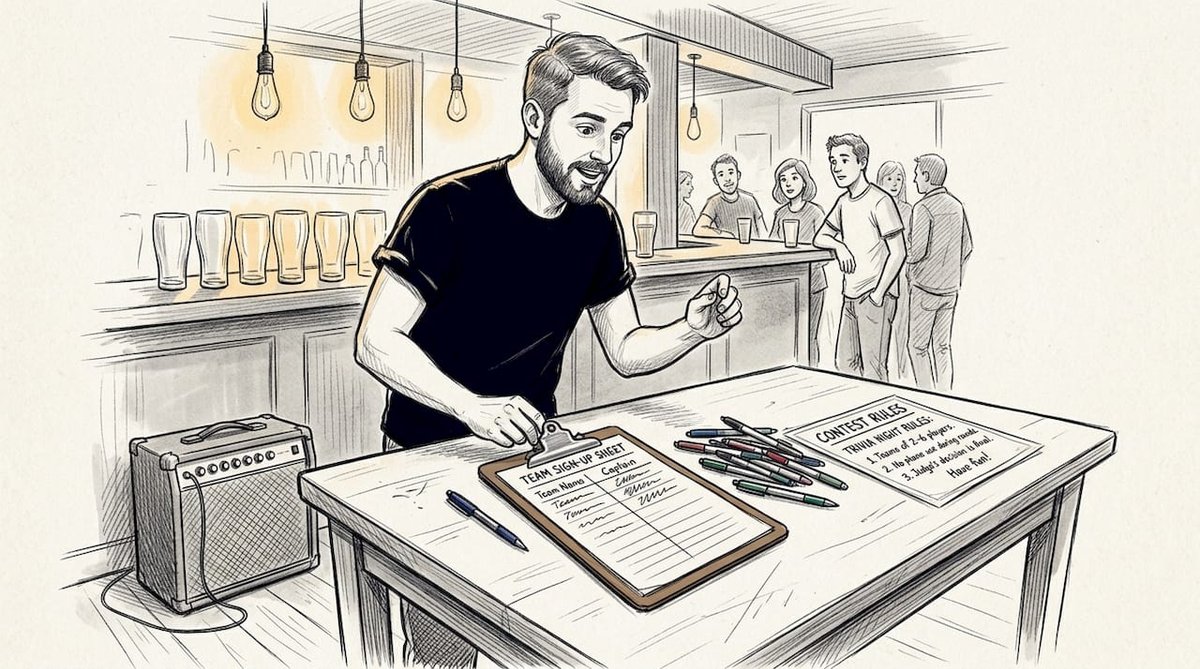
Developing compelling content requires understanding your audience. Survey regular customers about their interests or analyze which topics generate the most conversation at your bar. Mix difficulty levels within each round so everyone experiences both success and challenge. Include 30% easy questions that most teams will answer correctly, 50% medium difficulty questions that require thought, and 20% hard questions that separate top performers.
Your question sets should reflect current events, pop culture, local history, and topics relevant to your venue's identity. Sports bars lean heavily into athletics trivia, while music venues might focus on band history and lyrics. Avoid overly obscure questions that frustrate participants or make them feel stupid. The goal is engagement, not stumping everyone.
Clear, engaging rules and well-moderated contests maximize participant involvement and group cohesion. Before starting, explain the scoring system in simple terms. Specify how many points each question is worth, whether partial credit exists, and how tiebreakers work. Clarify timing rules for answers and whether teams can confer before responding. Write key rules on a visible board so participants can reference them throughout the event.
Execution requires maintaining energy from start to finish. Begin with an enthusiastic introduction that sets expectations and builds excitement. Use your microphone effectively, projecting energy without shouting. Read questions clearly at a moderate pace, repeating when necessary. After each question, provide the correct answer with a brief explanation or interesting fact that adds value beyond just scoring.
Update scores visibly after each round so teams know where they stand. This transparency maintains competitive tension and gives trailing teams motivation to push harder. Between rounds, take short breaks for teams to refresh drinks and socialize, which enhances the overall experience and boosts bar sales.
Pro Tip: Plant a few enthusiastic participants in the crowd who can model the energy level you want. Their excitement becomes contagious and helps shy participants feel comfortable joining in.
Manage pacing carefully. Most successful contests run 90 to 120 minutes total, broken into rounds of 15 to 20 minutes with brief breaks between. Shorter events feel rushed and don't give teams time to gel, while longer contests cause energy to flag and people to leave early. Monitor audience engagement and be ready to skip questions or add bonus rounds based on how the room feels.
Common mistakes to avoid and troubleshooting tips
Uneven team composition ruins contests faster than any other factor. When one team has all your trivia regulars while another consists entirely of first-timers, the outcome feels predetermined and discourages full participation. Watch for this during team formation and intervene by redistributing players. If someone objects, explain that balanced competition makes the event more enjoyable for everyone.
Skill level imbalances extend beyond just knowledge. Some teams naturally have stronger leaders who organize discussions and keep everyone engaged. Others struggle with coordination and waste time debating answers. You can't fix personality dynamics, but you can structure questions to give every team chances to shine by including diverse topics that play to different strengths.
Ambiguous rules create unnecessary conflict and slow your event to a crawl. Participants will exploit any loophole or unclear guideline, leading to arguments about whether answers should count. Prevent this by being specific upfront. Define what constitutes a correct answer (exact wording, close enough, or first/last names required). Explain whether teams can use phones for answers (usually not) and what happens if someone breaks this rule.
When disputes arise despite clear rules, handle them quickly and fairly. Listen to the team's concern, reference the specific rule that applies, and make a decision without lengthy debate. You can acknowledge that reasonable people might disagree while standing firm on your ruling. Offering a small consolation (bonus point on the next question) can smooth hurt feelings without undermining your authority.
Lack of host engagement saps energy from even the best-designed contests. Your enthusiasm sets the tone for the entire room. If you seem bored or distracted, participants mirror that energy. Smile, make eye contact with different teams, celebrate correct answers, and offer encouraging comments to struggling groups. Your job is part educator, part entertainer, and part cheerleader.
Technical failures test your adaptability. When your slideshow freezes or audio cuts out, don't panic or apologize excessively. Have backup plans ready: printed question sheets, a whiteboard for scoring, or the ability to continue verbally without visual aids. Avoiding imbalanced teams and unclear rules is critical to maintain participant motivation and engagement. Your calm response to problems reassures participants that the show will go on.
Poor timing kills momentum. Running behind schedule frustrates participants who have other commitments, while rushing through content feels chaotic and unfair. Build buffer time into your plan for unexpected delays. If you're running long, cut questions from later rounds rather than speeding through everything. If you're ahead of schedule, add a spontaneous bonus round or extend break times.
Neglecting the social aspect misses the point of team contests. These events succeed because they facilitate connection and shared experiences, not just because people want to win prizes. Encourage teams to chat during breaks, create opportunities for inter-team banter, and celebrate participation as much as victory. Thank everyone for coming and invite them back regardless of their final scores.
Pro Tip: Keep a "emergency entertainment" list of quick games or challenges you can deploy if technical issues force an extended pause. Simple activities like team name origins or rapid-fire pop culture questions keep energy up while you resolve problems.
Measuring success and improving future contests
Tracking the right metrics reveals whether your contests achieve business goals and satisfy customers. Start with attendance numbers, recording not just total participants but also how many are first-timers versus regulars. Growing your regular base indicates you're creating experiences people want to repeat. High first-timer counts suggest your marketing works but retention needs improvement.
Collect feedback immediately after events when experiences are fresh. Simple surveys with three to five questions work better than lengthy forms people ignore. Ask what participants enjoyed most, what could improve, and whether they plan to return. Include a rating scale for overall satisfaction and specific elements like question difficulty, host performance, and prize value.
Informal conversations provide insights surveys miss. Chat with teams during breaks and after the contest ends. Listen for unprompted comments about pacing, question topics, or team dynamics. These organic observations often reveal issues participants wouldn't mention in formal feedback.
Sales data shows contests' business impact. Compare revenue on contest nights to similar non-event nights, accounting for seasonal variations and other factors. Track per-person spending, total covers, and whether participants order additional rounds during the event. Successful contests should increase both attendance and per-customer revenue.
Create a simple tracking system comparing different contest variables:
| Contest Type | Average Attendance | Repeat Rate | Revenue Lift | Satisfaction Score |
|---|---|---|---|---|
| General trivia | 45 | 62% | 28% | 4.2/5 |
| Music trivia | 52 | 71% | 35% | 4.5/5 |
| Sports trivia | 38 | 58% | 22% | 3.9/5 |
| Mixed format | 48 | 65% | 31% | 4.3/5 |
This data reveals which formats resonate most with your specific audience. Use these insights to schedule contests strategically, running popular formats more frequently while experimenting with variations to keep things fresh.
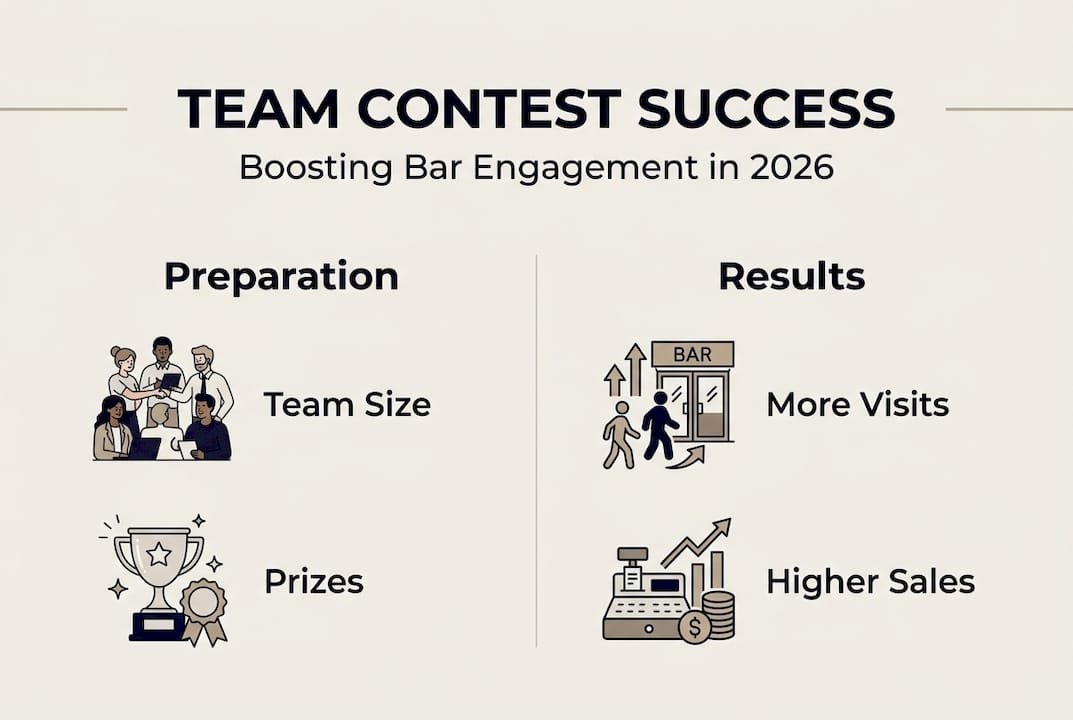
Studying participant feedback and attendance trends allows continuous improvement of team contests. Analyze patterns across multiple events rather than reacting to single data points. One poorly attended night might reflect bad weather or competing events rather than problems with your contest design.
Test changes systematically. If you want to try a new prize structure, run it for three consecutive events before evaluating results. Document what you changed and track whether it improved satisfaction, attendance, or revenue. This disciplined approach prevents you from making changes based on hunches rather than evidence.
Engage your regular participants in improvement efforts. Ask loyal attendees what would make them invite friends or come more often. Some venues create advisory groups of frequent contestants who provide input on question topics, formats, and scheduling. This involvement builds ownership and turns customers into advocates.
Benchmark against your own performance rather than other venues. Your customer base, location, and venue characteristics create unique dynamics. What works at a college bar might flop at a neighborhood pub. Focus on improving your metrics month over month rather than copying competitors.
Pro Tip: Photograph your crowds during contests (with permission) and share images on social media. This visual proof of fun, engaged customers serves as powerful marketing while giving you a record of attendance trends and energy levels.
Review your data quarterly to identify long-term trends. Are certain months consistently stronger? Do specific question categories always rate higher? Does team size affect satisfaction? Use these insights to refine your contest calendar, content strategy, and operational approach.
Enhance your team contests with Quizado's interactive platform
Running engaging team contests requires juggling multiple elements simultaneously: questions, scoring, timing, and crowd energy. Quizado's interactive contest platform simplifies this complexity with ready-made trivia templates and customizable content specifically designed for bars and restaurants. The software handles scoring automatically, eliminating disputes and letting you focus on hosting rather than math.
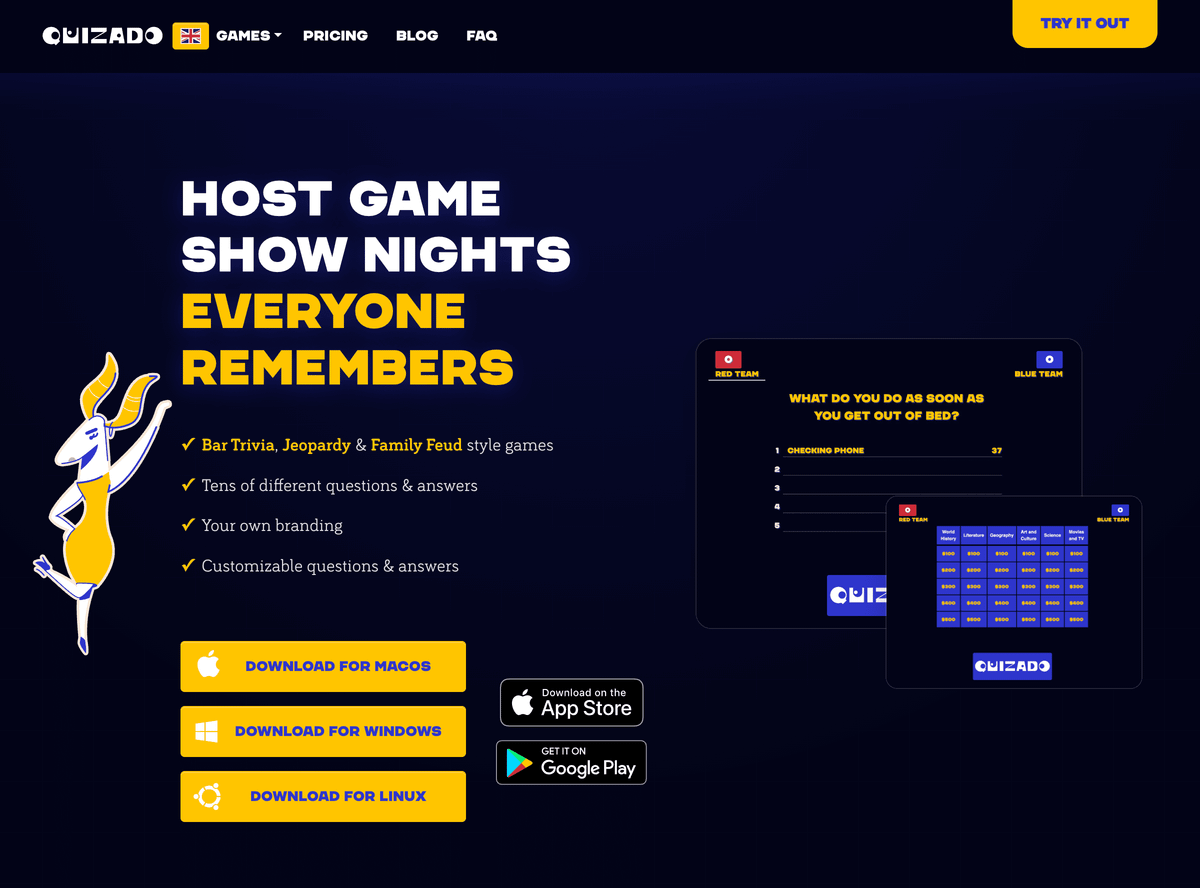
Real-time audience engagement tools transform passive spectators into active participants. Teams use their smartphones as controllers, creating an immersive experience that feels professional and modern. The platform runs every game on its servers, so a reload or a device switch won't derail your event. With over 500 hours of pre-built content and the ability to create custom questions, you'll never run out of fresh material. Supporting resources and responsive customer service help you maximize every event's success.
Frequently asked questions about creating team contests
How many people should be on each team in a bar contest?
Four to six people per team creates optimal dynamics for bar contests. Smaller teams lack diverse perspectives and energy, while larger groups struggle with coordination and leave some members disengaged. This size ensures everyone contributes without creating chaos during discussions.
What types of prizes work best to encourage participation?
Gift certificates to your establishment work exceptionally well because they guarantee return visits and future revenue. Free drinks or appetizers for winning teams cost wholesale prices but feel valuable to customers. Branded merchandise builds loyalty while advertising your venue to a wider audience.
How long should each team contest or trivia night session last?
Most successful contests run 90 to 120 minutes total, broken into rounds of 15 to 20 minutes with brief breaks between. Shorter events feel rushed and don't allow teams to gel, while longer contests cause energy to drop and participants to leave early. Monitor your specific crowd and adjust accordingly.
Can we run contests for mixed-age groups effectively?
Yes, mixed-age contests work well when you balance question topics across generations. Include categories spanning different decades, mixing current pop culture with classic references. This approach ensures every age group has moments to shine and learn from each other.
What's the best way to handle scoring and resolving disputes?
Use digital scoring systems that calculate totals automatically and display results visibly to all teams. Establish clear rules before starting about what constitutes correct answers. When disputes arise, reference your stated rules, make a quick decision, and move forward without lengthy debates that kill momentum.
Recommended
Run your next trivia night with Quizado
Prepare the rounds, invite players by QR code and show live scores on your venue’s screen.

Bring your group together for a game
Try a free starter game, then choose the format and plan for your group.
Trusted by 5,000+ hosts