Why host live game shows to boost bar traffic in 2026
Slow Tuesday and Wednesday nights challenge bar and restaurant managers looking to fill seats and increase revenue. While many venues default to live music or karaoke, hosting live trivia nights boosts midweek customer traffic on slow nights by attracting diverse groups seeking social entertainment. Live game shows create active participation that keeps guests engaged longer, ordering more food and drinks while building loyal communities around your venue. This article explores why live game shows outperform traditional entertainment, how they increase sales through strategic pairing with specials, and practical steps to maximize your return on investment.
Table of Contents
- Key takeaways
- How live game shows increase bar and restaurant traffic
- Boosting sales through engagement and themed specials
- Why trivia and live game shows outperform other entertainment
- Maximizing return and ensuring successful live game shows
- Explore tools and resources to host your own live game shows
- What questions do bar managers ask about hosting live game shows?
Key Takeaways
| Point | Details |
|---|---|
| Midweek traffic boost | Live trivia nights attract groups on slow weeknights, turning quiet evenings into busier social experiences. |
| Longer visits and orders | Participants stay 90 to 120 minutes and order more food and drinks as the game unfolds. |
| Themed specials pay off | Pairing trivia with themed cocktails and shareable appetizers increases per visit spend. |
| Community and loyalty | Regular weekly events build venue loyalty and encourage word of mouth without heavy marketing costs. |
How live game shows increase bar and restaurant traffic
Midweek nights typically see 40-60% lower foot traffic compared to weekends. Live trivia events reverse this trend by giving customers a compelling reason to visit on otherwise quiet evenings. Groups of friends, coworkers, and couples actively seek venues offering interactive entertainment rather than simply dining and leaving.
The social nature of trivia creates natural gathering opportunities. Teams of 4-6 people collaborate, debate answers, and celebrate victories together. This dynamic transforms your venue from a simple dining location into a destination experience. Unlike passive entertainment where guests might arrive late or leave early, game show formats with clear start times and progressive rounds keep participants engaged from beginning to end.
Consider the traffic comparison for a typical 150-seat venue:
| Night Type | Average Customers | Average Stay Duration | Table Turnover |
|---|---|---|---|
| Regular Tuesday | A quiet room | Shorter stays | Faster turnover |
| Trivia Tuesday | A busier room | Longer stays | Slower turnover |
While table turnover decreases slightly, total revenue increases substantially because guests order multiple rounds of drinks and appetizers throughout the extended stay. The weekday bar traffic boost becomes predictable and sustainable when you establish consistent scheduling.
Key factors driving increased traffic include:
- Social proof from seeing packed venues on typically slow nights
- Word-of-mouth recommendations from enthusiastic participants
- Lower competition for entertainment options midweek
- Affordable night out compared to weekend premium pricing
Pro Tip: Schedule your trivia night on your slowest weeknight and maintain the same day and time every week. Consistency allows customers to build the event into their regular routines, creating habitual attendance that fills your venue without constant promotional effort.
The psychological appeal of competition and achievement drives participation. Customers return week after week to improve their performance, climb leaderboards, or simply enjoy the social atmosphere. This recurring traffic pattern provides predictable revenue streams that help you manage inventory, staffing, and cash flow more effectively during traditionally challenging periods.
Boosting sales through engagement and themed specials
Increased foot traffic only matters if it translates to higher revenue. Quiz games create advantages by encouraging extended stays and multiple orders throughout the event. Participants arrive hungry and thirsty, then continue ordering as they settle in for 90-120 minutes of entertainment.
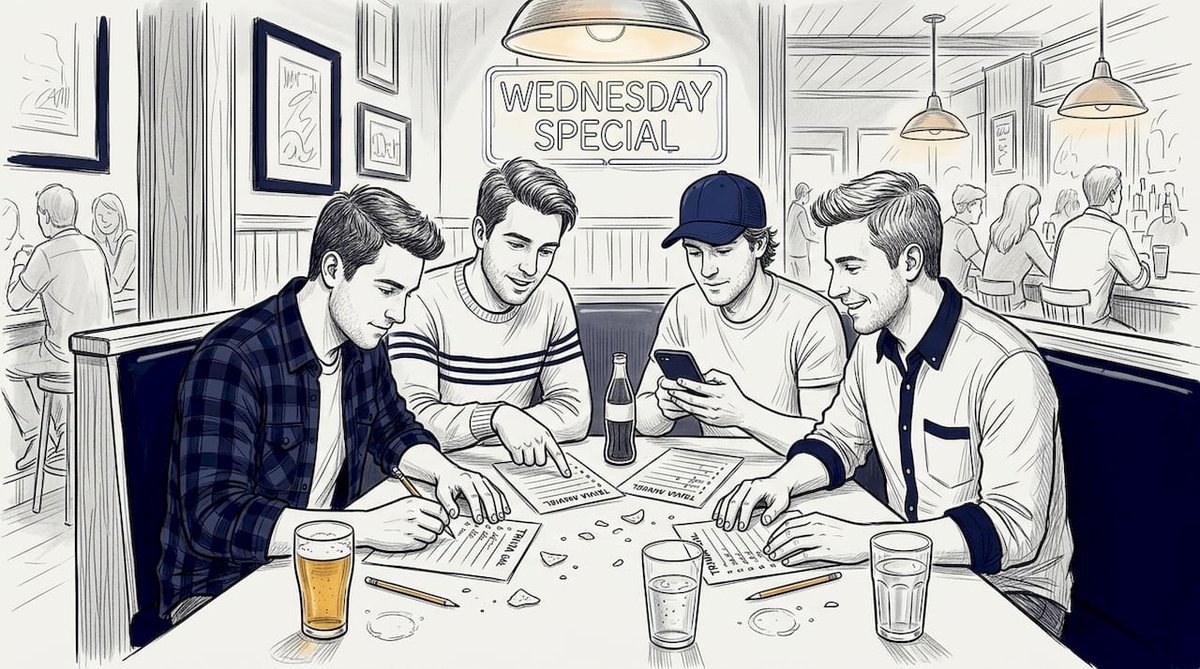
The engagement factor proves crucial. When customers actively participate in trivia rounds, they're mentally stimulated and socially connected, creating positive associations with your venue. This emotional investment translates directly to purchasing behavior. Teams celebrating correct answers naturally order celebratory rounds. Groups debating tough questions linger over appetizer platters.
Strategic pairing with themed specials amplifies this effect:
- Trivia-themed cocktails named after famous game shows or quiz categories
- Discounted appetizer platters designed for sharing among teams
- Bonus points or prizes for customers ordering featured menu items
- Happy hour pricing extended through trivia duration
Revenue impact comparison for a mid-sized venue:
| Metric | Regular Slow Night | Trivia Night | Percentage Increase |
|---|---|---|---|
| Average check per customer | Lower | Higher | Up |
| Food sales | Lower | Higher | Up |
| Beverage sales | Lower | Higher | Up |
| Total revenue | Lower | Higher | Up |
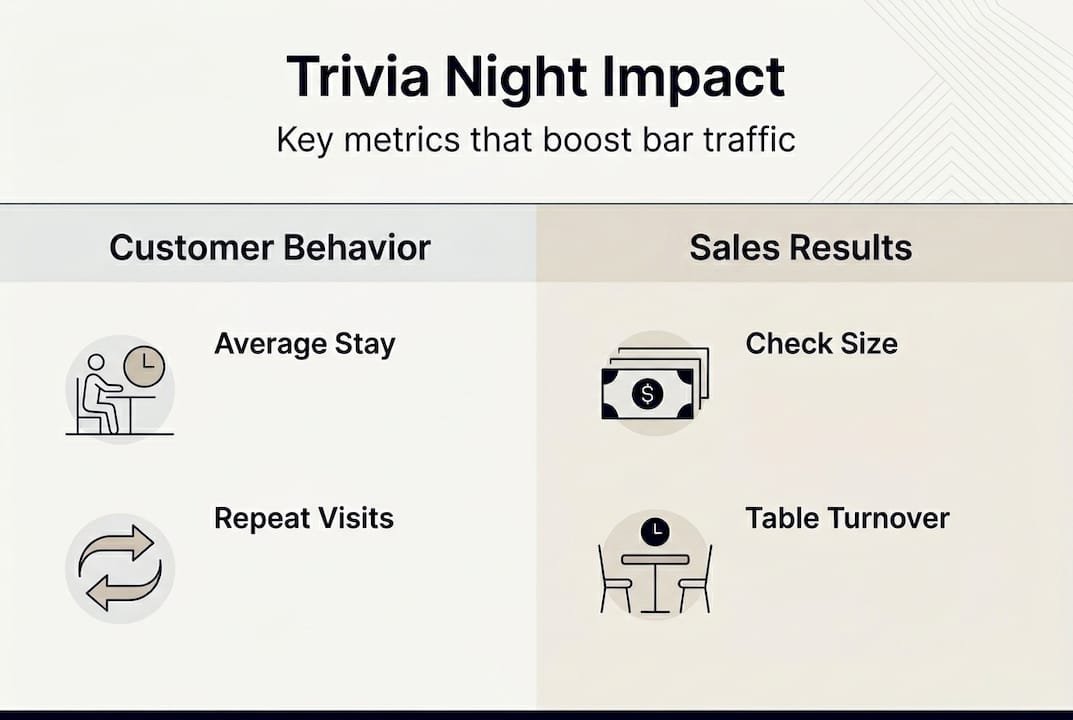
These numbers reflect real-world results from venues implementing consistent trivia programs. The extended stay duration naturally increases consumption. A customer might order one beer during a typical 45-minute visit, but will easily consume three drinks plus food during a two-hour trivia event.
Trivia boosts retention by creating memorable experiences that customers want to repeat. The combination of social interaction, mental stimulation, and competitive fun generates positive emotions that become associated with your brand. Participants don't just remember the trivia questions; they remember laughing with friends, the excitement of close competitions, and the overall atmosphere of your venue.
Pro Tip: Promote your trivia specials heavily on social media 48 hours before the event and display them prominently on table tents and digital screens during the event. Create urgency by offering limited-time specials available only during trivia hours, encouraging immediate orders rather than delayed decisions.
The interactive game hosting approach transforms passive diners into active participants invested in the outcome. This investment keeps them engaged, ordering, and returning week after week for the experience your venue uniquely provides.
Why trivia and live game shows outperform other entertainment
Many bar managers assume live music or karaoke nights deliver similar benefits to trivia events. The data tells a different story. Quiz games outperform alternatives in participant engagement, revenue potential from food and drink sales, and repeat attendance due to active interaction versus passive observation.
The fundamental difference lies in participation levels. Live music creates atmosphere but guests remain spectators. They might tap their feet or nod along, but they're not actively involved in the experience. Karaoke offers participation but only for brave individuals willing to sing publicly, usually a small part of the room. Trivia engages everyone simultaneously, with every team member contributing answers and strategy.
Comparative performance metrics:
| Entertainment Type | Active Participation Rate | Average Customer Stay | Repeat Visit Rate | Setup Complexity |
|---|---|---|---|---|
| Live Trivia | Most of the room | Long stays | Many weekly regulars | Low |
| Live Music | Few guests | Medium stays | Occasional returns | Medium |
| Karaoke | Few guests | Medium stays | Occasional returns | Medium |
| DJ/Dancing | Part of the room | Long stays | Occasional returns | Medium-High |
The participation rate directly correlates with engagement and spending. When most of your customers actively play trivia, they're mentally present and socially connected. This creates organic conversation, laughter, and energy that permeates the entire venue. New arrivals immediately sense the vibrant atmosphere and want to join the action.
Key advantages and challenges of each format:
- Live music provides ambiance but requires significant budget for quality performers and sound equipment
- Karaoke creates memorable moments but only engages performers, leaving most guests as spectators
- DJ and dancing appeal to younger demographics but require space, equipment, and may not fit restaurant atmospheres
- Trivia engages all ages and demographics with minimal equipment while building community through team collaboration
The digital versus traditional trivia comparison reveals another advantage. Modern digital platforms eliminate the tedious paper-based scoring that interrupts flow and creates delays. Automated systems keep energy high by providing instant feedback and maintaining competitive tension throughout the event.
Community building represents perhaps the strongest differentiator. Regular trivia teams develop identities, rivalries, and friendships. They recruit new members, celebrate victories together, and return consistently even during busy life periods. This loyalty transforms occasional customers into brand ambassadors who actively promote your venue within their social circles.
Live music fans might attend sporadically when their favorite bands perform. Trivia regulars block out the same night every week, making your event a non-negotiable part of their routine. This predictability allows better staffing, inventory management, and revenue forecasting.
Maximizing return and ensuring successful live game shows
Implementing live game shows requires strategic planning to deliver consistent results. Follow these proven practices to optimize your trivia night investment:
- Establish consistent scheduling on your slowest weeknight and maintain the same time slot every week to build customer habits
- Pair events with targeted food and beverage specials that encourage ordering and increase average check size
- Select general knowledge themes with broad appeal rather than niche topics that exclude potential participants
- Integrate digital scoring platforms to eliminate delays and maintain high energy throughout the event
- Promote heavily through social media, email lists, and in-venue signage starting 72 hours before each event
- Hire or train an energetic host who can engage crowds, maintain pace, and create entertaining commentary between rounds
- Offer meaningful prizes that incentivize participation without destroying profit margins, such as gift certificates or branded merchandise
These fundamentals create the foundation for successful events. However, avoiding common pitfalls proves equally important:
- Inconsistent scheduling confuses customers and prevents habit formation
- Overly difficult or obscure questions frustrate participants and discourage return visits
- Slow scoring and long delays between rounds kill momentum and energy
- Unfair rules or perceived favoritism damage credibility and trust
- Inadequate promotion leaves seats empty despite offering quality entertainment
- Low-energy hosts create boring atmospheres that fail to engage crowds
Pro Tip: Adopt a hybrid approach combining digital scoring platforms with traditional question-and-answer formats. Digital systems handle the tedious calculation work while maintaining the social, collaborative atmosphere that makes trivia special. This digital versus traditional balance delivers reliability without sacrificing the human connection that drives repeat attendance.
Expert insight on consistency:
Venues running trivia every single week at the same time build much stronger attendance than those hosting sporadic events. Customers need predictability to plan their schedules and build attendance into their weekly routines. Missing even one week breaks momentum and requires rebuilding audience interest from scratch.
The implementation timeline matters. Expect 4-6 weeks to build critical mass when launching a new trivia program. Early events might draw modest crowds, but consistent execution and word-of-mouth promotion compound over time. By week eight, a consistent program can fill a good share of your seats.
Boosting customer engagement requires attention to details beyond just asking questions. Create themed rounds that tie to current events, local culture, or seasonal topics. Incorporate multimedia elements like audio clips or visual puzzles. Vary question difficulty to keep both casual players and trivia enthusiasts engaged throughout the event.
Consider borrowing corporate trivia night ideas that emphasize team building and collaboration. These concepts translate perfectly to bar and restaurant settings where fostering community and social connection drives repeat business. Even virtual team celebration concepts offer inspiration for creative round formats and engagement techniques.
Measure success through multiple metrics beyond simple attendance numbers. Track average check size, repeat visit rates, social media mentions, and customer feedback. These indicators reveal whether your trivia program genuinely drives business value or simply fills seats without generating proportional revenue.
Explore tools and resources to host your own live game shows
Ready to launch your own live game show events? Quizado provides the digital platform and support you need to host professional-quality trivia nights without technical complexity. The software handles automated scoring, team management, and question delivery while you focus on creating memorable experiences for your guests.
The platform runs every game on its servers, so a reload or a device switch does not stop the night, even with the spotty WiFi common in bars and restaurants. Participants use their smartphones as controllers, eliminating the need for expensive buzzer systems or paper-based scoring that slows down your event. Customizable branding options let you maintain your venue's unique identity while delivering polished, professional presentations that rival TV game shows.
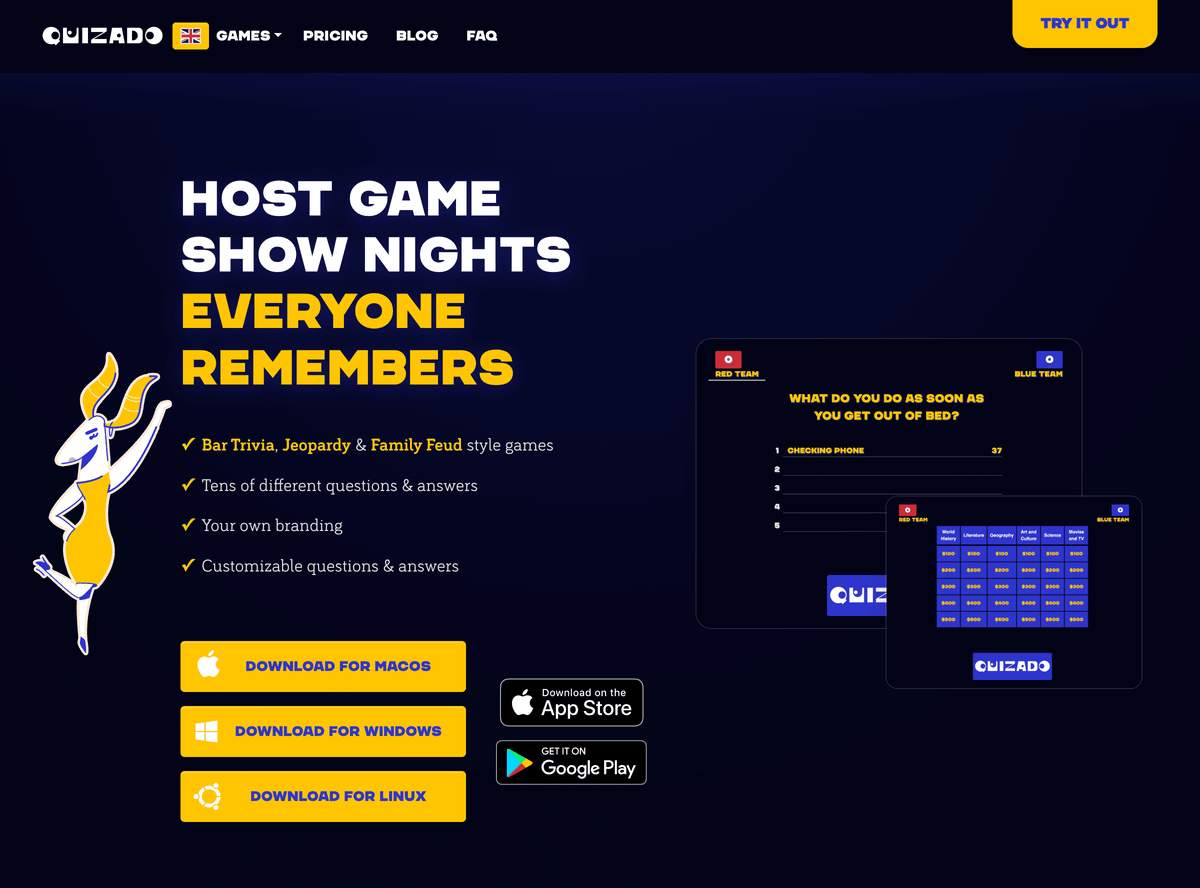
Access ready-made question libraries covering hundreds of hours of content, or create custom questions tailored to your local community and customer base. The intuitive interface requires minimal training, allowing your staff to confidently host engaging events from day one.
Pro Tip: Use Quizado's automated scoring to eliminate the tedious calculation work that interrupts event flow. Instant leaderboard updates maintain competitive tension and keep energy high throughout the night, allowing your host to focus entirely on entertaining guests rather than managing spreadsheets.
What questions do bar managers ask about hosting live game shows?
How long should a live game show event last?
Optimal trivia nights run 90-120 minutes including breaks between rounds. This duration keeps participants engaged without exhausting them while maximizing food and beverage orders. Structure events with 4-6 rounds of 8-10 questions each, allowing natural breaks for ordering and socializing.
What type of prizes incentivize participation?
Gift certificates to your venue work best because they drive return visits and additional spending. Offer $50-75 for first place, $25-35 for second place, and $15-20 for third place. Branded merchandise like t-shirts or pint glasses provides affordable options while promoting your venue when winners wear or use them publicly.
How to handle scoring fairly and quickly?
Digital platforms eliminate human error and speed up the process dramatically. Automated systems calculate scores instantly and display real-time leaderboards that maintain competitive tension. If using paper-based methods, assign dedicated scorekeepers separate from the host and display running totals after each round to maintain transparency.
Can live game shows be combined with other entertainment?
Yes, but avoid direct competition for attention. Live quizzes work well alongside background music during breaks or pre-event periods. Avoid scheduling trivia simultaneously with live bands or sports broadcasts that divide customer focus. Consider alternating weeks if you want to offer multiple entertainment formats.
What marketing approaches best promote trivia nights?
Consistent social media posting 48-72 hours before each event generates strong attendance. Create event pages on Facebook allowing customers to invite friends and RSVP. Email your customer database weekly with reminders and featured specials. Display prominent signage inside your venue and at the entrance announcing your recurring schedule. Encourage participants to share photos and tag your venue during events, leveraging user-generated content for organic reach.
Recommended
Run your next trivia night with Quizado
Prepare the rounds, invite players by QR code and show live scores on your venue’s screen.
Bring your group together for a game
Try a free starter game, then choose the format and plan for your group.
Trusted by 5,000+ hosts